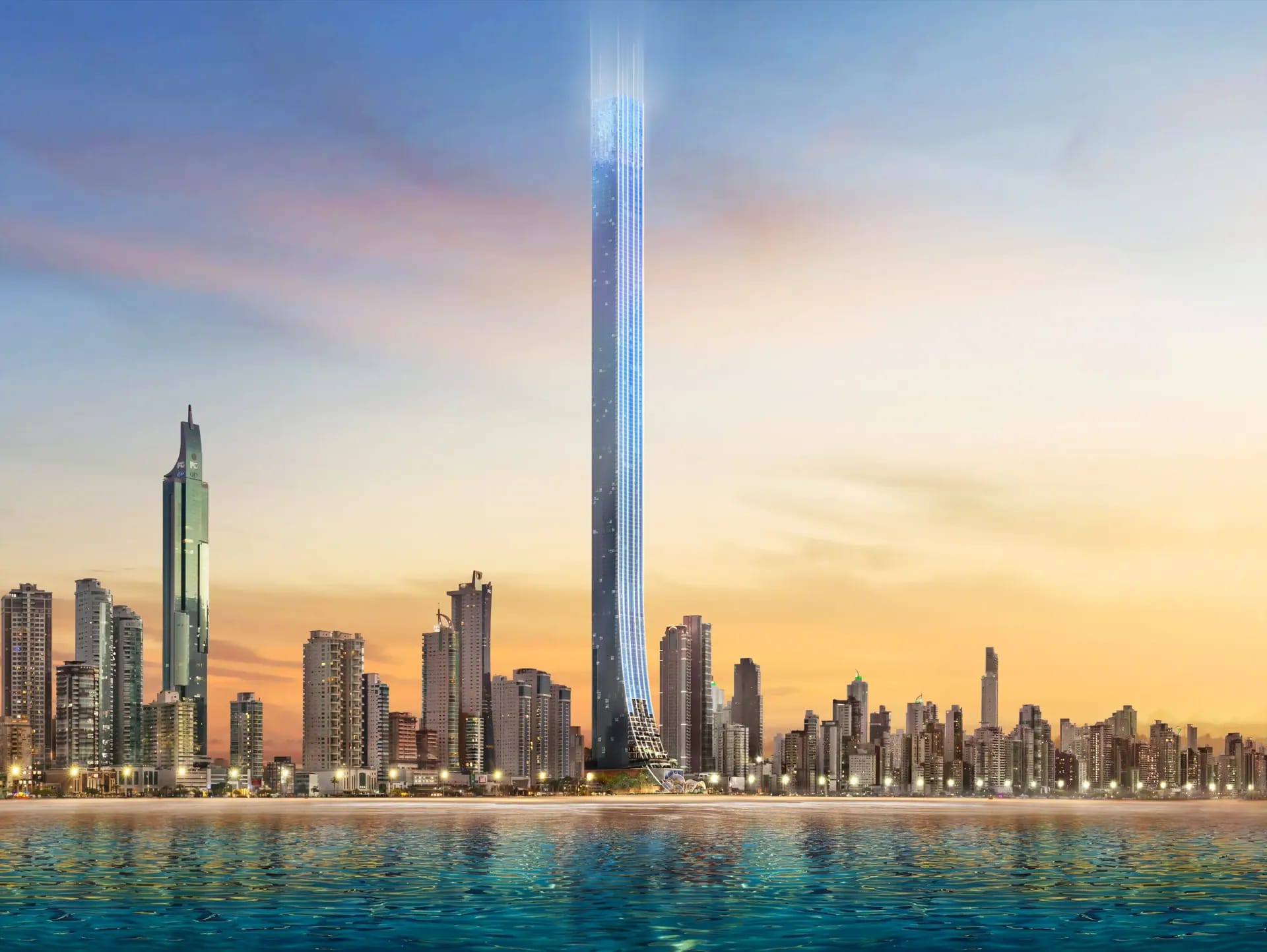
An important milestone has been reached in the construction of the Senna Tower skyscraper in the city of Balneário Camboriú, in southern Brazil. Work on the building’s pile foundation has been successfully completed. The structure is expected to become the tallest residential building in the world.
The announcement was made by civil engineer Stefan Domenini, CEO of Talls Solutions, the company overseeing the project.
As part of the project, a total of 798 bored piles, each 60 centimetres in diameter and ranging from 27 to 44.5 metres in length, were installed beneath the building’s main foundation slab. The piles were driven down to the bedrock layer. In the next stage, construction teams will begin building the reinforced-concrete foundation slab, which will distribute the load of the building’s above-ground structure evenly.
The building is expected to exceed 550 metres in height. This would make it taller than One World Trade Center in New York, which stands at approximately 541 metres, and would establish it as the tallest residential skyscraper in the world.
Before the foundation work was completed, more than four years were devoted to research, as well as extensive testing and technical inspections. These activities were carried out jointly by Talls Solutions, Brazilian construction company FG Empreendimentos and specialists engaged in the relevant fields.
Senna Tower is among the supertall skyscraper projects being developed in various countries around the world. These also include Jeddah Tower, currently under construction in Saudi Arabia. Its construction is scheduled for completion by 2028, and the building is expected to exceed one kilometre in height.








Comments
No comments yet. Be the first.