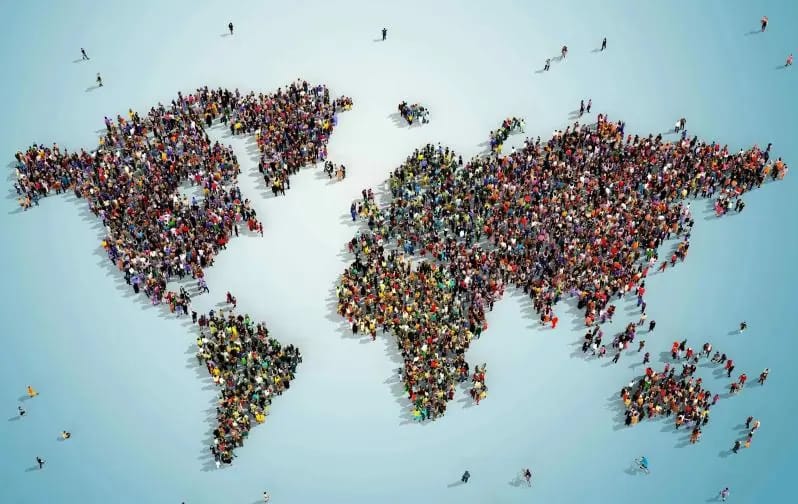
The world population has reached 8.2 billion people. Since it first surpassed one billion in 1804, the population has increased eightfold over the centuries. Since 2022, the world population has grown by more than 200 million. At the same time, populations in China and Brazil have decreased, while India and Nigeria contributed most to global growth.
According to UN data, India ranks first with a population of around 1.5 billion. From 2022 to 2025, the country’s population grew by about 53 million, while the average number of children per woman fell to 1.9. Life expectancy has exceeded 72 years, approximately 10 years more than in 2000.
China, with over 1.4 billion people, ranks second. Since 2022, China’s population has declined by 36 million. In 2023, India overtook China due to an aging population and record-low birth rates.
The United States ranks third in 2025 with a population of 347 million. Projections suggest that by 2050, Nigeria’s population could double due to its large youth population, surpassing the US. In Europe, demographic trends remain challenging. For instance, Italy’s population decreased by over one million in less than four years, and Greece’s by around 400,000. Both countries have some of the oldest average populations in the world — 48 and 47 years, respectively.





Comments
No comments yet. Be the first.