With the aim of increasing the cattle population in Turkmenistan and enhancing the efficiency of breeding work in the livestock sector, a new international project is being implemented.
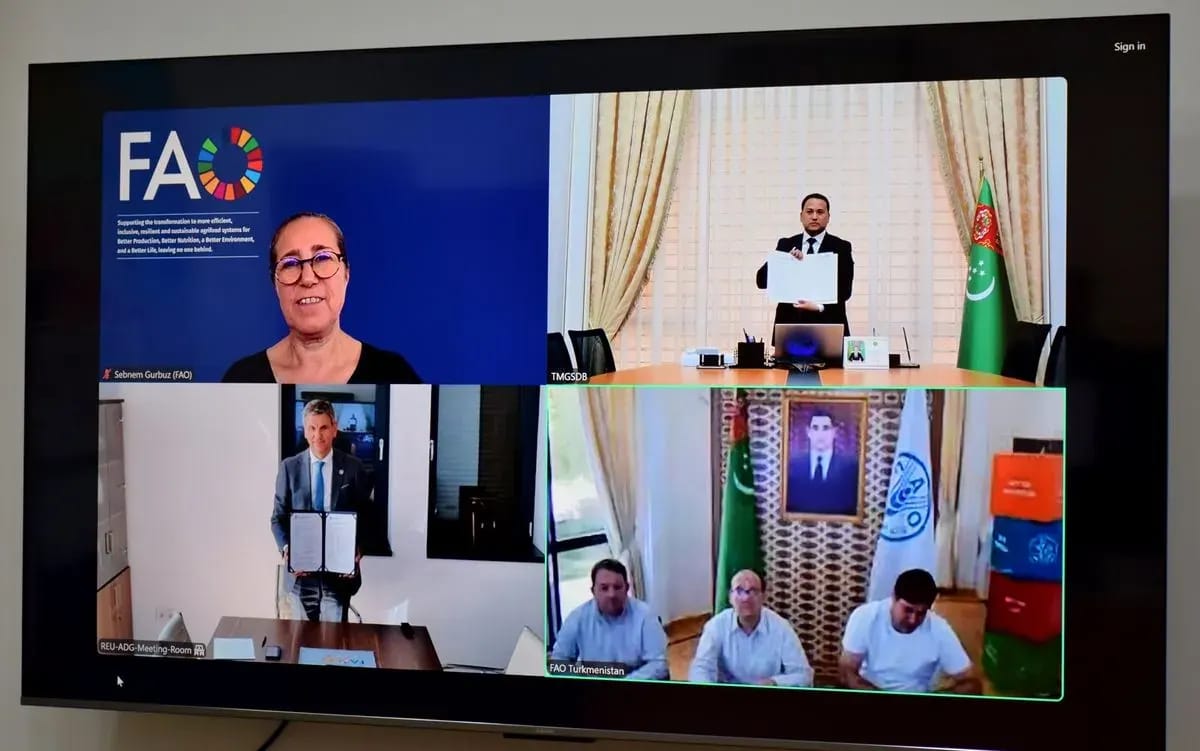
On September 1, an agreement on the respective joint project was signed in Ashgabat between the State Association of Livestock and Poultry Industry of Turkmenistan and the Food and Agriculture Organization of the United Nations (FAO). The event was held in an online format, marking the launch of the project titled "Improvement of Cattle Breeding and Artificial Insemination Services."
The document was signed on behalf of the Turkmen side by Gochmurat Atayev, Chairman of the State Association of Livestock and Poultry Industry, and on behalf of FAO by Viorel Gutu, FAO Assistant Director-General and Regional Representative for Europe and Central Asia.
The main objective of the project is to strengthen national capacities for increasing the cattle population on a breeding basis and improving the quality of artificial insemination services in Turkmenistan. The introduction of modern digital technologies into the livestock sector is also envisaged in this direction.
Within the framework of the project, it is planned to improve the legal framework for pedigree livestock breeding, enhance the technical capabilities of artificial insemination specialists and specialized laboratories. The modernization of relevant equipment is also foreseen.
The funding amount of the project is 180,000 US dollars, and it is scheduled for completion by 2028.
As a result of the project, a strategic roadmap for the development of breeding activities is expected to be prepared, along with the development of standard operating procedures and the creation of a national information system. In addition, plans include updating the national breeding catalog and drafting legal and regulatory proposals aimed at improving the genetic potential of animals.
The introduction of international best practices and modern technologies will help increase livestock productivity, strengthen food security, and contribute to the socio-economic development of rural areas.



Comments
No comments yet. Be the first.