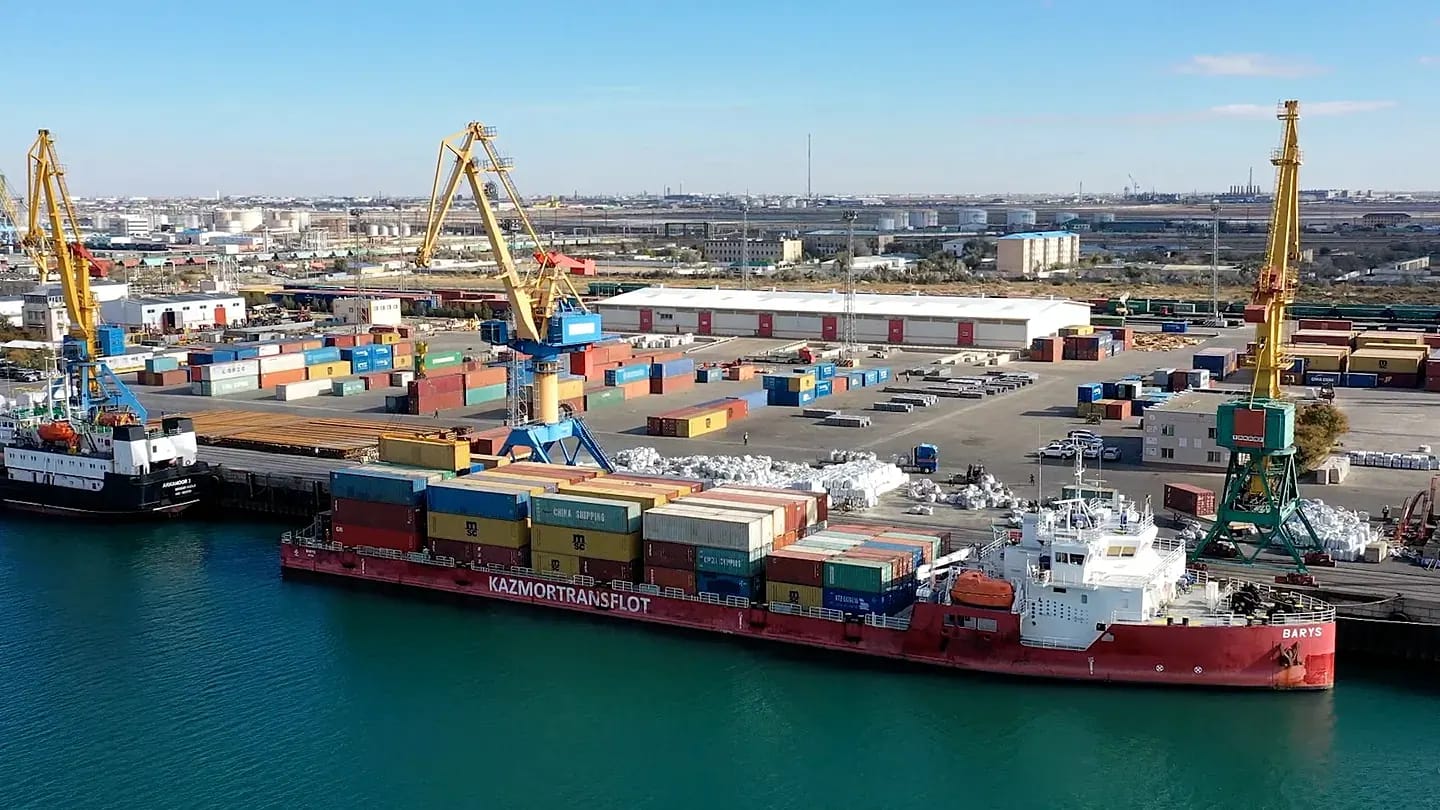
On 20 October 2026, an international online training session entitled “Smart Ports — A Sustainable Future: How Does Digitalisation Influence the Environmental Transformation of Ports?” was held במסגרת the Organization for Security and Co-operation in Europe (OSCE) project “Promoting the Development of Green Ports in the Caspian Sea Region.” Representatives of the State Service of Maritime and River Transport of Turkmenistan and the International Seaport of Turkmenbashi took part in the event.
The main objective of the training session was to exchange experience in improving the environmental sustainability of ports in the Caspian region, modernising transport and logistics infrastructure, and making effective use of digital technologies.
During the event, international experts from HPC Hamburg Port Consulting provided detailed information about modern solutions used in the world’s leading ports. Particular attention was paid to the role of digital technologies in improving port operations, reducing the impacts of climate change, and adapting to its consequences.
The experts highlighted ways to reduce harmful emissions by shortening the time ships spend waiting in ports, preventing excessive fuel consumption, and using energy resources efficiently. It was emphasised that such measures not only improve port operational efficiency but also contribute to environmental protection.
Innovative technologies used to monitor changes in climatic and natural conditions were also discussed during the training session. In particular, participants were introduced to digital systems that enable accurate measurements of water levels, wind speeds and temperatures, as well as technologies for modelling the potential impacts of extreme weather conditions.
The concluding part of the event focused on exchanging views on the possibilities of introducing an interconnected “Smart Port” ecosystem in the Caspian region, accelerating customs and trade procedures, and improving the practical effectiveness of digital solutions.
This international training session is important for advancing the digital transformation of ports in the Caspian region, creating infrastructure that meets environmental requirements, and implementing international best practices. Such initiatives can contribute to the modernisation of Turkmenistan’s transport and logistics system, improving the efficiency of port services, and developing sustainable transport connections across the region.




Comments
No comments yet. Be the first.