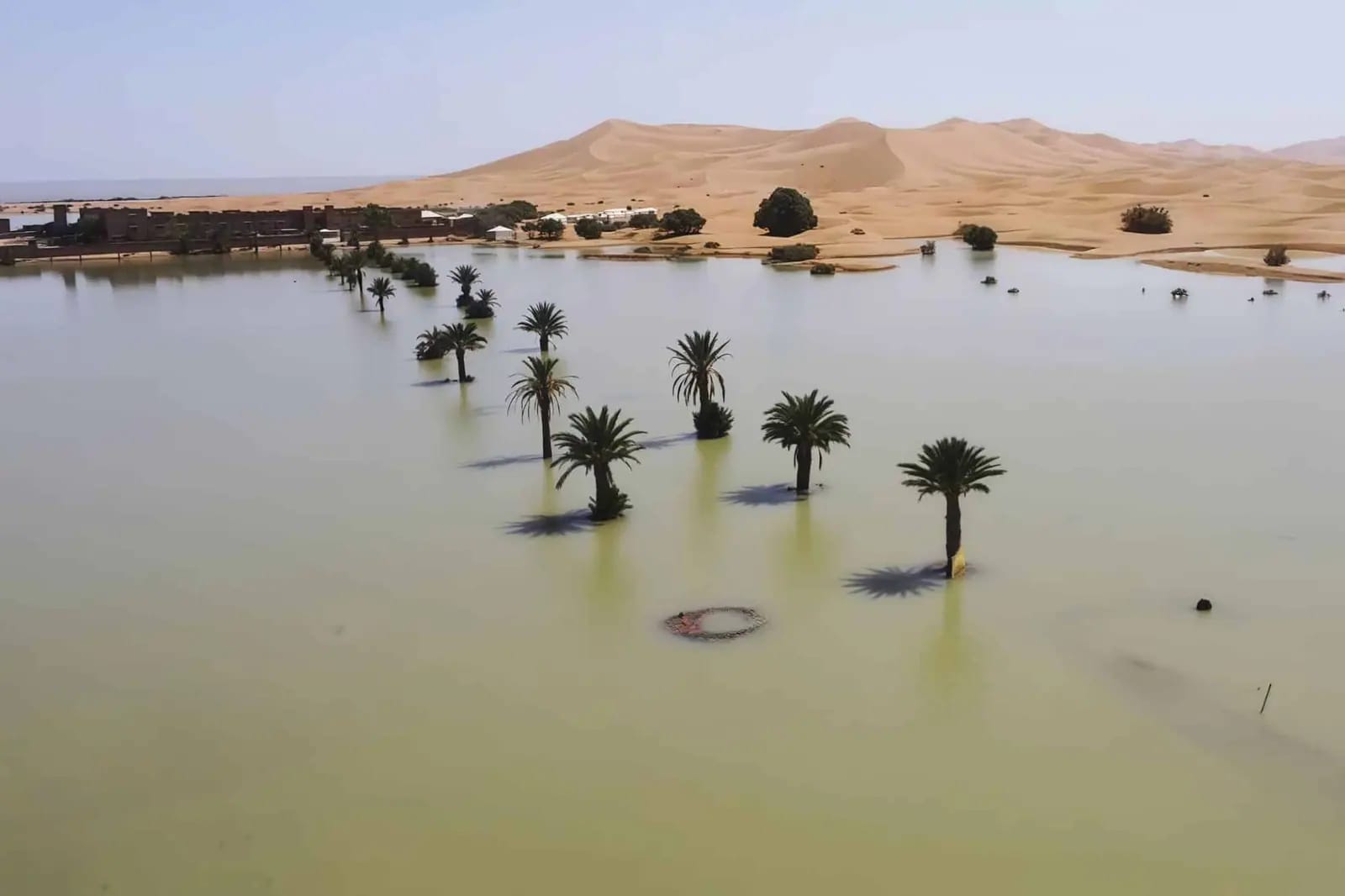
According to projections by climate researchers, rainfall in the Sahara Desert will increase by 75% in the second half of this century. However, this situation promises no positive outcomes for either Africa or the global level.
Normally, it rains no more than five times a year in the Sahara Desert, and in some regions, drought prevails for years. The rare rains in this area often occur in the form of short-lived and intense flash floods. Of course, this water does not come from local evaporation but is brought by winds from more humid regions. Although winds regularly blow toward the desert, they almost always encounter an insurmountable obstacle: descending air currents dominate over the Sahara, which, as they warm up, prevent the formation of rain clouds.
However, with global warming, rising surface temperatures weaken the air subsidence process, and the historical "cap" over the desert begins to lose its effect. At the same time, the temperature difference between the continents and the ocean increases: land heats up much more intensely than water. This means that winds will inevitably strengthen.


Comments
No comments yet. Be the first.