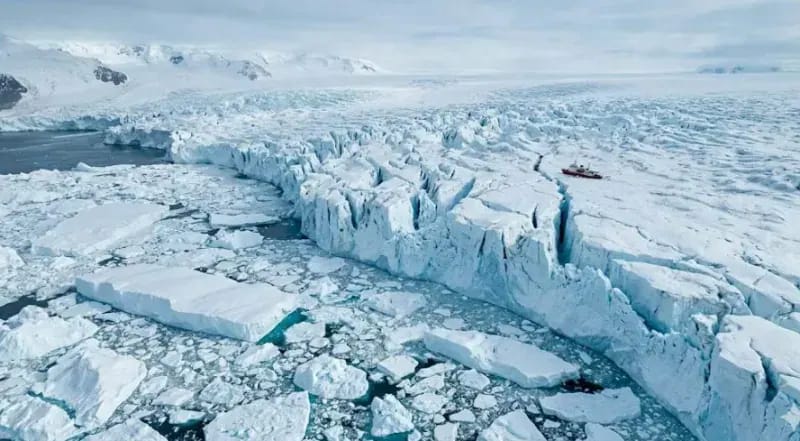
The Thwaites Glacier in Antarctica, often referred to as the “Doomsday Glacier”, is melting much faster than previously projected. New research suggests that its future contribution to rising global sea levels could be greater than earlier estimates indicated. The Khovar news agency reports this.
A study published in the scientific journal Nature Communications describes a new method that allows researchers to examine changes occurring beneath the glacier more accurately. According to the findings, the ice mass may be melting more actively than previously anticipated.
The study’s authors estimate that by 2100, melting of the Thwaites Glacier could contribute approximately three centimetres to global sea-level rise. This figure is twice as high as earlier estimates. Rising sea levels could, in turn, increase the risk of flooding in coastal areas.
Scientists also point out that measures to reduce greenhouse gas emissions may not be sufficient to prevent all the consequences of changes that are already underway. In their view, the glacier’s current condition will continue to affect sea-level rise in the years ahead.
The Thwaites Glacier is located in West Antarctica. Its condition is important for scientific monitoring and projections of future global sea levels. As a result, studying the rate at which it melts and assessing its potential consequences remain key areas of international scientific research.





Comments
No comments yet. Be the first.