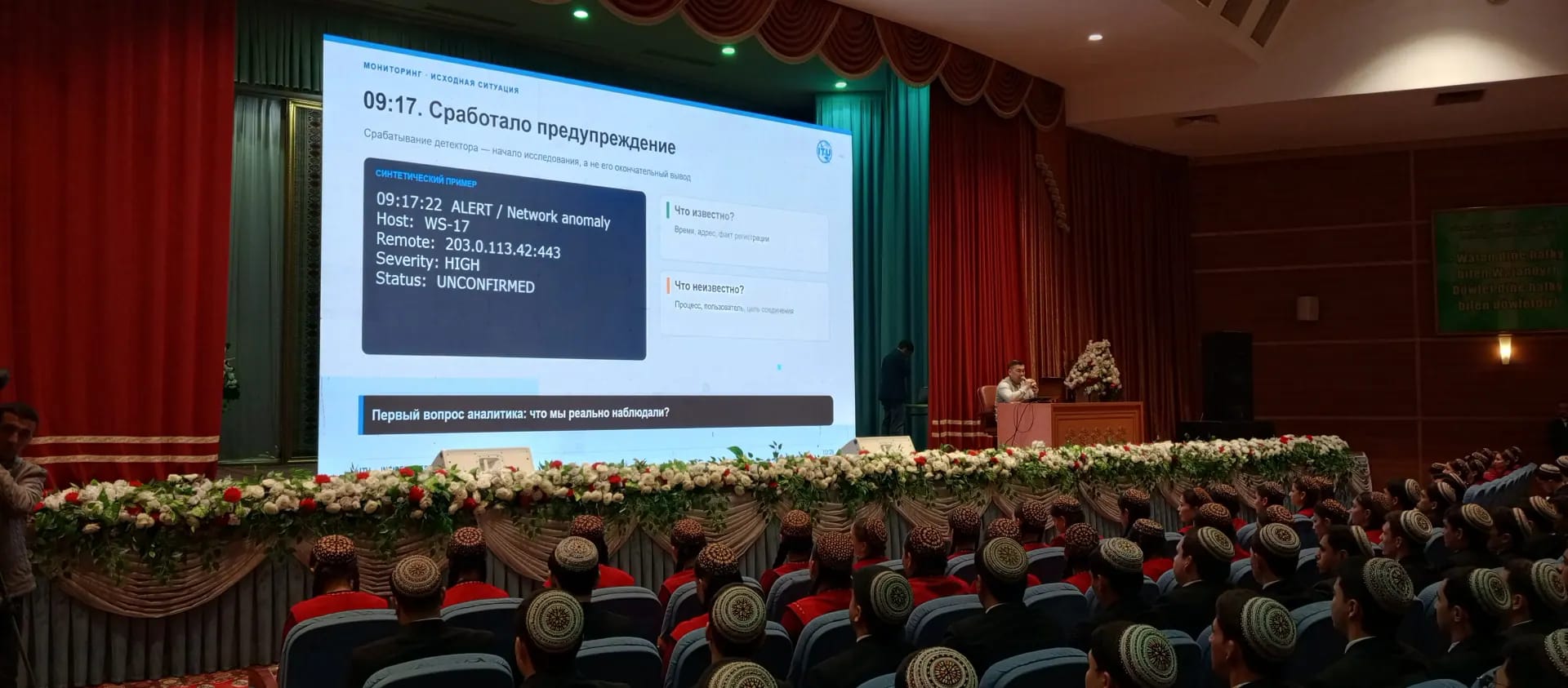
During the 19th International Exhibition and Scientific Conference Türkmentel – 2026, training sessions, seminars and discussions were organized for specialists from the transport and communications sector and civil servants. The events focused on cybersecurity, artificial intelligence and the digitalization of public administration. They were jointly organized by the Ministry of Communications of Turkmenistan, the International Telecommunication Union (ITU) and the United Nations Development Programme (UNDP).
Dialogue on Artificial Intelligence and Innovation
UNDP, in cooperation with the Ministry of Communications of Turkmenistan, held a dialogue entitled “Artificial Intelligence and Innovation – 2026: From Pilot Projects to Strategic Partnerships” at the Iş Nokady coworking centre in Ashgabat.
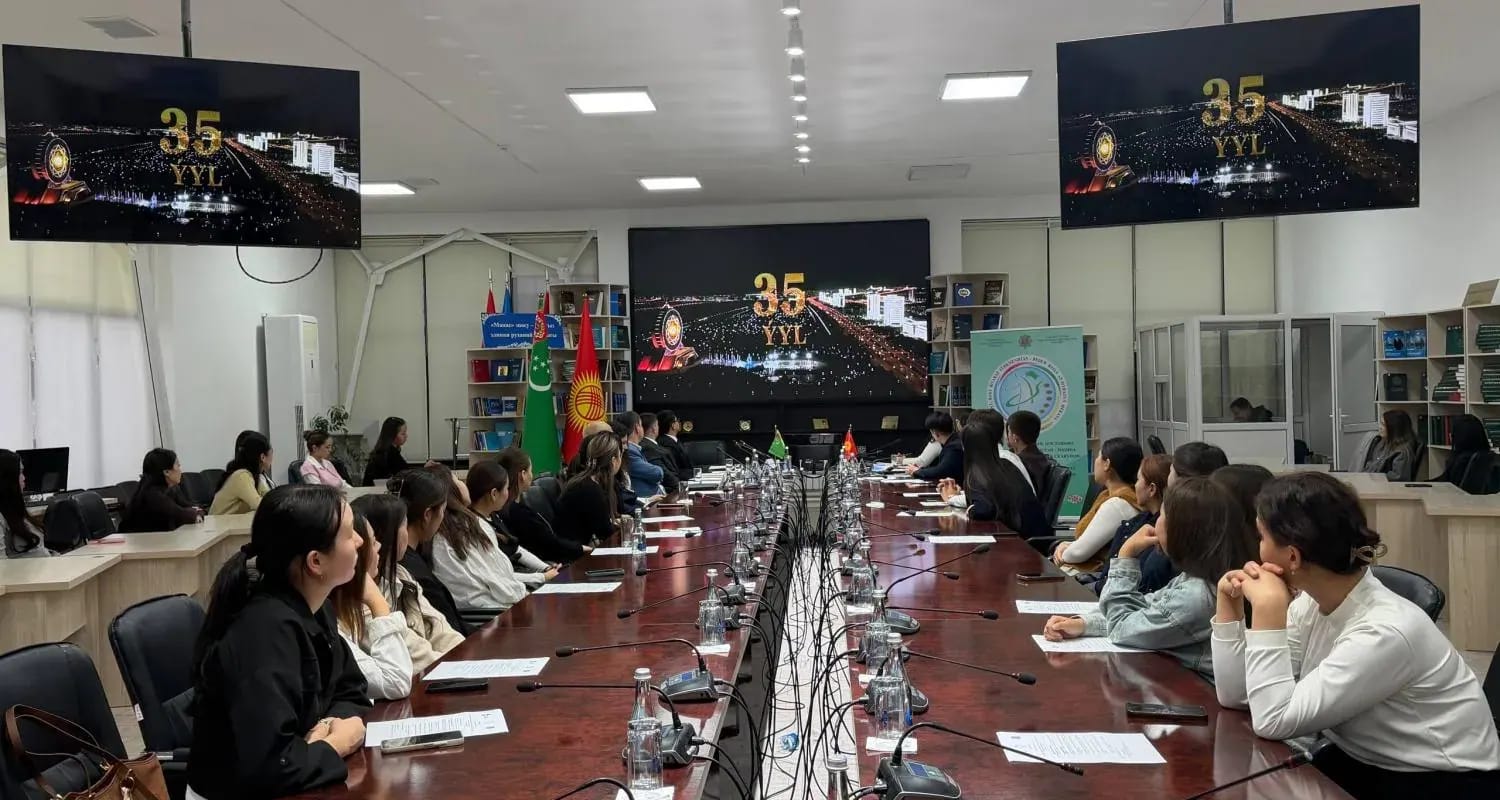
The event brought together representatives of government agencies, the private sector, international organizations, technology companies and the startup community. Participants from Central Asian countries and other regions discussed the opportunities and challenges involved in implementing artificial intelligence solutions, moving pilot projects into practical application, developing public-private partnerships and improving the startup ecosystem.
Particular attention was also given to attracting venture capital investment, developing innovation infrastructure and professional capacity, and strengthening cross-border cooperation. The programme included an exhibition of startup projects from Central Asia and panel discussions featuring representatives of technology companies, innovation centres and startups.
According to Narine Saakyan, UNDP Resident Representative in Turkmenistan, bringing together the efforts of government institutions, business communities and the innovation community is essential to making effective use of artificial intelligence. She noted that regional cooperation and the exchange of experience create conditions for innovative solutions to contribute to economic development and improvements in people's quality of life.
Training Seminar for Civil Servants
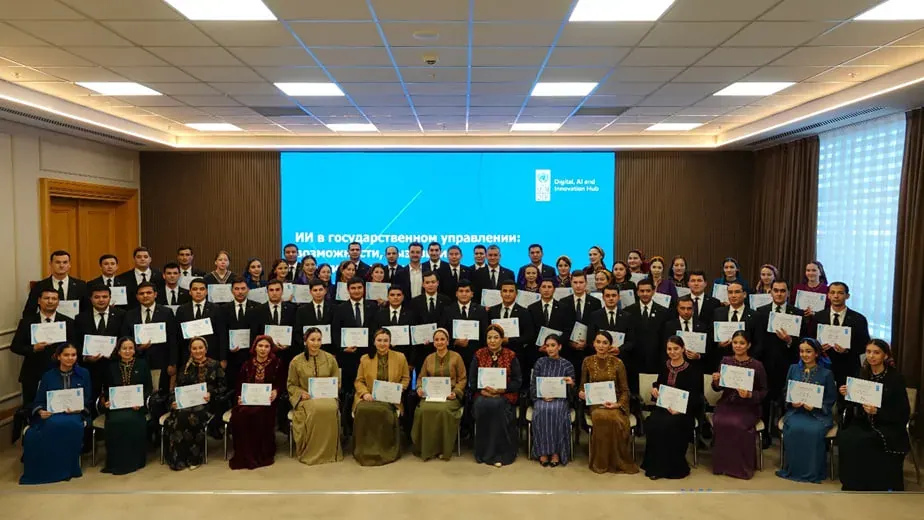
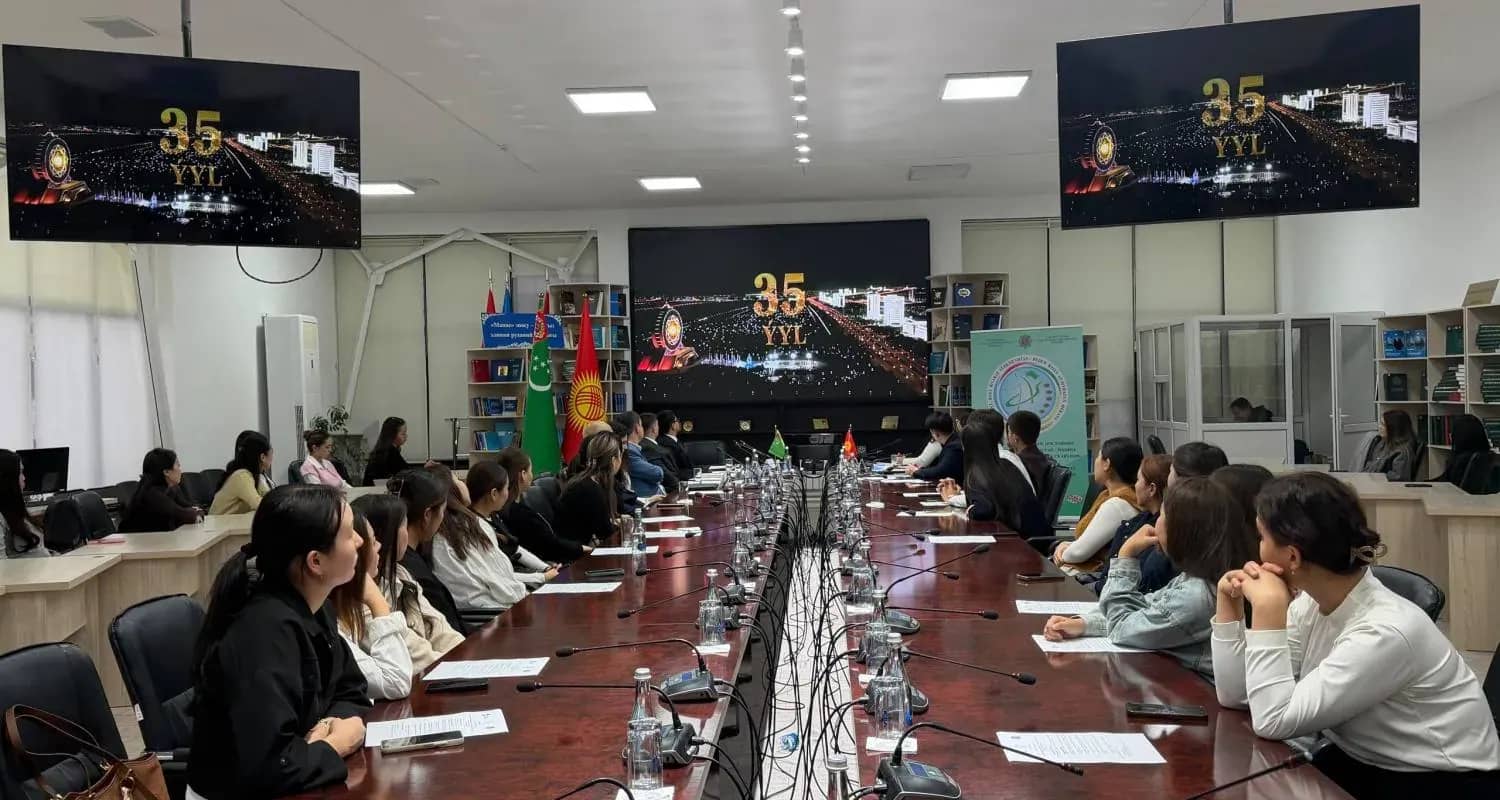
A training seminar for civil servants was also held through cooperation between the UNDP Office in Turkmenistan, the Ministry of Communications of Turkmenistan and the Academy of Civil Service under the President of Turkmenistan.
The seminar was attended by ministry representatives, as well as lecturers and students of the academy. During the training session, Alexander Gradecki, Head of UNDP’s global work on capacity development in artificial intelligence, shared his experience.
The seminar primarily aimed to strengthen the digital skills of civil servants, explore the role of artificial intelligence and innovative management in public administration, and improve their knowledge of preparing and making decisions with the help of digital tools.
The training programme covered the strategic foundations of digital public administration, the digital government ecosystem, secure data exchange, relevant legal regulations, and the use of new technologies and artificial intelligence in the civil service.
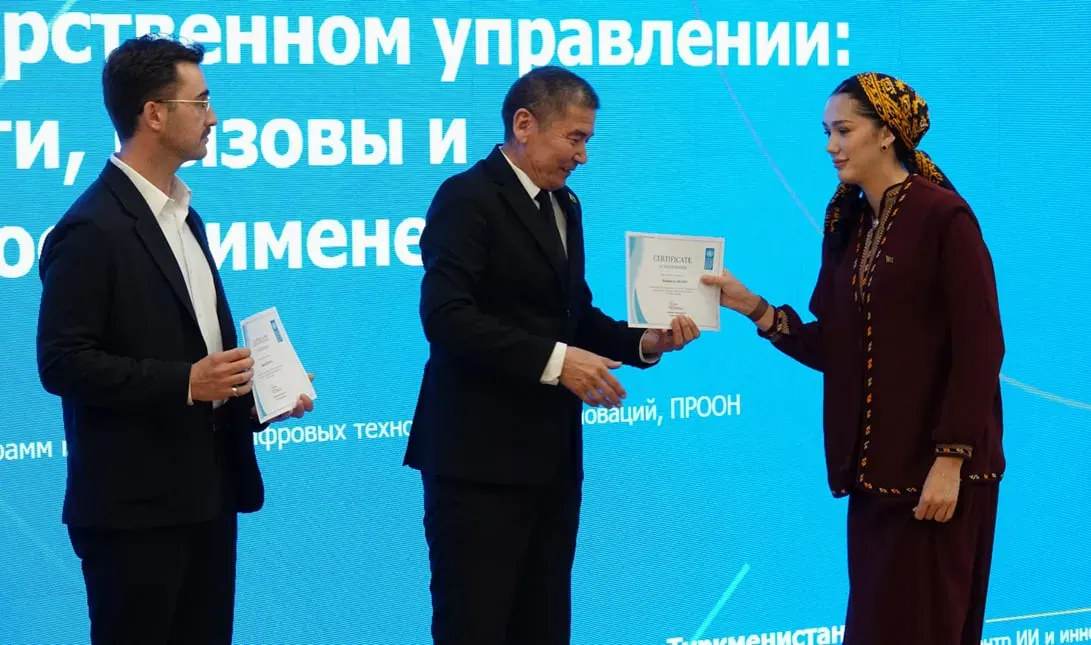
Attention was also given to the importance of improving the legal literacy of civil servants amid digital transformation. Alongside theoretical learning, participants completed practical assignments and analysed various scenarios. At the end of the training, participants received certificates confirming the knowledge and skills they had acquired.
Cybersecurity Training for Digital Systems Engineers
A training session entitled “Cybersecurity for Digital Systems Engineers: Networks, Infrastructure and Incident Response” was held at the International University of Telecommunications and Informatics of Turkmenistan. It was organized by the Ministry of Communications of Turkmenistan and the International Telecommunication Union.
The training was designed for engineers responsible for the operation of digital systems and network infrastructure. Participants studied methods of protecting information systems and infrastructure, as well as the measures to be taken when information security incidents occur.
The organization of these training activities is an important part of ongoing efforts not only to introduce digital technologies but also to ensure information security and develop the relevant skills of civil servants and industry specialists.




Comments
No comments yet. Be the first.