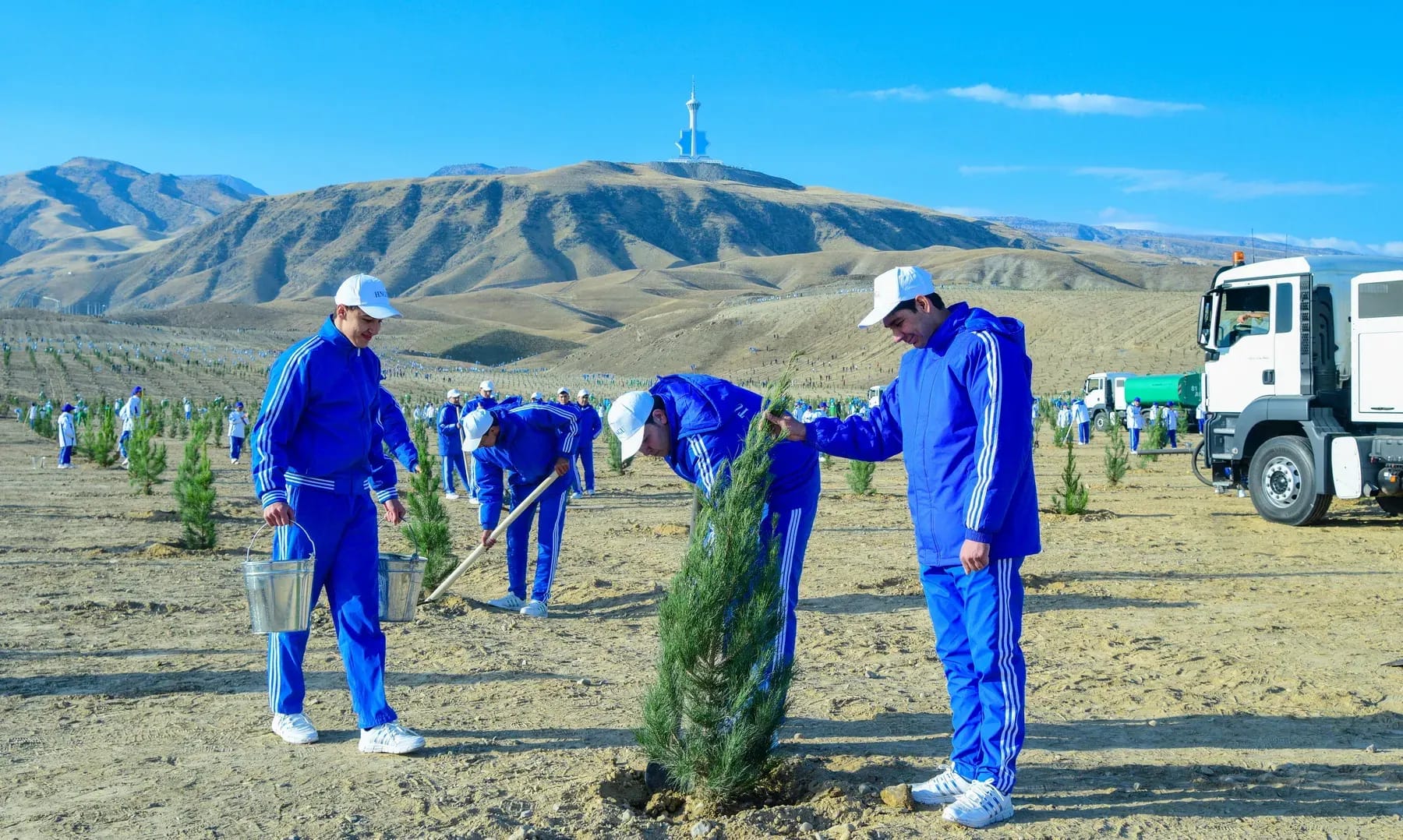
Preparations have begun in Turkmenistan for the traditional autumn tree-planting season held in November. Specialists from the Ministry of Environmental Protection are examining the condition of forest belts established in previous years, assessing tree growth, and drawing up plans for planting new saplings.
The work is being carried out under the National Forest Programme, which covers the period through 2030. Mass tree-planting campaigns have been held regularly in the country since 1998.
This year, particular attention will be given to deciduous trees, including fruit trees and grapevines. The planting of mountain species is also planned, including Turkmen juniper, true pistachio, almond, Caucasian hackberry, and southern hackberry.
The main planting activities will take place on the outskirts of cities and in foothill areas, within the protected zones of nature reserves, as well as in desert and steppe areas, oases, and along riverbanks.
According to specialists, the establishment of forest belts helps combat desertification, conserve soil and moisture, prevent mudflows, and protect biodiversity.
All saplings intended for planting are grown domestically. Large nurseries are located in the Sarahs, Tejen, and Baharly districts of Ahal Region. These facilities use container-based growing technology, which reduces the risk of root damage when saplings are transplanted.
Scientific support for tree planting and forest-belt development is provided by the National Institute of Deserts, Flora and Fauna. Scientists have developed recommendations on selecting tree species and preparing saplings for planting. Satellite imagery is also used to assess the condition of ecosystems.






Comments
No comments yet. Be the first.