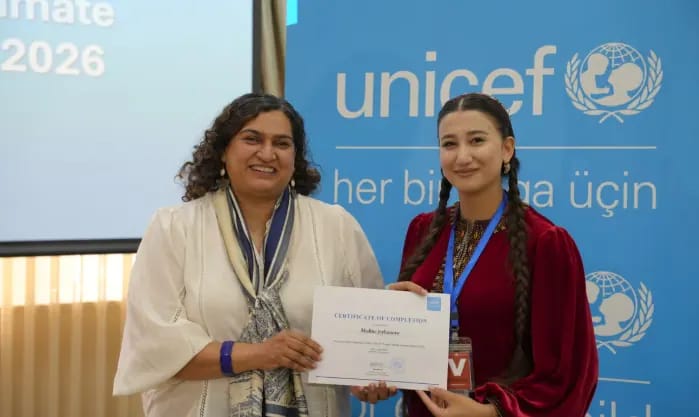
Young people from various regions of Turkmenistan are actively participating in educational and practical events aimed at contributing to the solution of climate change issues and promoting the principles of sustainable development.
The United Nations Children's Fund (UNICEF), in cooperation with the Ministry of Education of Turkmenistan, has concluded the second youth summer school on climate change. This event was organized within the framework of the joint work plan for 2026.
The summer school brought together 33 young participants from all velayats of Turkmenistan and the city of Ashgabat. During the training sessions, participants not only expanded their knowledge on climate change, environmental protection, and sustainable development, but also acquired various practical skills.
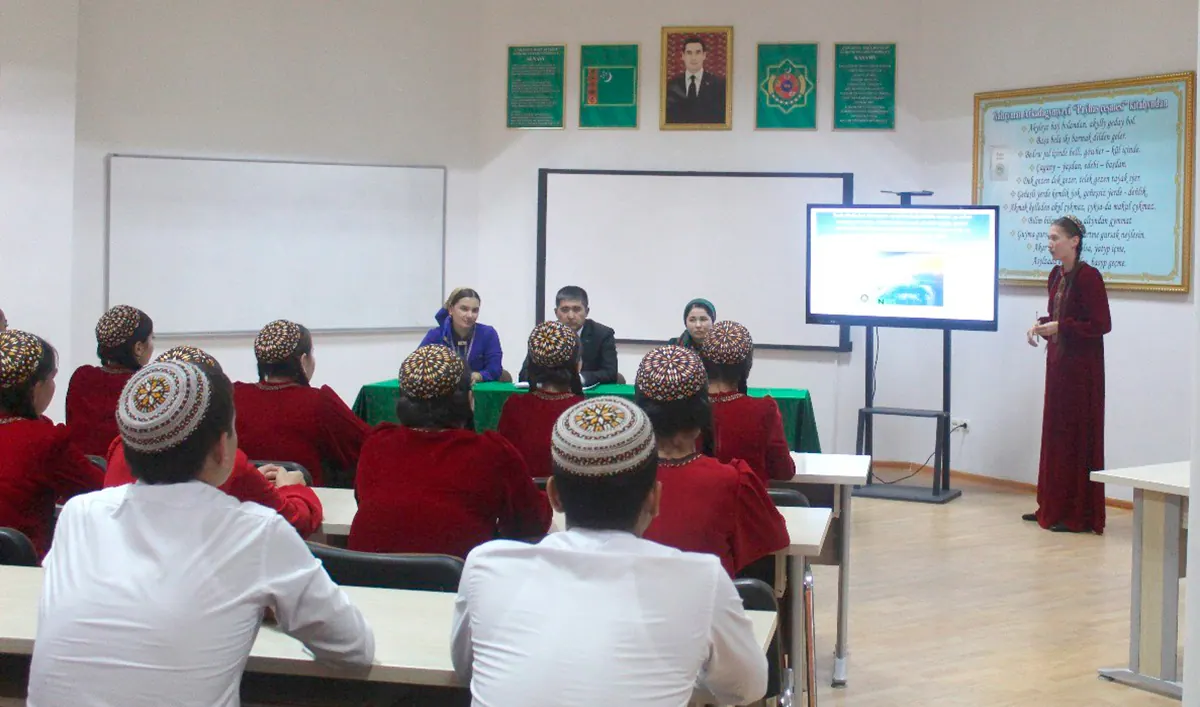
As part of the program, the youth attended specialized training sessions and worked on solving team assignments. Additionally, to familiarize themselves with the importance of natural resource conservation and environmentally responsible production, they visited the Kopetdag State Nature Reserve and the "Tudana" private enterprise.
One of the main outcomes of the summer school was the drafting of the National Youth Statement by the youth to be presented on behalf of Turkmenistan at the 31st UN Climate Change Conference (COP31) in 2026. The prepared document is expected to be submitted in the future to YOUNGO, the official youth constituency of the United Nations Framework Convention on Climate Change.
This initiative is a continuation of the first youth summer school held in 2025. Graduates of the previous educational program have also participated in international environmental events, speaking as representatives of Turkmenistan's youth at the Regional Ecological Summit in Kazakhstan in April 2026.
The Youth Summer School on Climate Change was established in 2025 in cooperation between UNICEF and the Ministry of Education of Turkmenistan. The program enables young people aged 16 to 25 to improve their ecological literacy, take the initiative in climate change issues, and participate in projects aimed at sustainable development.
Such educational initiatives are of vital importance in increasing youth interest in environmental issues, supporting their public initiatives, and expanding their participation in international efforts to combat climate change.



Comments
No comments yet. Be the first.