Society
Architectural Miracle of the 12th Century: Gyzlar Bibi and Astanababa Mausoleums
April 23, 2026 11:22 • UTC+5 (Ashgabat) • 9 views
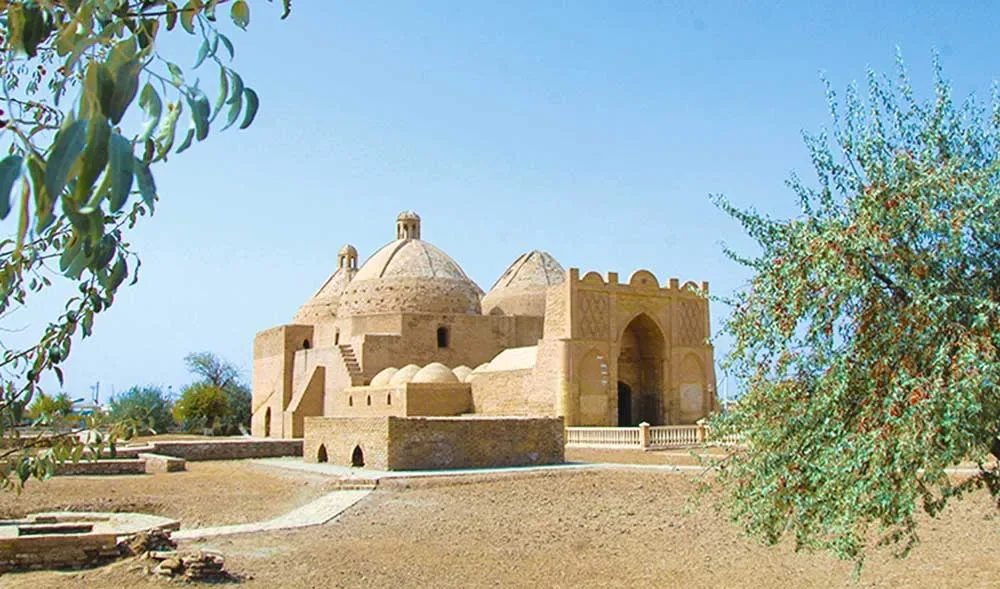
The Astanababa (Gyzlar Bibi) mausoleum, dating back to the 12th century, is an important architectural monument of Turkmenistan. It represents a unique example of medieval architecture and spiritual heritage.
The Astanababa monument, dating back to the 12th century, is one of the sacred sites that holds a unique place in the architectural history of Turkmenistan, constantly attracting the attention of tourists and scholars. Among the people, this building is also known as "Astanababa," "Gyzlar Bibi's Mausoleum," or the "Four-Domed Shrine."
According to folk legends, Zubeýda, the only daughter of the ruler of Balkh, Ibn Aly Nur, got married on the banks of the Amu Darya River but passed away shortly after. All the king's attempts to build a magnificent structure in memory of his daughter ended in failure—the building collapsed every time it was constructed.
Finally, an old man appeared in the king's dream and advised him to make the mortar for the mausoleum using sand brought from Mecca and water mixed with that sand. Thus, the building constructed with this sacred clay became durable. Later, the king himself was buried here, next to his daughter.
Architectural Features This monument, studied in 1948 by the famous scholar Professor G.A. Pugachenkova, consists of a combination of several rooms built during different periods rather than a single structure:
- The oldest part: A mosque built in the 12th century during the Seljuk period.
- Khan's Divankhana (Reception Hall): A room built at the same time as the mosque.
- Gyzlar Bibi Mausoleum: A much later construction part dating back to the 19th century.
- Decoration: The building's prominent portal is decorated with Arabic calligraphy in Kufic and Naskh scripts, as well as unique geometric patterns.
Currently, the Astanababa monument is included in the list of state-protected assets. It is under the administration of the historical-cultural reserve in the city of Kerki and holds great importance in studying the architectural art of the past, the spiritual world, and the historical roots of our people. The Astanababa monument is considered one of the most perfect and fascinating examples of medieval architecture within the territory of Turkmenistan.