Education
Turkmenistan and Kazakhstan Strengthen Strategic Partnership in Higher Education
April 26, 2026 10:52 • UTC+5 (Ashgabat) • 7 views
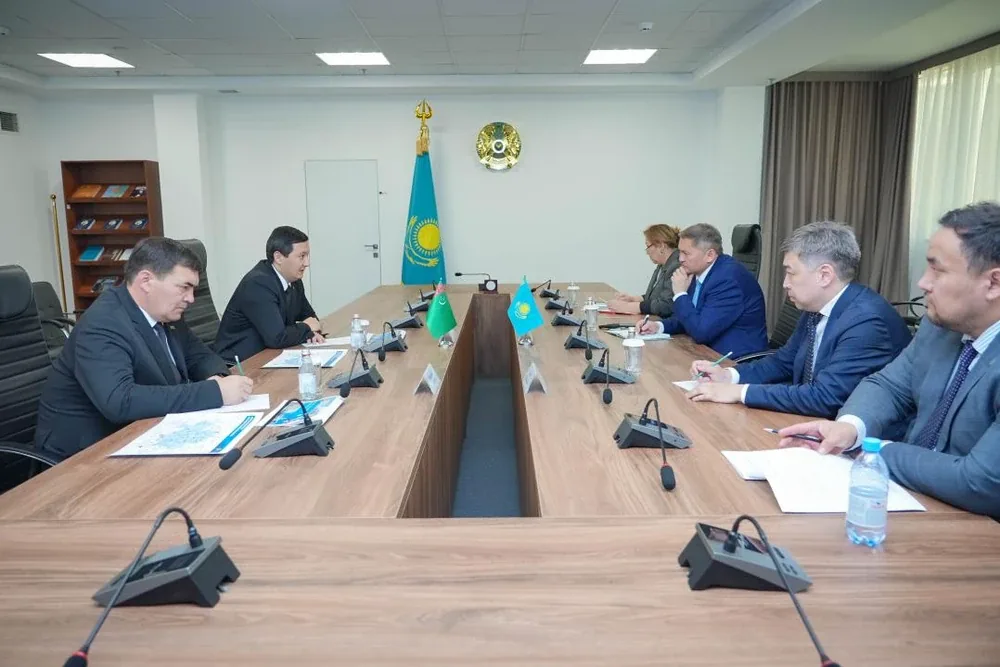
Turkmenistan and Kazakhstan are strengthening strategic cooperation in higher education. The meeting focused on digitalization, academic mobility, and the implementation of the 2026–2052 education development strategy.
A significant meeting was held in the capital of the Republic of Kazakhstan between the Deputy Minister of Education of Turkmenistan, Azat Atayew, and the Minister of Science and Higher Education of Kazakhstan, Sayasat Nurbek. The main objective of the talks was to bring bilateral practical cooperation in higher education and science to new heights.
During the meeting, the Turkmen side provided detailed information on the implementation of the Strategy for the Development of Higher Education in Turkmenistan for 2026–2052, approved by the Head of State. Specifically, the following issues were discussed:
- Forecasting promising areas of professional specialization;
- Harmonizing the education system with changes in the labor market;
- Implementing analytical systems based on demographic dynamics and promising areas of economic growth.
The Kazakh side shared its experience in managing the higher education system and ensuring the quality of education. Particular attention during the talks was paid to the work of Kazakhstan's National Testing Center in collaboration with the international organization ETS (Educational Testing Service) to assess the quality of education.
The importance of systematic coordination regarding the education of Turkmen citizens in Kazakhstan's universities, academic mobility, and the professional development of graduates was also emphasized.
In line with modern requirements, the parties identified promising areas of cooperation for the digitalization of the higher education system and the integration of Artificial Intelligence (AI) technologies into the learning process. Views were exchanged on sharing expertise and implementing joint projects in this field.
As a result of the meeting, the parties reached an agreement on:
- Creating sustainable interaction mechanisms in higher education and science;
- Developing a joint working mechanism in areas of mutual interest.
This meeting is clear evidence that the relations between the two neighboring states in the scientific and educational fields are rising to a qualitatively new level, with concrete plans for the coming decades.