Politics
Turkmenistan and ESCAP Discuss New Stages of Sustainable Development
April 24, 2026 17:43 • UTC+5 (Ashgabat) • 8 views
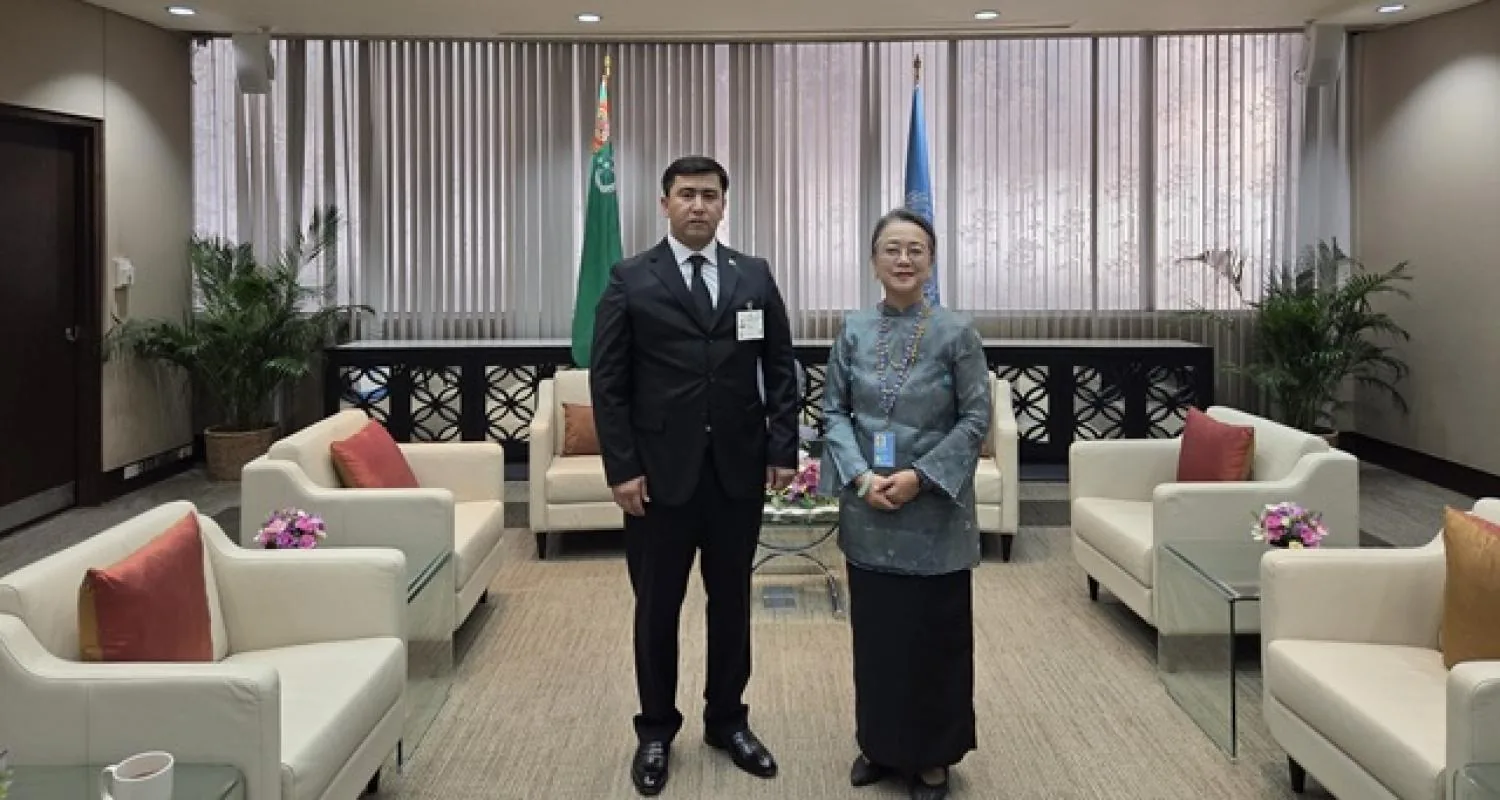
A high-level meeting between Turkmenistan and ESCAP was held in Bangkok. The parties discussed sustainable development, logistics, and regional cooperation.
Within the framework of the 82nd session of the UN Economic and Social Commission for Asia and the Pacific (UNESCAP) held in Bangkok, a high-level meeting took place between the delegation of Turkmenistan and the Executive Secretary of ESCAP, Armida Salsiah Alisjahbana.
The Turkmen delegation, led by the Deputy Minister of Finance and Economy Perhat Yagshyyev, discussed the most crucial directions of regional cooperation.
During the meeting, high praise was given to Turkmenistan’s achievements in implementing the Sustainable Development Goals (SDGs). Specifically:
- The effectiveness of the Voluntary National Reviews presented in 2019 and 2023 was highlighted.
- ESCAP's readiness to provide support for the preparation of the third Voluntary National Review, planned for 2027, was confirmed.
The parties emphasized the importance of coordinated actions in the transport and logistics sector. Key platforms for cooperation were identified as:
- Creating modern transit corridors and ensuring the "energy transition" within the framework of the 2030 Agenda.
- Simplifying trade procedures through the exchange of regional expertise.
- Implementing major projects aimed at expanding Turkmenistan’s transit potential.
During the meeting, special significance was attached to the initiative of the President of Turkmenistan to establish a Regional Center for Combating Desertification for Central Asian countries in Ashgabat as a specialized institution of ESCAP.
Ms. Armida Salsiah Alisjahbana highly appreciated Turkmenistan's activity in the international arena, including high-level UN conferences held in Avaza. It was also noted that the Executive Secretary's visit to Ashgabat in December 2025 on the occasion of the 30th anniversary of Turkmenistan’s Neutrality gave a new impetus to bilateral relations.