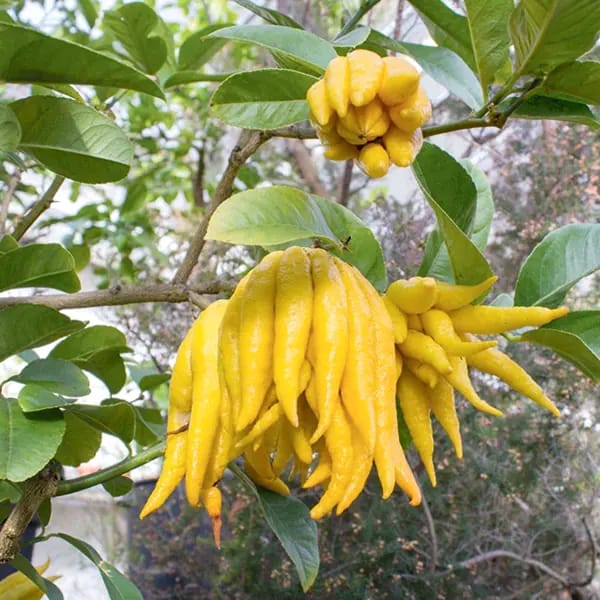
The list of fascinating fruits continues. The bushukan fruit, grown in Japan, China, and the northeastern region of India, amazes everyone with its octopus-like appearance. This fruit, which has long finger-like protrusions, is scientifically named "Citrus medica var. sarcodactylis."
Native to Southeast Asia, this fruit is commonly known as "Buddha’s Hand." The length of the fruit reaches 15–30 centimeters, and its weight is up to 450 grams. According to historical data, this unique fruit was brought to Rome in the year 300. Experts believe that during that period, this octopus-like fruit was the most expensive fruit available. Unlike other citrus fruits, the bushukan has no pulp or juice, and the inner part is not bitter. This means the fruit can be eaten in its entirety. This fragrant fruit is eaten raw and is also used in perfume making, medicine, and cooking. Famous sweets, desserts, drinks, and marmalades are prepared from this fruit. In Asian countries, the "Buddha’s Hand" fruit is a symbol of wishing happiness and long life and is given as a gift. Reportedly, in Ancient China, people used the peel of this fruit as a fragrance and placed it between washed clothes.
Currently, farmers in East Asia distinguish six varieties of this fruit. It grows on a shrub-like tree similar to a lemon tree with yellow fruits. This tree, which produces white flowers, thrives in warm and humid climates. The exotic fruit ripens in late autumn or early winter. Available in markets during winter and spring, the bushukan fingers appear as if they are opening up.




Comments
No comments yet. Be the first.