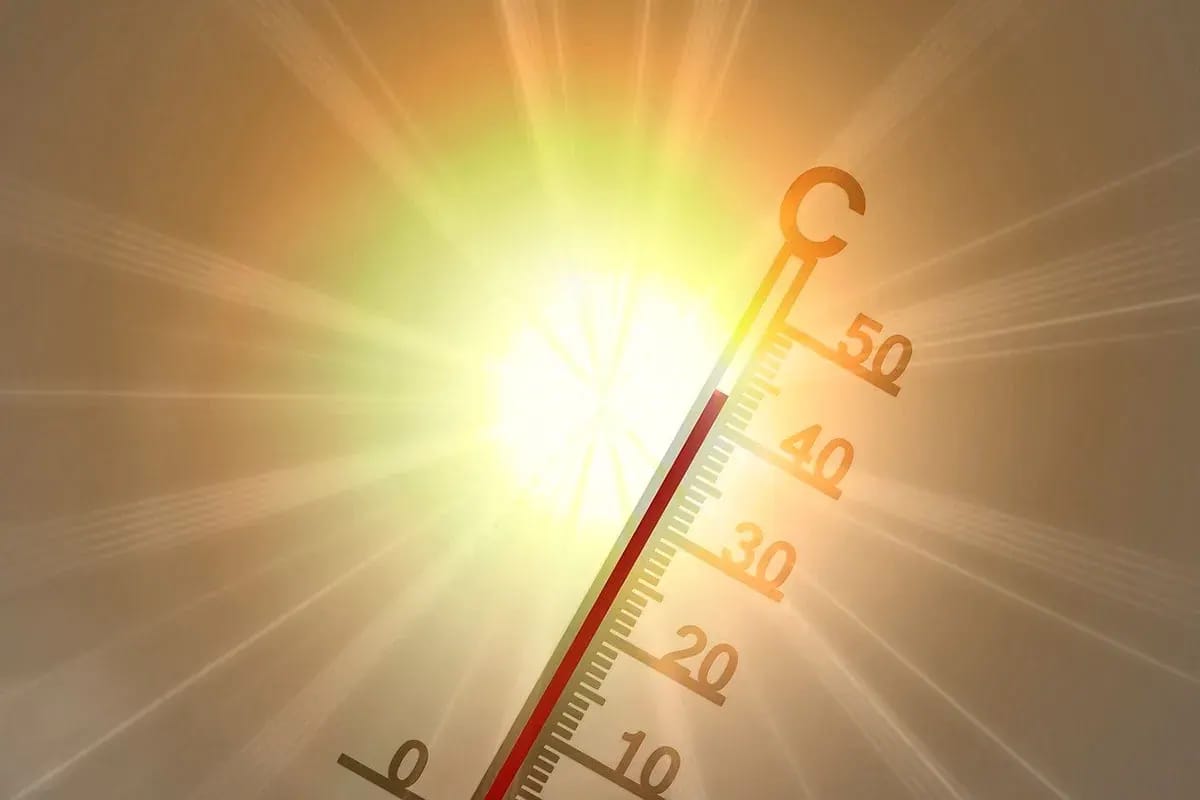
Ongoing extreme heat across various regions of the globe is setting new temperature records. In countries throughout Europe, North America, the Middle East, and East Asia, red alerts have been issued in connection with rising temperatures, while authorities urge populations to follow safety measures.
In Italy, the Ministry of Health issued its highest red-level heat alert in 25 out of the country's 27 largest cities. Across much of the country, air temperatures approached 40 degrees, and forecasters predict the heat wave will persist at least until the end of the week. The public is advised to avoid staying outdoors for extended periods during the hottest hours of the day.
In the United Kingdom, a record-breaking figure related to drought was recorded. According to preliminary data from the national meteorological service, July rainfall reached only 35 percent of the long-term average. Southern England recorded its driest July since 1836.
In the western US states—including California, Arizona, Nevada, and Utah—extreme heat warnings remain in effect. In Las Vegas, air temperatures reached 46 degrees Celsius, marking the highest reading of the year.
Egypt is also bracing for a new heat wave. According to forecasts, temperatures in the Nile Delta and Greater Cairo area could reach 41–44 degrees, while southern parts of the country may exceed 45 degrees.
In East Asia, South Korea issued its highest-level extreme heat alert for the capital city of Seoul and several regions. In Yangsan, located in the country's southeast, temperatures hit 42.5 degrees Celsius, the highest recorded temperature since observations began in 1904. Furthermore, air temperatures in Yangsan remained above 40 degrees for five consecutive days.
In Japan, temperatures exceeding 40 degrees were also recorded on Kyushu Island. Dazaifu city in Fukuoka Prefecture registered 40.2 degrees, while Saga city recorded 40.1 degrees. This marks the first time in recent years that such a prolonged period of intense heat has lasted this long in the country.
According to World Meteorological Organization (WMO) data, extreme heat is one of the most hazardous natural phenomena. The organization notes that its frequency and intensity are increasing in connection with climate change.
According to experts, many countries are stepping up measures to adapt cities to extreme heat conditions, such as expanding green spaces, increasing shaded areas, and developing cooling systems in public buildings. Nevertheless, heat waves are expected to recur more frequently in the coming decades, requiring adaptation to these new conditions.






Comments
No comments yet. Be the first.