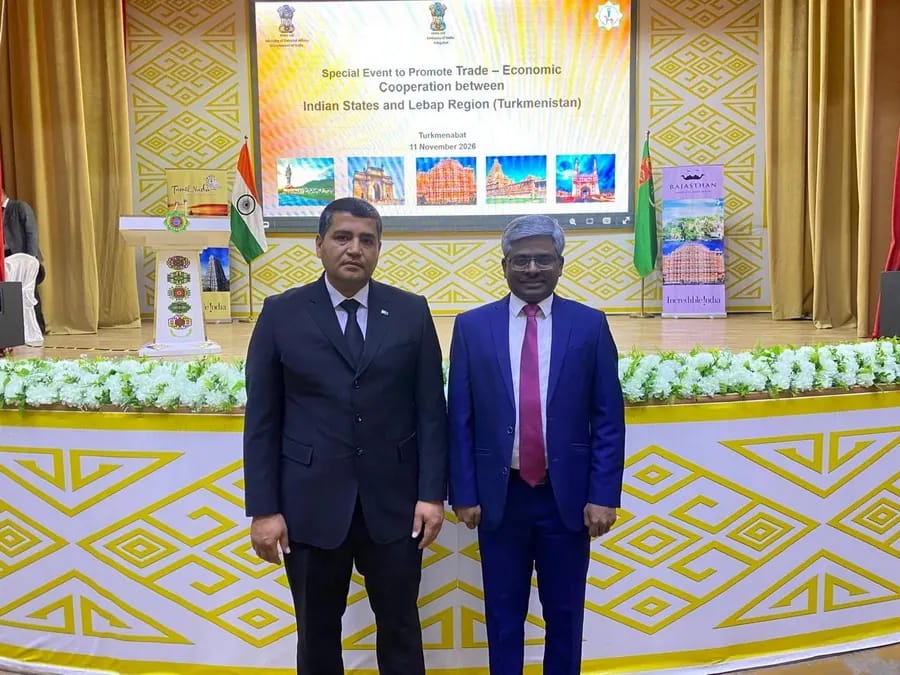
India is putting forward initiatives to develop trade and economic relations with Turkmenistan’s Lebap region and identify new areas of cooperation. To this end, India’s Ambassador Extraordinary and Plenipotentiary to Turkmenistan, Bandaru Wilsonbabu, visited the city of Turkmenabat, where he met with Sabirjan Ibragimov, Chairman of the Lebap Regional Union of Industrialists and Entrepreneurs. This was reported by Trend.az.
The meeting discussed opportunities to develop trade and economic ties between Lebap region and the Indian states of Rajasthan, Gujarat, Maharashtra, Tamil Nadu and Telangana. According to the Embassy of India in Turkmenistan, the visit was aimed at strengthening the friendly relations between the two countries and expanding mutually beneficial cooperation.
Lebap region has considerable potential in the industrial and agricultural sectors, creating favourable conditions for cooperation with Indian companies in areas such as manufacturing, mineral resource processing, energy, agriculture and the textile industry.
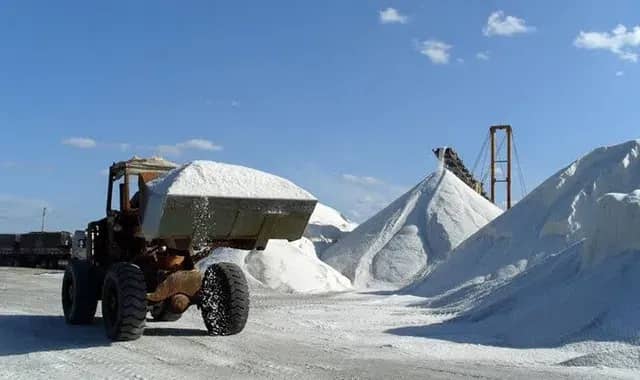
The Seydi Oil Refinery, gas-processing enterprises and the Galkynysh mining complex operate in the region. The chemical industry is also developing in Turkmenabat. In this regard, the experience of the Indian states of Gujarat and Maharashtra in petrochemicals, chemical production, mineral fertiliser manufacturing, mechanical engineering and industrial equipment production could be of particular relevance to Lebap region. Cooperation in these fields could help modernise local production facilities and expand the processing of mineral raw materials.
Agriculture and the textile industry are also regarded as promising areas for cooperation. Cotton, wheat, rice, vegetables and melons are cultivated in Lebap region. The development of these sectors is closely linked to the introduction of modern agricultural machinery, irrigation systems, and technologies for storing and processing agricultural products.
The Indian states of Rajasthan, Telangana and Maharashtra have experience in agricultural technologies and food processing. Tamil Nadu, meanwhile, is one of the country’s major centres for the textile and garment industries. Its expertise in yarn production, textile manufacturing and the production of equipment for the textile sector could prove valuable in developing Lebap region’s cotton-processing and textile industries. Gujarat and Maharashtra also have significant production capacities in the textile sector.
India’s economic relations with Turkmenistan’s regions are not limited to Lebap region. In February 2026, India’s Ambassador to Turkmenistan, Bandaru Wilsonbabu, also visited Mary region. During that visit, an event was held to promote trade and economic relations between Mary region and the Indian states of Andhra Pradesh, Gujarat, Madhya Pradesh, Maharashtra and Rajasthan.
As noted, Gujarat, Maharashtra and Rajasthan are involved in initiatives to develop cooperation with both Mary and Lebap regions. The other Indian states involved in activities with the two regions differ.
These initiatives demonstrate India’s interest in establishing direct business ties with different regions of Turkmenistan, taking into account their industrial and trade potential.


Comments
No comments yet. Be the first.