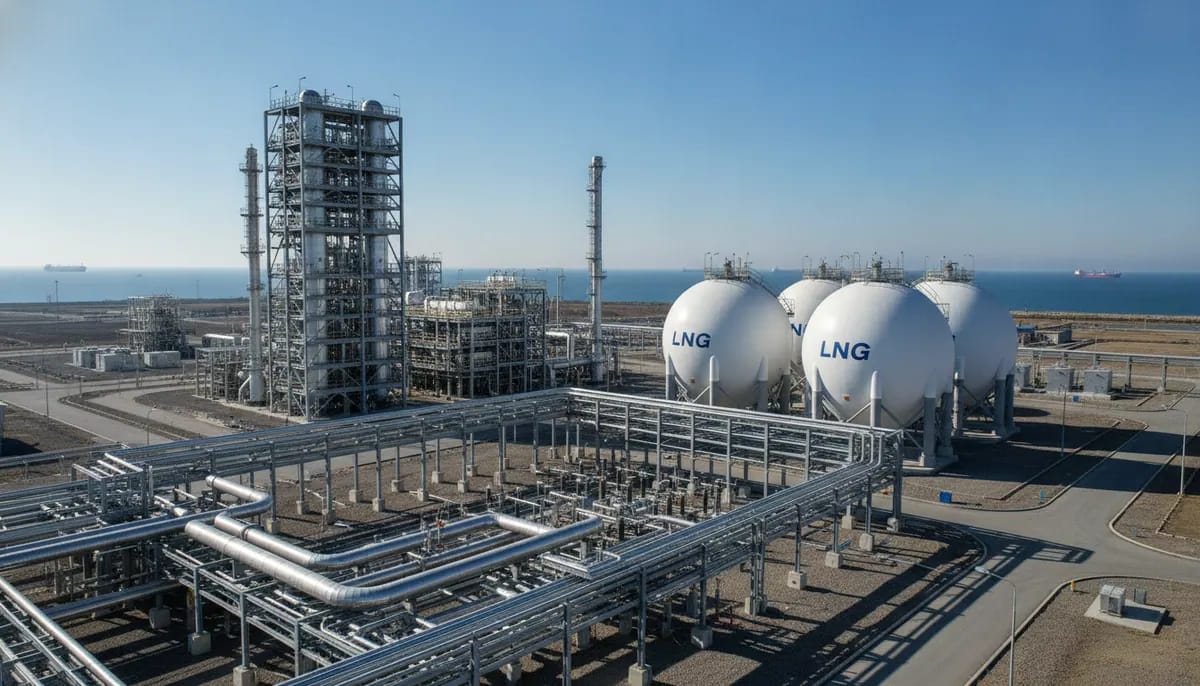
The expansion of the global liquefied natural gas (LNG) market is increasing demand for gas pipelines and storage facilities. According to expert forecasts, alongside the growth of export capacity, developing new supply infrastructure is also becoming increasingly important.
According to a forecast by S&P Global Energy CERA, daily natural gas demand from LNG production facilities along the U.S. Gulf Coast could reach approximately 35 billion cubic feet in 2031. This figure is more than double the level recorded in 2025.
According to Platts, industry experts are highlighting the possibility that the construction of new gas pipelines and storage facilities may lag behind the pace of demand growth. Therefore, alongside expanding LNG production, additional infrastructure is needed to transport gas to production facilities and store it when necessary.
According to a separate forecast published by the U.S. Energy Information Administration (EIA) on October 6, 2026, U.S. LNG exports, expressed in gaseous equivalent, could increase from 17.6 billion cubic feet per day in 2026 to 18.6 billion cubic feet per day in 2027. These figures represent the gaseous equivalent of LNG exports rather than the physical volume of the liquefied product.
When analysing market indicators, it is important to recognise the differences between the two forecasts. S&P Global Energy CERA provides an estimate of natural gas demand from LNG facilities along the U.S. Gulf Coast, whereas the EIA forecasts the country's total LNG exports. In addition, the two sets of figures cover different periods.
The expansion of the LNG market creates new production and export opportunities. However, this growth alone does not mean that natural gas prices will necessarily decline. Future market conditions will depend on the expansion of production capacity, the construction of pipelines and storage facilities, and the balance between supply and demand.






Comments
No comments yet. Be the first.