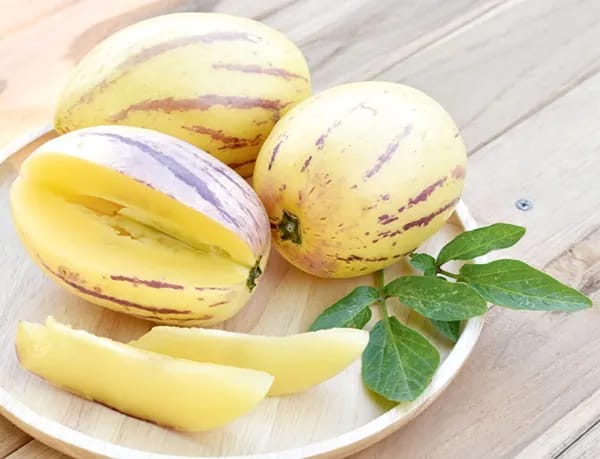
There are thousands of varieties of fruit in the world. Many grow on trees, while others are cultivated like melons and other field crops. One such unusual fruit is pepino, also known as the “melon pear” or “sweet cucumber.” It stands out for its appearance, taste and cultivation characteristics.
South America, particularly Chile and Peru, is considered the homeland of pepino. In scientific sources, this fruit is known as Solanum muricatum. In Spanish, it is called “Pepino dulce,” meaning “sweet cucumber.”
Appearance and Taste
Pepino is an elongated, pear-shaped fruit with yellowish skin marked by purple stripes. It can reach 10 centimetres in length and 6 centimetres in width. Its weight typically ranges from 300 to 500 grams.
The plant belongs to the nightshade family, which also includes tomatoes, eggplants and potatoes. The small seeds inside the fruit are edible as well.
Pepino’s flavour combines the sweetness of melon with the refreshing taste of cucumber. For this reason, it is most often eaten fresh. Various products are also manufactured from the fruit on an industrial scale, and its components are used in cosmetic products.
How Is Pepino Grown?
Pepino grows on an evergreen, semi-shrubby plant that can reach a height of one metre. It thrives in regions with warm climates. Today, the plant is cultivated in several South American countries, New Zealand and parts of Europe whose tropical and subtropical climatic conditions are suitable for its growth.
Pepino is mainly propagated through cuttings. In some countries, it is grown in a manner similar to tomatoes, with its branches spreading along the ground or being tied to supports. The plant produces its first fruits approximately five months after planting. Under favourable conditions, it can continue bearing fruit for up to two years.
According to the information provided in the source, pepino yields can reach 40–60 tonnes per hectare. However, this figure may vary depending on growing conditions, soil quality and the level of care provided.
Pepino is rarely found growing wild in nature and is cultivated primarily as a crop. Its fruits can be harvested until autumn.
New Opportunities for Fruit Growing
With its distinctive taste, appearance and versatility, pepino is attracting interest in the fruit-growing sector. This crop, which can be cultivated in warm climates, may also offer an interesting opportunity for farmers seeking to produce alternatives to conventional fruits.




Comments
No comments yet. Be the first.