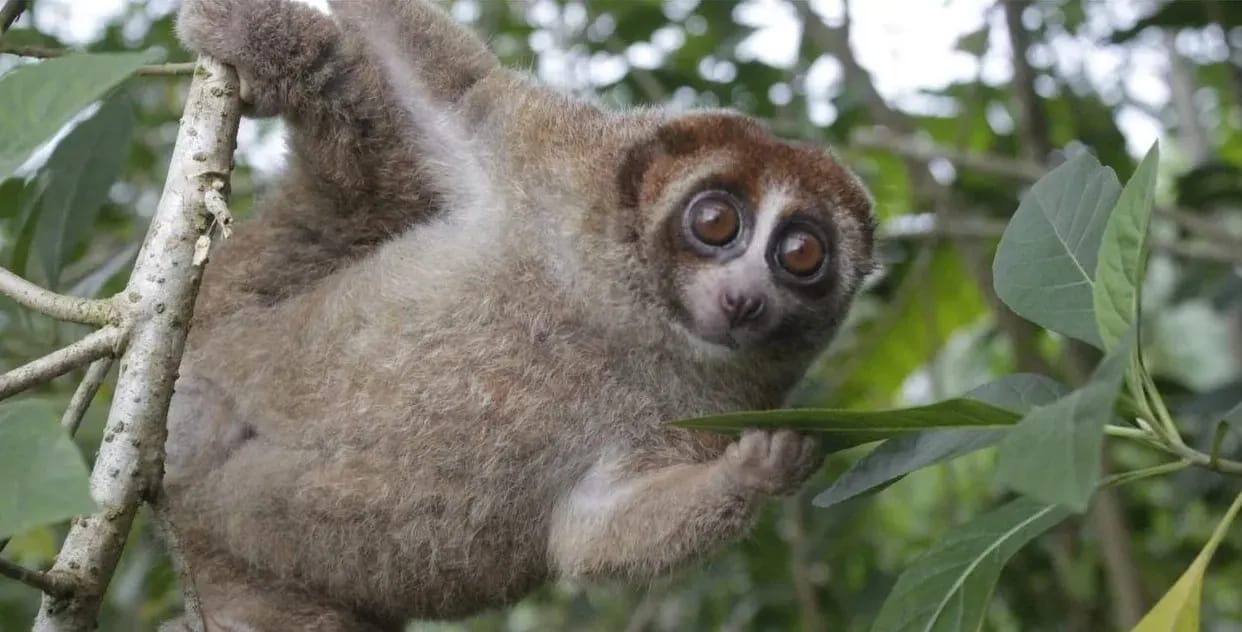
Indonesian scientists have confirmed that slow lorises, rare animals that had largely disappeared from scientific records for around 100 years, still inhabit the Bangka Islands. The findings of a new study show that the species has not only survived but is also found across several parts of the island.
According to the researchers, slow lorises live in a variety of natural environments, including agricultural areas. The discovery once again demonstrates that some wildlife species can remain beyond the reach of scientific observation for many years.
Scientific sources indicate that the last records of the animal dated back to 1937. The lack of reliable information about its status since then led biologists to suspect that the species might be at risk of extinction.
However, residents of Bangka Island have occasionally spotted slow lorises over the years. In some cases, they have even handed the animals over to local wildlife conservation centres. Information provided by the local community encouraged scientists to investigate the species more closely.
Based on the new findings, experts are proposing a reassessment of the slow loris’s conservation status in the Red List. They believe that earlier assumptions about the species being at risk of complete extinction should be reviewed.
The findings of the study were published in the scientific journal Spixiana.





Comments
No comments yet. Be the first.