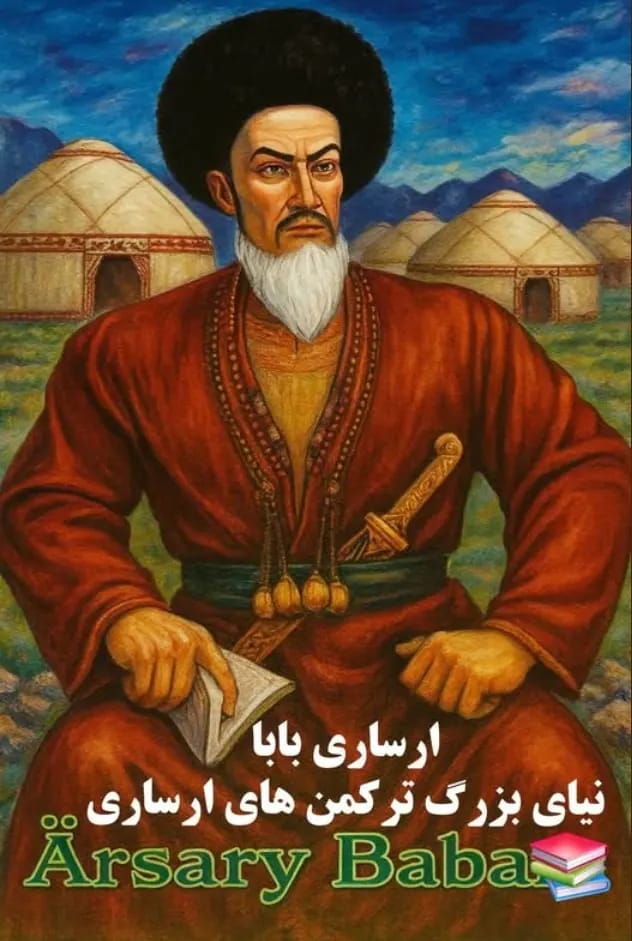
Ärsary Baba is one of the prominent spiritual figures in Turkmen history, originating from the Lebap region. He was not only the spiritual guide of a tribe but also a personality embodying a specific historical era, regional features, and the path of national development. His name is closely connected with the historical-geographical territory of modern Lebap and the origin of the Ersari Turkmens.
Lebap has historically been located along the Amu Darya River and served as a crossroads of various cultures, trade routes, and nomadic tribes. Historical sources note that Oghuz-Turkmen tribes have lived here since ancient times. In such circumstances, it was natural for figures capable of spiritual leadership and maintaining societal unity to emerge. According to local legends, Ärsary Baba lived in the middle reaches of the Amu Darya, in present-day Lebap, and enjoyed great respect among the Oghuz-Turkmen of the region.
The Ersari Tribe and the Role of Ärsary Baba
Historians and ethnographers note that the Ersari Turkmens are one of the ancient Oghuz clans, and the name of Ärsary Baba is revered as a spiritual guide in their formation. The very name “Ersari” confirms this connection. According to oral traditions, Ärsary Baba strengthened tribal unity, organized settlements, and introduced principles of justice into social relations. Therefore, he is considered not only a spiritual leader but also a historical figure shaping societal structures.
The lands of Lebap, especially the Amu Darya banks, are considered areas of strong influence of Ärsary Baba. Sacred sites and pilgrimage points associated with him have been preserved, demonstrating that he is regarded not only as a historical figure but also as a revered spiritual leader. This highlights Lebap as a cultural and spiritual center in Turkmen history.
Ärsary Baba — Historical and Legendary Figure
Ärsary Baba (known among the people as Ärsary baba) was a heroic, brave tribal leader and ancestor of the Ersari Turkmens. He is estimated to have lived in the 13th–14th centuries and played a key role in uniting the Ersari people. His name, “Ersari,” combines the words “er” (brave) and “sary” (light), meaning “brave and united person.”
According to local legends, he lived during the expansion of the Mongol Empire and the difficulties of Central Asia. During this period, conflicts arose among the Turkmens, and various empires and tribes frequently fought each other. Ärsary Baba reconciled disputes, united the Ersari, and demonstrated leadership, contributing greatly to the consolidation of the Turkmen population in Central Asia.
Most information about him comes from the 17th-century book Šejerei Terakime by Abulghazi Bahadur, Khan of Khiva, which collected legends and genealogies. His children—Eynel Ghazi, Zeynel Ghazi, Mustafa Ghazi, and daughter Mamabike—are also mentioned, and their descendants’ names remain as geographical toponyms.
Some sources note that in 1313, Ärsary Baba commissioned the educational work Muin al-Murid, one of the first educational texts translated from Arabic into Turkic, supporting the growth of science and written knowledge.
Today, in Lebap and Turkmen society, Ärsary Baba is honored as an inseparable part of national spiritual heritage. His personality helps young generations understand historical roots, ancestral paths, and national identity. His legacy remains a symbol of national unity and spiritual integrity.

Comments
No comments yet. Be the first.