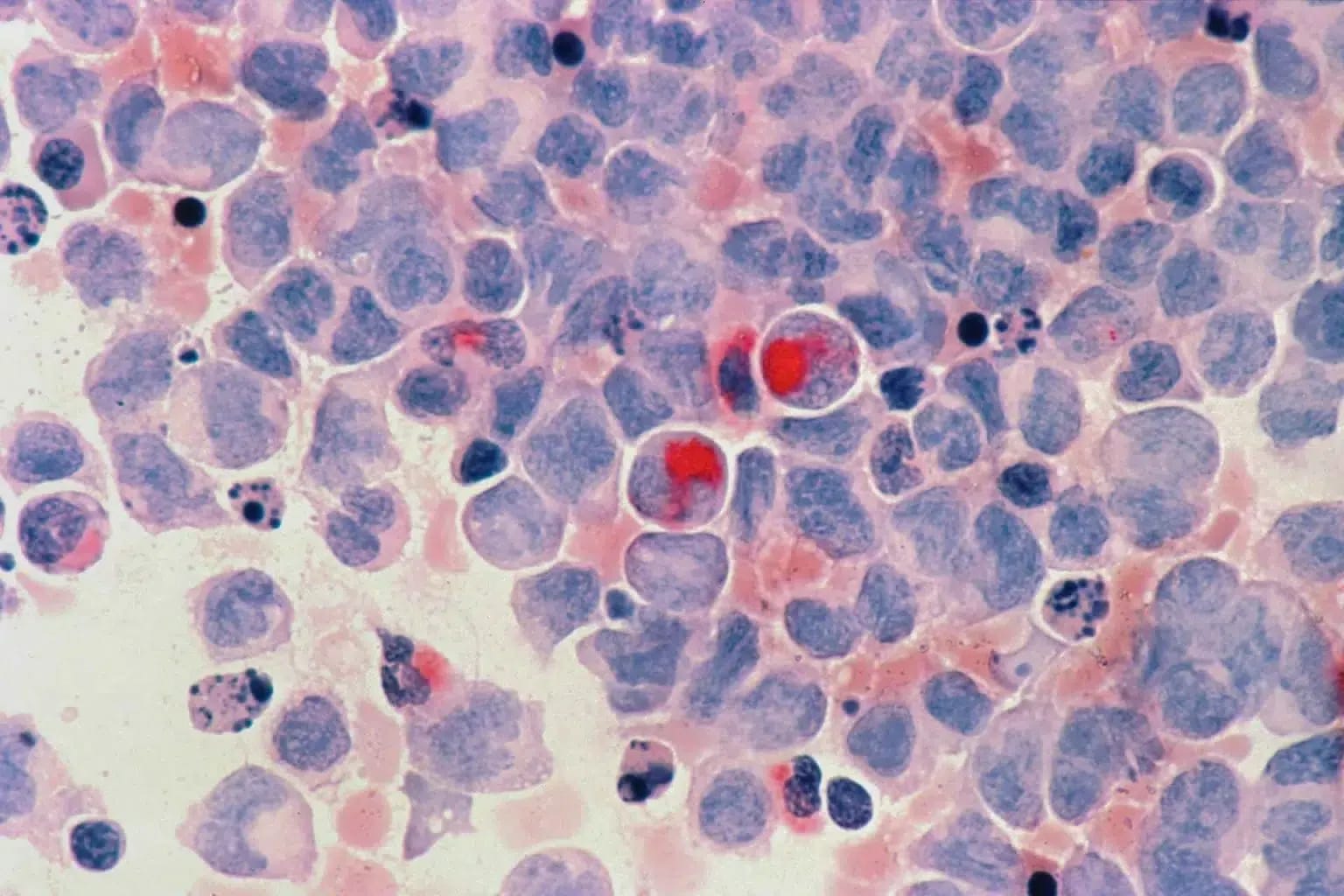
An international team of scientists has identified a vulnerability in osteosarcoma cells, a difficult-to-treat form of bone cancer that occurs primarily in children and adolescents. In laboratory experiments, combining two experimental approaches slowed tumor growth and significantly extended the lifespan of mice.
Researchers at St. Jude Children’s Research Hospital in the United States used specialized protein-degrading molecules to identify vulnerabilities in cancer cells. While conventional drugs temporarily block the activity of harmful proteins, these molecules mark them for destruction by the cell, helping ensure they are broken down completely.
The researchers focused on EP300, a protein involved in osteosarcoma development. They found that when the activity of the AKT protein signaling system increases, cancer cells become more sensitive to treatments designed to degrade EP300.
Since drugs that reduce AKT signaling activity have already been approved, the scientists tested a combination of the two approaches. In laboratory mice implanted with human tumor cells, combining EP300 degradation with the suppression of AKT signaling proved more effective. As a result, tumor growth slowed considerably, and the experimental animals lived longer.
The findings of the preclinical study were published in the scientific journal Journal of Experimental Medicine.
The researchers also explained why some types of osteosarcoma respond to treatment while others remain resistant. Biological and biochemical analyses showed that cells in treatment-resistant tumors produce proteins more rapidly. This allows them to replenish the degraded EP300 protein quickly. In treatment-sensitive cells, however, EP300 production is slower, allowing the approach to eliminate the cancer cells.
According to the scientists, the lack of newly approved treatments for osteosarcoma over the past four decades highlights the need for new therapeutic approaches. The discovery opens up promising opportunities to develop treatments tailored to individual patients.
In the future, genetic testing could help identify patients with the relevant mutations and select targeted therapies for them. This approach could be important in advancing personalized treatments, including in cases where cancer cells have spread to other parts of the body.
However, these findings are currently based only on preclinical research. Further clinical trials will be needed to establish the safety and effectiveness of the approach in humans.






Comments
No comments yet. Be the first.