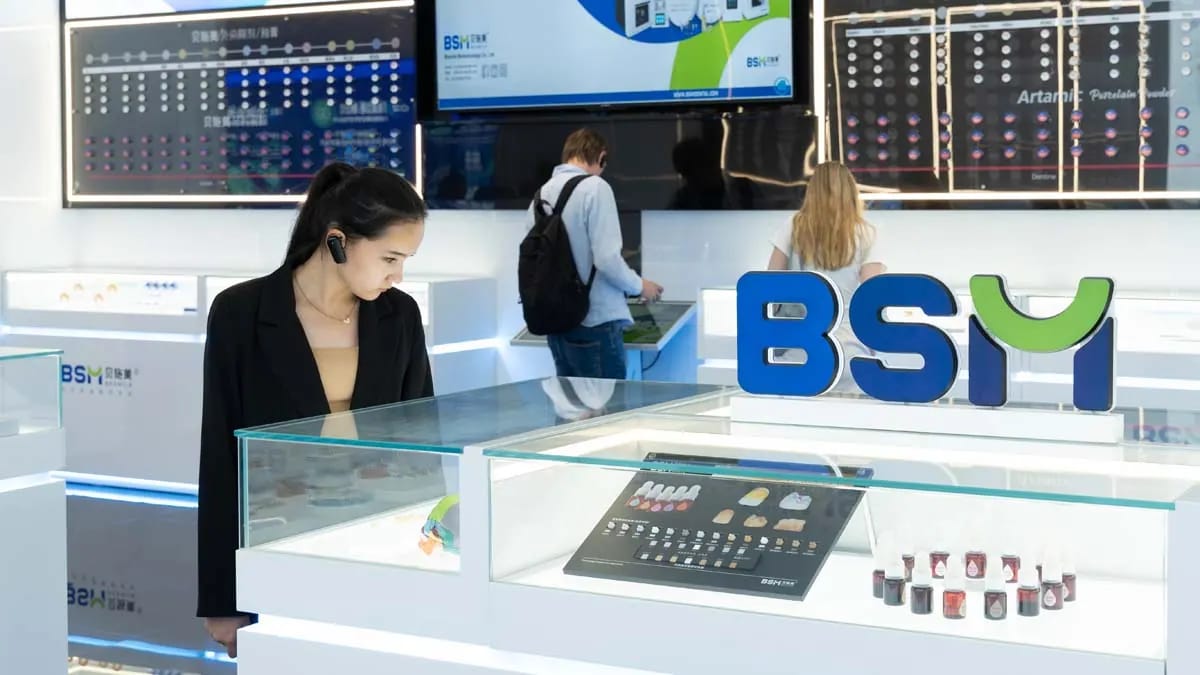
In the People's Republic of China, within the framework of the "International Communication Center" project, the international training program "China International Press Communication Center (CIPCC) 2026" for journalists from various countries is ongoing. As part of the program, mass media representatives from different countries, including Turkmenistan, are undertaking trips to various regions of China.
One of the latest visits of this practice-based program took place in Chengdu, China, from September 21 to 24. The main focus areas of the trip were sustainable development, green energy, innovative technologies, and international scientific and technical cooperation.
Amidst the ongoing geo-economic and political transformations in the modern world, science, technology, and innovation serve not only as effective tools of economic growth but also become one of the most important areas of international diplomacy. In the Chengdu-Chongqing region, scientific and technical cooperation carried out under the "Belt and Road" initiative brought together journalists and experts from various countries.
On the first day of the visit to Chengdu, the opening ceremony of the event dedicated to scientific and technical cooperation was held at the Shijicheng International Convention Center. Information was provided on the current state of international innovative and scientific and technical cooperation within the framework of the "Belt and Road" initiative, as well as on the event's program. Participants were introduced to the scientific, technical, and innovative potential of Sichuan Province.
In addition, foreign scientists working in the region delivered speeches on the topic "My Scientific Research Work in Sichuan."
On September 22, visiting the Sichuan Institute of Energy Internet of Tsinghua University became an important part of the program. Here, participants were introduced to China's achievements in ecological diplomacy and new energy sectors.
It was particularly emphasized that scientific cooperation is one of the key areas of international diplomatic relations. The joint China-New Zealand laboratory for studying kiwifruit production was presented as a vivid example of this. It was noted that states geographically distant from each other and possessing different political systems can develop agriculture and biotechnology through joint scientific research.
This experience demonstrates that the "Belt and Road" initiative is not limited to physical infrastructure projects alone, but also contributes to the formation of the international scientific community.
On the same day, participants also visited the Tianfu International Bio-town in Chengdu. This region, part of the Western China Science City in Chengdu, is defined as a leading zone for bio-economy development and a model platform in the format of a "park-city."
A program aimed at creating a world-class innovation center in the field of bio-economy is being implemented here. Biomedicine, medical equipment, bio-services, and bio-production are highlighted as its main areas.
On September 23, program participants visited the Chengdu Research Base of Giant Panda Breeding. The panda is not only a symbol of nature and biodiversity conservation, but is also recognized as a diplomatic symbol of friendship and peace between states.
Established in 1987, the center received a 4A-level national tourist attraction rating in 2006. Furthermore, it has twice been awarded the prestigious United Nations "Global 500" environmental prize.
Presentations held at the exhibition hall of the Chengdu Science and Innovation Eco-park and the Chengdu Humanoid Robot Innovation Center also aroused great interest among the program participants.
"Chengdu Humanoid Robot Innovation Center Co., Ltd.", established in April 2024, operates as one of the major associations in the field of humanoid robotics in Central and Western China. Taking local conditions into account, the center develops new production capacities and helps improve and introduce engineering robots based on "embodied intelligence" technology into production.
On September 24, as part of the program, visits were made to "Chengdu Guoxing Aerospace Technology Co., Ltd." and the "Tongwei" Solar Photovoltaic Technology Museum.
At the end of the trip, a final experience-sharing meeting was held. Representatives of foreign mass media shared their impressions of the trip and discussed opportunities for developing future cooperation.
Meetings and presentations held during the visit to Chengdu demonstrated that in the 21st century, sustainability and peace are strengthened not only through negotiations, but also through joint scientific and technological development.
Thus, the "Belt and Road" initiative forms one of the areas of international cooperation aimed at uniting technologies, ecology, and people from various countries to create new opportunities for multilateral development.



Comments
No comments yet. Be the first.