
The month of August 2026 will turn into a real "holiday" for lovers of open skies and wonderful natural phenomena. As reported with reference to the "MIR 24" agency, this month humanity will witness a total solar eclipse, the peak of the world-famous Perseid meteor shower, and a partial lunar eclipse.
August 12: The day of the trio coincidence The most important and event-rich day of the month falls on August 12. On that day, several amazing celestial phenomena will occur simultaneously:
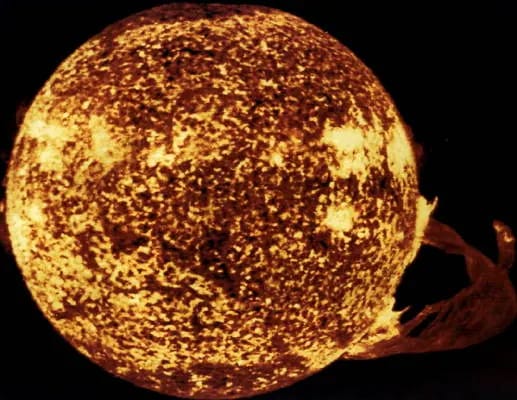
Total solar eclipse: The Moon will pass between the Earth and the Sun, completely covering the solar disk in some parts of the world. At this moment, the Moon will be located at a distance of approximately 359 thousand kilometers from the Earth, so its visible size will be much larger than usual.
The appearance of the New Moon will also coincide with this period.
Peak of the Perseid meteor shower: On the night of August 12 to August 13, one of the brightest and most anticipated star showers of the year will reach its peak activity.
As experts note, this year the peak of the Perseids coincides with the appearance of the New Moon. The absence of bright moonlight in the night sky will create a wonderful opportunity to clearly observe even the dimmest meteors that are not visible under normal conditions.
A "festival of planets" in the sky During these days, the sky will amaze not only with meteors, but also with the arrangement of the planets. On clear nights, it will be possible to observe Neptune, Saturn, Uranus, Mars, Mercury, and Jupiter simultaneously in the sky. This will provide a wide observation platform for astronomy amateurs and professionals.
Experts advise going beyond city lighting and choosing places with an open sky horizon to better view these natural wonders.
Lunar eclipse at the end of the month August will complete the series of unique celestial events with a lunar eclipse. On the night of August 27 to August 28, a partial lunar eclipse will take place. It will be clearly visible in many regions of the world. However, the coincidence of some stages with sunrise and moonset may affect the observation of the phenomenon in some places.




Comments
No comments yet. Be the first.