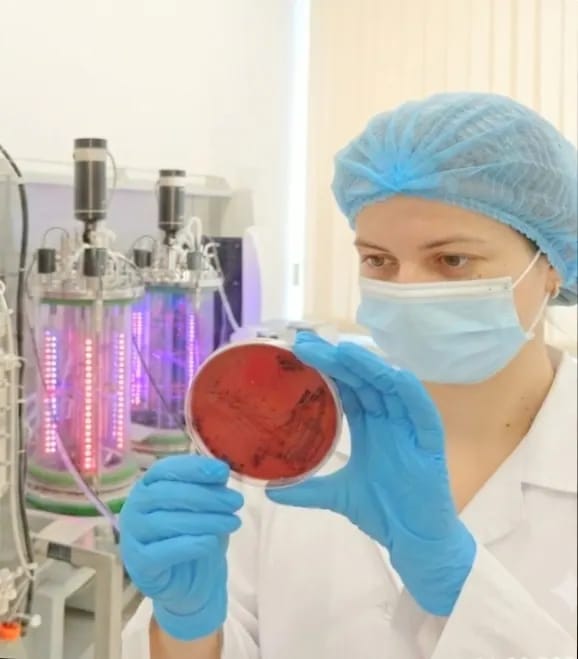
Specialists from the International Scientific and Technological Platform of the Academy of Sciences of Turkmenistan have developed a new generation biopreparation that allows for the effective neutralization of methane emissions directly within the soil cover.
The new development was carried out under the leadership of Doctor of Chemical Sciences, Corresponding Member Durdymyrat Gadam, with the participation of Altyn Rahmanova, Head of the Biotechnology Laboratory.
The main feature of the biopreparation is the use of strains of methane-oxidizing bacteria that occur naturally in the region and are adapted to local climatic conditions. The methane monooxygenase enzyme within these microorganisms converts methane into carbon dioxide and water, which are naturally much safer.
To facilitate the application of living microbial cultures, scientists combined them with a special protective microenvironment prepared from local and accessible raw materials. This approach enables the use of the biopreparation under local conditions.
Methane is one of the main gases in the atmosphere affecting climate change. Its accumulation in large quantities in the atmosphere negatively affects natural ecosystems, posing risks to the environment and human health. Therefore, reducing methane emissions is one of the most important tasks in the environmental and energy sectors today.
Among the main advantages of the new biopreparation are its efficiency in local-level methane neutralization in industrially loaded zones, cost-effectiveness, and the ability to replace imported resources with local raw materials. It is also noted that the development is non-toxic to humans, animals, and the environment.
This development by Turkmen scientists serves as an important scientific and practical step within the framework of the country's efforts in environmental protection and sustainable development. Such innovative solutions aimed at reducing methane emissions are of particular importance in ensuring environmental safety, especially in the energy sector.








Comments
No comments yet. Be the first.