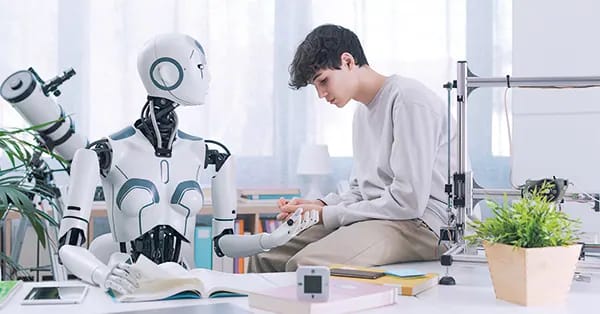
In recent years, with the rapid development of technology, artificial intelligence has become widely integrated into various areas of our daily lives. Today, artificial intelligence technologies are actively used in online consultation services, trade, education and healthcare systems, mass media, as well as the entertainment industry.
The popularity of artificial intelligence is growing particularly among young people. Teenagers can quickly find answers to questions that interest them through digital systems, without searching through books or asking adults. This technology serves as a convenient assistant for learning new information, expanding knowledge, and looking for solutions to various problems.
However, as the capabilities of artificial intelligence continue to expand, another interesting question arises: can a system that operates through computer technology and has no emotions become a close friend or a confidant to whom a person can share their secrets?
Communicating with Artificial Intelligence
According to technology experts, artificial intelligence can communicate with users at any time, answer various questions, and offer advice. It can appear to listen to a person and can even provide words of encouragement in different situations.
Such capabilities lead some people to develop an emotional attachment to artificial intelligence. Especially for people who feel lonely in their daily lives or are looking for someone with whom they can share their thoughts, communicating with artificial intelligence can provide temporary comfort.
However, according to experts, artificial intelligence cannot replace genuine friendship. Friendship is not limited to conversation or advice. A true friend experiences emotions alongside a person, shares their joys and difficulties, is there when needed, and has their own thoughts and feelings.
Artificial intelligence, on the other hand, is a technology that analyzes information and generates responses based on pre-trained models. It does not actually experience human emotions.
Therefore, it would be more appropriate to view artificial intelligence as a useful digital assistant for gaining knowledge, learning new things, organizing thoughts, and solving everyday problems. However, it is not reasonable to expect it to replace genuine friendship, trust, and warm human relationships.
Ultimately, artificial intelligence can be a good adviser and an always-available conversational partner. However, technology is not yet capable of fully replacing genuine human emotion, which is one of the most important characteristics of friendship.






Comments
No comments yet. Be the first.