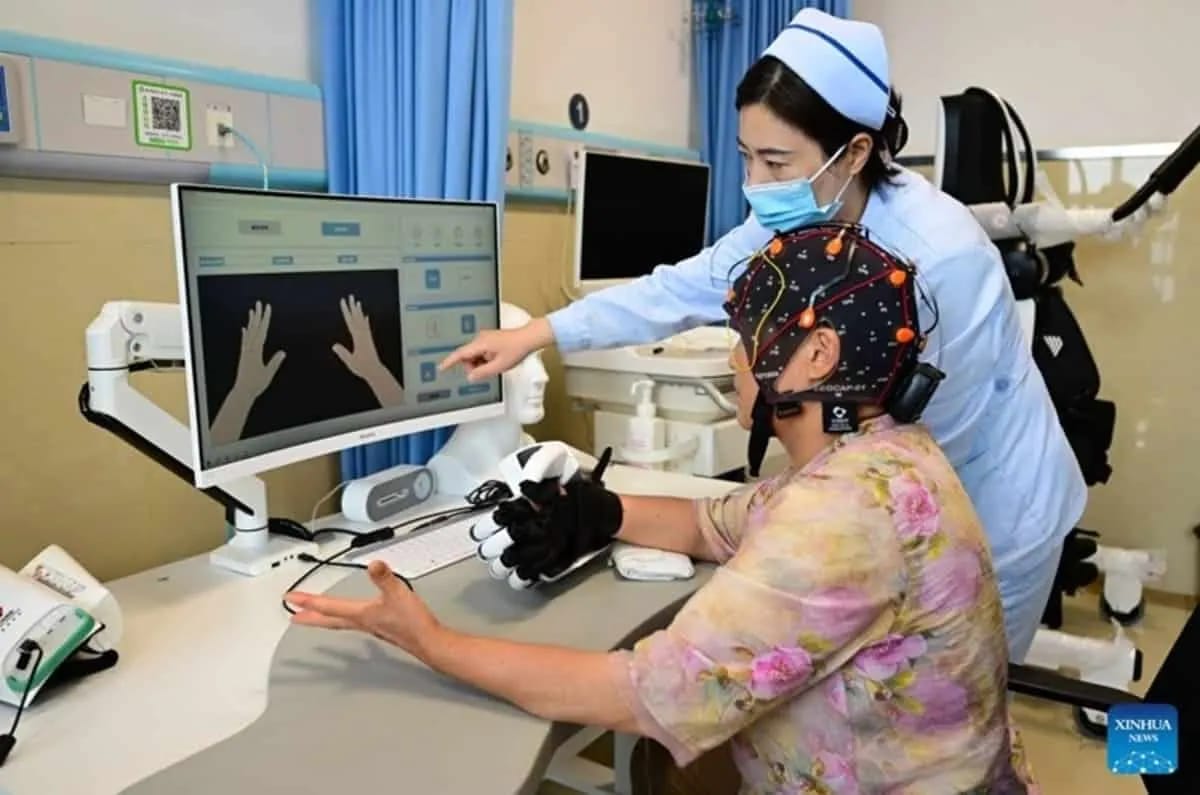
Developers in China have introduced a new system for working with a brain-computer interface (BCI) based on magnetic resonance imaging (MRI). The developers characterize the system, named uMR Shenguan, as the world's first fully functional MRI-based complex.
The system integrates the capabilities of recording and decoding brain signals, influencing the brain through neuromodulation, and evaluating the results of such influence into a single technological platform. It was jointly developed by Shanghai United Imaging Healthcare and Tianjin University.
Unlike traditional solutions, uMR Shenguan is not limited to merely combining an MRI machine with a BCI system. It forms a closed technological loop that reads brain activity, analyzes the data obtained, targetedly influences the brain, and then can measure the result of that influence.
According to the manufacturers, the system is capable of recording nerve activity signals with millisecond temporal accuracy while simultaneously imaging the brain structure with sub-millimeter precision. This makes it possible to track very rapid changes occurring in the brain and determine precisely which region exhibits activity.
Special BCI tools have been developed to reduce magnetic interference that implantable devices might create in MRI scanners. This approach allows brain imaging and neuromodulation to be performed simultaneously.
The new platform is primarily intended for neuroscientific research, the development of BCI technologies, and exploring their future clinical applications. Scientists can use a single system to observe brain activity, deliver targeted interventions, and evaluate the outcomes through the exact same platform.
With the expansion of BCI applications in medicine, the new system is expected to grow in importance for scientific research in fields such as motor function restoration, neurorehabilitation, psychiatry, ophthalmology, and audiology.
In the future, the scope of brain-computer interfaces may extend beyond medicine into areas such as education, sports, the gaming industry, sleep quality research, and industrial safety.
The main feature of uMR Shenguan is that it combines not just "reading" brain signals, but controlling these signals, influencing the brain, and measuring the result within a unified system.








Comments
No comments yet. Be the first.