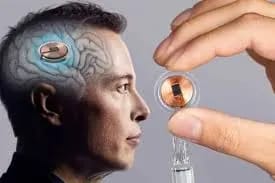
Elon Musk’s company Neuralink has announced that it has completed the engineering development of its Blindsight brain implant, designed to restore visual perception in people with complete blindness. However, the device still requires approval from the relevant US regulatory authorities before it can be tested in humans. Entrepreneur Elon Musk announced this on his account on the social media platform X.
«The device is technically ready. Now we are just waiting for regulatory approval», he wrote.
How Does Blindsight Technology Work?
Unlike the Telepathy implant, which enables users to control external devices through brain signals, Blindsight is being developed to deliver visual information directly to the brain’s visual centre.
The system works by converting images captured by a special camera into electrical signals and transmitting them through the implant to the visual cortex. In this way, the technology is designed to bypass damaged eyes and the optic nerve.
According to the developers, this approach could potentially enable even people who have never had sight to perceive visual images.
Current Development Status and Prospects for Testing
In September 2024, the US Food and Drug Administration (FDA) granted the Blindsight device «Breakthrough Device» designation. This status allows developers to work more closely and efficiently with the relevant regulatory authority. However, it does not mean that the device’s safety and effectiveness have been fully confirmed or that it has been authorised for commercial use.
Elon Musk previously stated that, once the necessary approvals had been obtained, the first surgical implantation in a human could take place within 6–12 months. He also said that the quality of the images produced would initially be low, but predicted that the technology could eventually surpass even normal human vision.
Thus, the completion of the Blindsight implant’s engineering development marks a new stage in the project. Nevertheless, clinical trials and approval from the relevant authorities are still required before the technology can be used in medical practice.
If successfully implemented, the project could represent an important step forward in neurotechnology and implant systems designed to restore visual perception artificially.


Comments
No comments yet. Be the first.