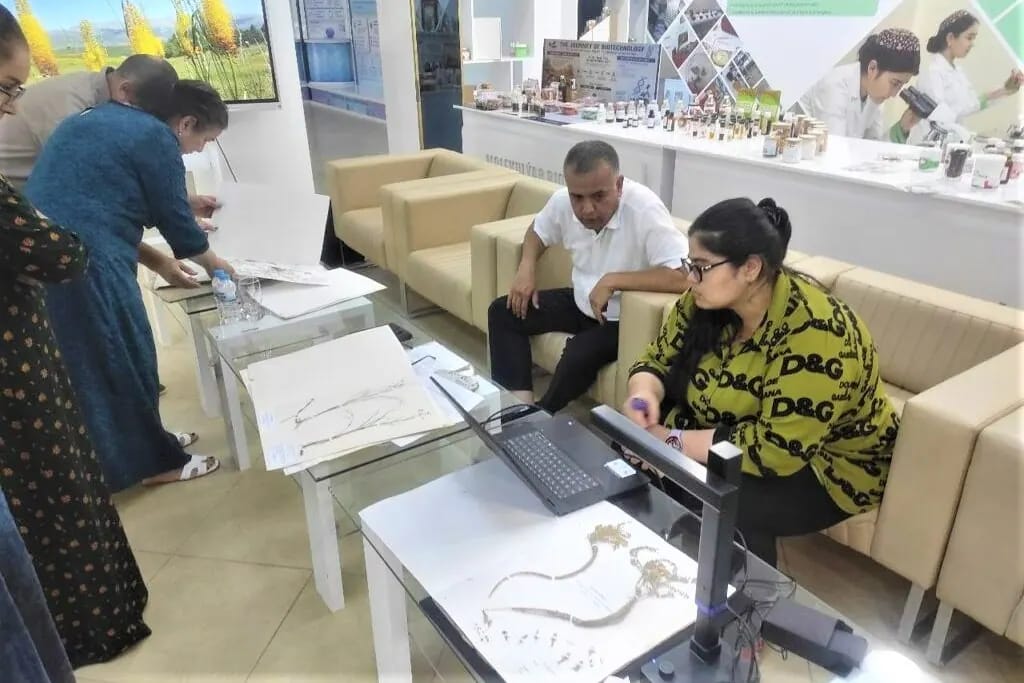
Scientific cooperation between botanists of Turkmenistan and Uzbekistan continues to expand into new areas. During a meeting in Ashgabat, participants discussed digitalizing plant life data, modern research methods for the National Herbarium collection, and integrating scientific information into international platforms.
During the visit of representatives from the Institute of Botany of the Academy of Sciences of the Republic of Uzbekistan to the Institute of General and Applied Biology at the Oguz Han Engineering and Technology University of Turkmenistan, specialists from both countries outlined future steps for digitizing herbarium specimens.
The meeting also addressed practical issues concerning the proper processing of samples, the refinement of their scientific descriptions, and their inclusion in international scientific databases. Special attention was paid to registering rare and endangered plant species listed in the Red Data Book of Turkmenistan, studying their distribution patterns, and collaborating closely with the collections of the National Herbarium.
Experts noted that compiling plant-related data in a digital format will enhance the efficiency of scientific research. Integrating these datasets into global open platforms, such as the Global Biodiversity Information Facility (GBIF), will enable scientists to make broader use of information regarding plant species growing across various regions.
The significance of this partnership is reinforced by the interconnected natural conditions and ecosystems of Central Asia. Turkmenistan and Uzbekistan share common natural landscapes, including the Karakum and Kyzylkum deserts, the Aral Sea basin, and mountainous regions. Consequently, joint research by scientists from both nations is crucial for addressing ecological challenges such as desertification, soil degradation, and climate change.
Consolidating botanical data into a unified digital system opens up new opportunities to monitor shifts in regional plant communities, identify rare species, and study drought- and salinity-tolerant plants. Such scientific data can also be utilized to formulate effective measures for protecting natural resources, combating desertification, and transforming border areas into green zones.
The collaboration between Turkmen and Uzbek botanists in this field marks a significant step forward in studying Central Asia's plant biodiversity, making scientific data accessible internationally, and supporting environmentally sustainable development across the region.






Comments
No comments yet. Be the first.