Serdar Yazhanow, teacher at Halaç District Secondary School №13: Teaching students foreign languages at school requires significant effort. For this purpose, we use the most advanced and effective methods for teaching and conducting lessons in foreign languages. Games and game-like competitions conducted in lessons across all classes increase students’ interest in the lesson. The main goal is to create a desire in the student to learn and actively participate in the lesson. One of the effective ways to increase students’ interest in the lesson is through educational games and competitions conducted during and outside of class. This method develops a positive attitude towards lessons and improves learning outcomes. Therefore, the teacher should use various types of games, didactic sequences, and exercises to engage students’ attention. Educational games develop students’ intelligence, logical thinking, and attentiveness. Organizing games in class requires the teacher’s good preparation and skill. Students’ interest in the lesson can be enhanced through educational games and competitive tasks with visual aids. These activities can be conducted in different lesson formats. The teacher should be able to creatively organize lessons with students, select didactic sequences according to each topic, and apply them when necessary. For educational games and competitions to be effective, they should include some novelty. Conditions that engage students should be created and carefully selected. Competitive lessons in teaching foreign languages are particularly effective. In these lessons, students are divided into teams and competition conditions are prepared — exercises related to the topic studied, including phonetics, grammar, and texts. Phonetic competitions in English lessons encourage correct pronunciation of sounds and proper use of stress. Students also learn from each other. Competitions have several rules. For example, in Sound Chain, several students from each team participate and say an English word (e.g., “Dog”), the next student starts a new word with the last sound of the previous word (“Game”, “Egg”, “Go”). The team that finds the most words wins. Didactic competitions in English lessons develop vocabulary, reinforce grammar, and improve speaking skills. Teams create sentences using adjectives and adverbs. The opposing team constructs sentences using the same descriptors. If a word is repeated, the participant is out. For example: “Aman is very clever. He reads books well”; “Gozel is an active pupil. She speaks English fluently.” For effective English learning, it is essential to use methods and tools aimed at developing students’ intellectual abilities. These include different types of games, using poems, proverbs, sayings, speech etiquette, and analyzing difficulties. Interactive lessons are more effective, allowing students to better master topics through listening and visual perception. Students listen to correct pronunciation and repeat it, improving their skills. Teachers help them memorize sentence structures through listening. Special attention is given to students’ abilities, memory, and interest. Teachers supervise, helping students improve their individual language skills. This builds students’ confidence and facilitates rapid language acquisition.
The Importance of Actively Conducting a Lesson
3 min read35
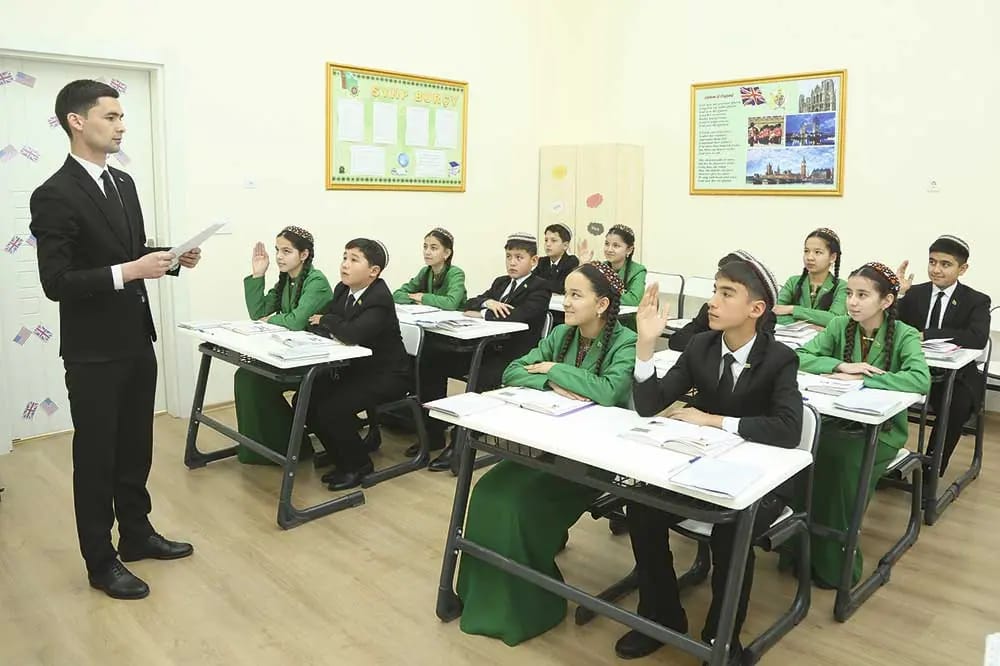
Interactive and game-based lessons in school increase students’ interest in foreign languages. Phonetic and didactic competitions develop vocabulary, grammar, and speaking skills.





Comments
No comments yet. Be the first.