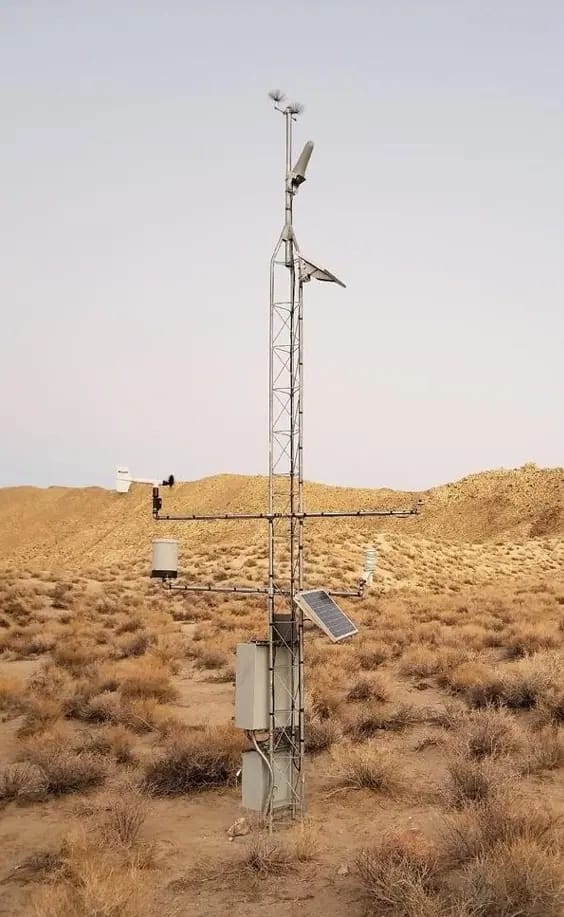
The National Institute of Deserts, Plants and Wildlife of Turkmenistan (NIDPW) and China’s Xinjiang Institute of Ecology and Geography (Chinese Academy of Sciences) have strengthened scientific exchanges under the “Belt and Road” initiative. One key area of cooperation is studying China’s unique experience in protecting transport infrastructure under the harsh conditions of the Taklamakan Desert — China’s largest desert.
Turkmen scientists focus on an artificial forest covering more than 3,000 hectares along the world’s longest desert highway (562 km), ensuring its continuous operation.
This unique ecosystem contains 20 million drought-resistant plants that protect the road from shifting sands. To maintain the “green belt,” 108 electrically operated wells using mineral water are in operation.
The project’s successes are demonstrated not only by international engineering awards but also by biodiversity restoration — animals now inhabit the artificial forest. A particularly interesting technology involves cultivating “desert ginseng” (Cistanche), successfully grown on saxaul roots.
The natural conditions of the Taklamakan Desert are similar to the Karakums in many aspects — both feature extreme continental climates, shifting sands, and water scarcity. Sharing experience between countries is strategically important, as Turkmenistan has historically been recognized as a center for desert research.
For decades, the NIDPW has tested methods to combat land degradation, later implemented in African and Asian countries. Today, the country’s scientific potential enables the successful development of experimental sites; for example, pistachio (mańyz) forests grow in the Central Karakum despite the harsh climate.
The development of bilateral cooperation underscores the importance of Turkmenistan’s initiative to establish a UN regional center in Ashgabat for climate-related technologies. Combining Turkmen scientists’ efforts with Chinese technological achievements opens new opportunities to transform vulnerable areas into productive ecosystems, ensuring ecological security and sustainable regional development.
Comments
No comments yet. Be the first.