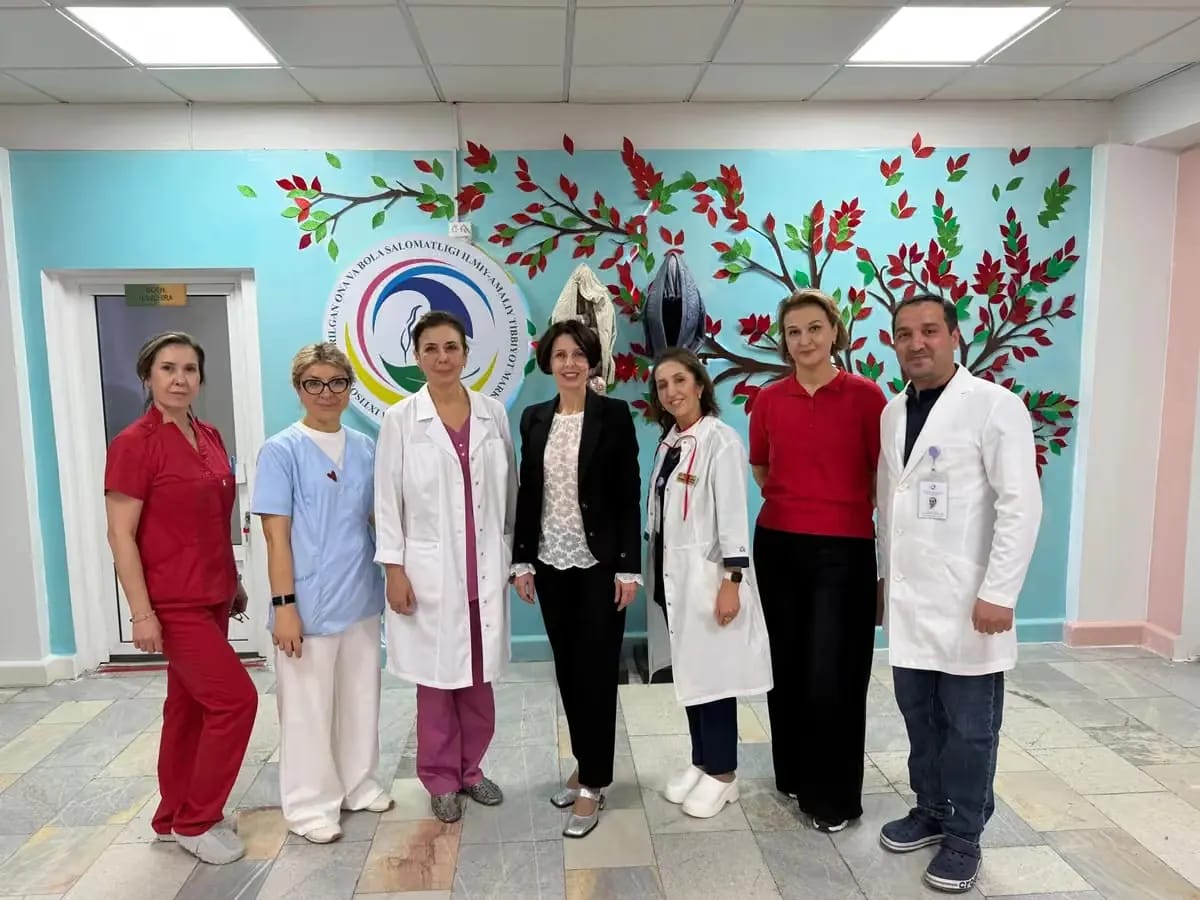
As part of the 39th meeting of the Council for Cooperation in Healthcare of the Commonwealth of Independent States (CIS), a delegation from Turkmenistan took part in working visits to leading medical and educational institutions in Uzbekistan. Representatives of Armenia, Belarus, Kazakhstan, Kyrgyzstan, Russia and Tajikistan also participated, along with representatives of the CIS Executive Committee and the World Health Organization (WHO).
The familiarization programme was organized by Uzbekistan’s Ministry of Health during its chairmanship of the Council and took place ahead of the summing up of the CIS Year of Healthcare. The main objectives of the visits were to exchange medical expertise, explore the potential of new technologies and identify future areas for interstate cooperation.
The delegations learned about the organization of treatment and diagnostic services, the technical equipment of medical institutions and the use of digital technologies at Uzbekistan’s National Medical Centre. The guests paid particular attention to the importance of international standards in improving the quality of medical services.
At the Republican Specialized Scientific and Practical Medical Centre of Oncology and Medical Radiology, as well as at the tuberculosis and endocrinology centres, discussions focused on the development of nuclear medicine, the prevention of diabetes mellitus and strengthening cross-border tuberculosis surveillance. Participants also exchanged views on standardizing treatment protocols and conducting joint clinical research.
During the visit, the delegations also toured the National Children’s Medical Centre and the “Mother and Child” Centre. The guests were introduced to modern methods used in neonatal surgery, rehabilitation treatment and paediatrics.
At the Centre for Especially Dangerous Infections, participants learned about practices for ensuring epidemiological safety, improving laboratory surveillance and responding promptly to biological threats. The importance of coordinated action among CIS countries in this area was emphasized.
Members of the delegations also visited a medical university, where they learned about the work of simulation training centres designed to develop students’ practical skills, as well as the university’s educational programmes. The meetings addressed ways to expand international academic exchanges between students and teaching staff and ensure continuous professional development for healthcare workers.
Following the working visits, representatives of the CIS countries and WHO highly praised Uzbekistan’s efforts to modernize its healthcare system. It was also emphasized that developing direct contacts among specialists creates more opportunities to implement joint educational projects, establish telemedicine services and expand scientific and technological cooperation.
These meetings are an important part of cooperation aimed at promoting the exchange of experience among the healthcare systems of CIS countries, improving the quality of medical services and strengthening epidemiological security at the regional level.






Comments
No comments yet. Be the first.