Types of Rice
There are thousands of rice varieties globally. They vary in biological characteristics, maturation periods, and grain shapes. The main types grown in Turkmenistan include:
1. Long-grain rice
Grains are long and slender. This type is preferred due to its high cooking quality and fluffiness.
2. Medium-grain rice
These grains are medium in length and rounder. They tend to be stickier after cooking.
3. Short-grain rice
These are short and wide grains. Often used in humid climates, they become sticky when cooked.
4. Popular varieties in Turkmenistan:
-
Türkmen şalysy – 1
-
Türkmen şalysy – 2
-
Altyn däne
-
Miras
These varieties are well adapted to local conditions and known for their high yield and quality.
Planting Methods
Rice is cultivated using two main methods:
1. Direct seeding (with grain)
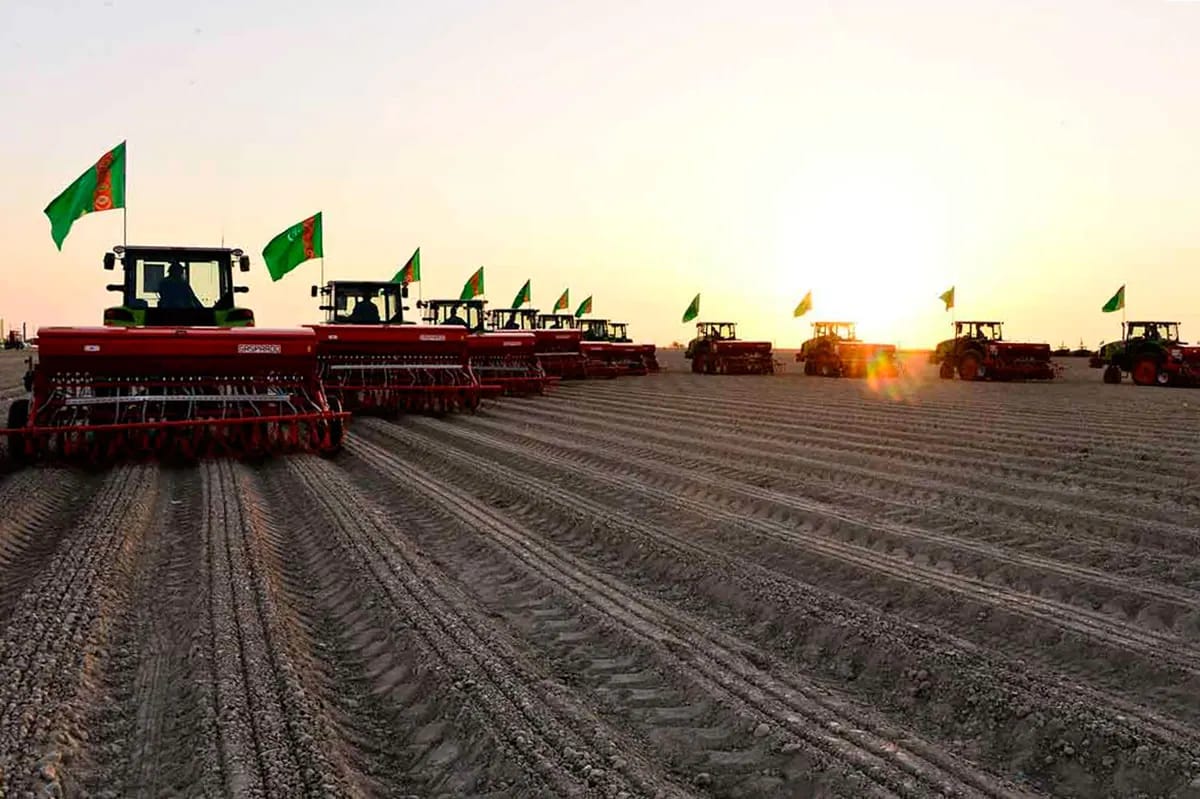
Seeds are sown directly into the field. The land must be prepared and leveled, and irrigation ensured. This method is less labor-intensive but more dependent on weather.
2. Transplanting seedlings
Seeds are first grown into seedlings in nurseries and then transplanted to the field. This method ensures better yield and pest control, though it requires more labor.
Planting Time
Proper planting timing is essential for high-yield rice cultivation. In Turkmenistan:
In Ahal and Lebap regions:
-
Seedling cultivation starts in mid-March. Transplanting occurs from mid-April to early May.
-
Direct seeding is carried out from late April to early May.
Farmers focus on:
-
Soil preparation and leveling,
-
Ensuring irrigation infrastructure,
-
Applying fertilizers,
-
Pest management.
Rice cultivation is a labor-intensive agricultural practice that requires attention to detail. The correct choice of variety, planting method, and timely execution of all agronomic tasks are key to high yields. In Turkmenistan, rice farming continues to progress with the introduction of improved local varieties and modern technologies.



Comments
No comments yet. Be the first.