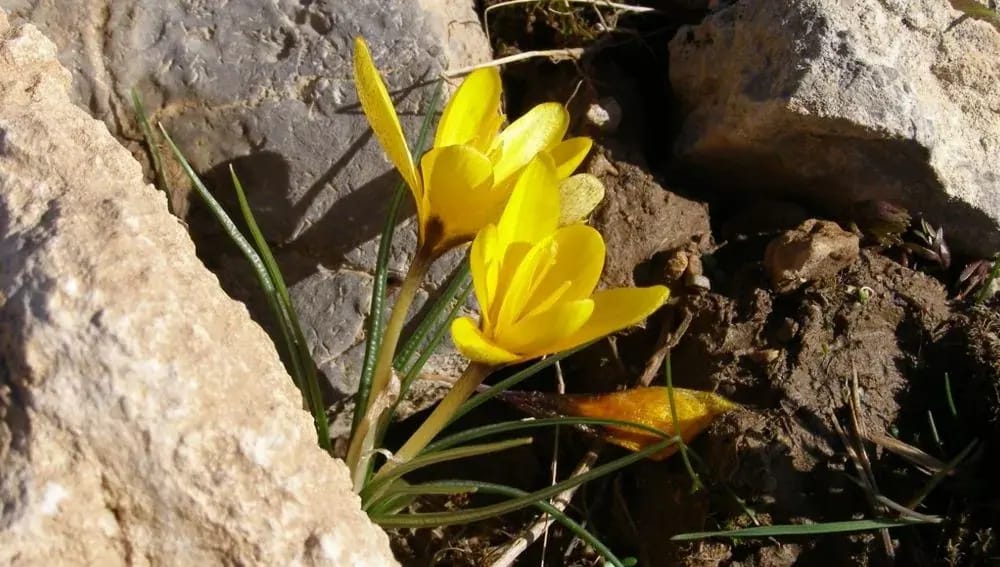
According to long-term phenological observations, spring in Turkmenistan began 15 days earlier than usual this year. This significant shift in nature's harmony led to the early blooming of rare plants, and by the first half of March, mountain slopes were already decorated with various colors. This was reported on the official website of the Ministry of Environmental Protection.
Such an unusual situation in nature is rare: usually, early-blooming plants flower gradually one after another, but this season, due to the mild winter, almost all of them are observed to be in full bloom simultaneously.
While the peaks of Koytendag are still covered with snow and cold air lingers in the valleys, a real miracle begins on the mountain slopes: ephemeroids—plants that bloom quickly while the soil is moist and live a short but very impressive life—are coming to life. Ephemeroids include various types of tulips, iridodictyum, yellow gagea, and other plants.
This year, the golden petals of the yellow gagea appeared very early and in large numbers at the foot of Koytendag. It was followed by the blooming of iridodictyum and Kesselring's colchicum. Then, Korolkow's saffron bloomed, visible even before the snow completely melted. Fedchenko's primrose is a true decoration of shaded rocks and moist places; its delicate pink-purple flowers look especially beautiful in the harsh conditions of the mountains.
As the spring sun begins to warm, the previously lifeless-looking mountain slopes are covered with bright colors. Early-blooming plants "cheat" the harsh weather conditions of Koytendag, taking advantage of the short spring period between the winter cold and the summer drought. As soon as the temperature rises above 0°C, they begin to grow rapidly, using the nutrients stored in their bulbs and roots.
The life of ephemeroid plants is very short. Within a few weeks, they must manage to grow, bloom, and scatter their ripened seeds into the environment.




Comments
No comments yet. Be the first.