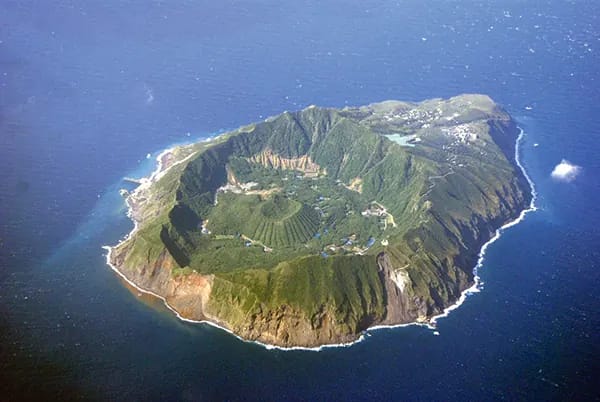
Aogashima Island, located in one of the most remote parts of Japan, approximately 350 kilometers south of Tokyo, is considered one of the most remarkable natural places in the world. Situated in the vast waters of the Philippine Sea, the island attracts particular attention for its unique geological structure.
Aogashima is often described as a “volcano within a volcano.” This is because another smaller crater is located inside the main crater at the center of the island. The island has a total area of approximately 8.75 square kilometers, and its landscape is characterized by mountainous and volcanic terrain.
The most remarkable feature is that, despite the presence of an active volcanic system on the island, around 160 people continue to live there. Local residents lead a life in harmony with nature in settlements located inside the crater.
Aogashima creates a unique landscape with its rare volcanic terrain, green hills, and expansive views of the ocean. Despite occasional signs of volcanic activity, the island’s residents continue their daily lives there.
The island’s natural features are reflected not only in its appearance but also in the way people live. Hot water emerging from underground is used for cooking and other household activities.
Fish and seafood have a particularly important place among the main foods consumed by the local population. Some vegetables are brought in from other regions of Japan.
The island’s residents also engage in limited-scale agriculture and livestock farming. Various types of cattle, as well as domestic and wild birds, can be found here. Potatoes and some melon and other field crops are also cultivated.
Aogashima Island is one of the world’s most remarkable places, demonstrating how the powerful natural force of a volcano can coexist in harmony with peaceful human life.




Комментарии
Пока нет комментариев. Будьте первым.