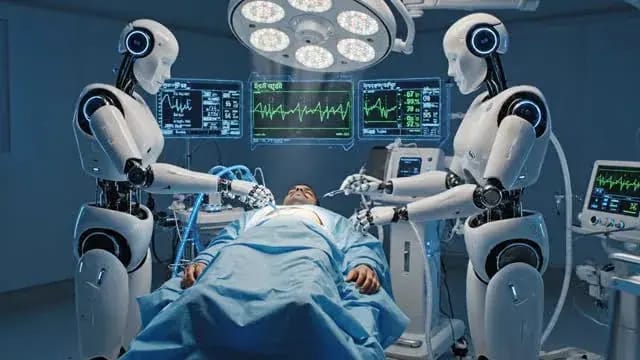
In the modern era, the pace of scientific and technological progress influences all aspects of human life. Artificial intelligence technologies can be cited as one of the most impactful directions of these developments. AI is not limited to data processing or automation; it also opens doors to new possibilities in medical science. At the same time, important goals such as increasing efficiency in the healthcare system, early detection of diseases, and providing patients with more accurate treatment are being successfully implemented.
Artificial intelligence is a technology aimed at recreating abilities inherent to the human mind—such as thinking, learning, and problem-solving—within computer systems. Its use in medicine has expanded significantly in recent years. For example, through AI algorithms, it has become possible to analyze medical images—such as X-ray, MRI, and CT scan results—with high precision. This enables the detection of the first signs of diseases at an even earlier stage. Early diagnosis is one of the most critical conditions in medicine. With the help of AI, dangerous conditions such as oncological diseases, cardiovascular diseases, or neurological disorders can be identified in advance. In such cases, algorithms analyze the data of thousands of patients and predict the degree of disease progression. This allows doctors to consider not only the current situation but also risks that may arise in the future.
AI also contributes greatly to the development of the concept of personalized medicine. Each person's body is unique, and treatment must be selected according to that uniqueness. AI systems can suggest the most appropriate treatment method by analyzing a patient's genetic data, lifestyle, and previous illnesses. This increases the effectiveness of treatment and prevents incorrect procedures. In hospitals, tasks such as managing queues, organizing patient data, and tracking medications are being automated, easing the workload of the staff. Consequently, doctors can devote more time to their primary duty—providing high-quality service to patients.
In our country, great attention is paid to the modernization of the healthcare system. Extensive work is being carried out to improve the quality of the national medical system by utilizing digital technologies, including the capabilities of artificial intelligence. This is of great importance for the health of not only the current generation but also future generations. From this perspective, artificial intelligence can be considered the main driving force behind fundamental transformations in medical science. It acts not just as a new technology, but as a reliable assistant in protecting human health. As the capabilities of AI expand further in the future, medical science will step onto a new stage of development. There is no doubt that these advancements will serve to ensure a healthy and happy life for mankind.




Comments
No comments yet. Be the first.