Throughout its glorious history spanning millennia, our people have made significant contributions to world culture through scientific discoveries, architectural traditions, and literary masterpieces. As the saying goes, "There is no new without the old," and in our wonderful era, the national values inherited from our ancestors are carefully preserved and studied scientifically.
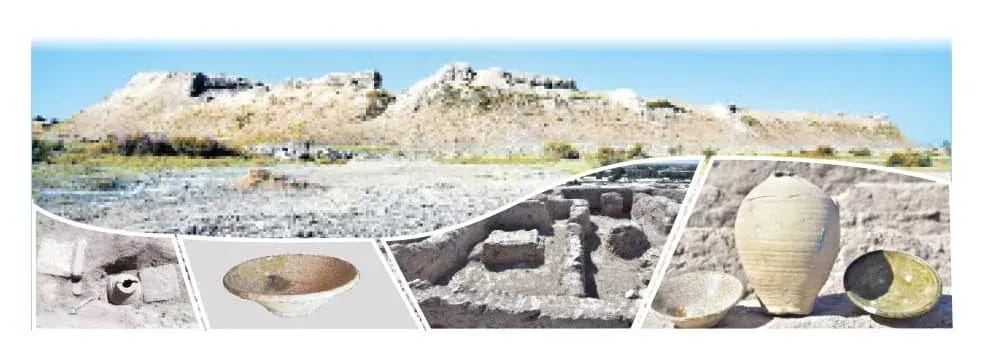
Amul Fortress, located in the southern part of Turkmenabat, was known in ancient times as one of the most visited places. Its location at a vital crossroads of the Great Silk Road and the presence of a convenient crossing over the Jeyhun River ensured the rapid socio-economic development of the ancient city. Excavations over the years have uncovered remains of kitchens and baths meters below the surface, as well as silver and copper coins, jewelry, pottery, and ceramics, all reflecting the advanced civilization of Amul's past.
With the start of the spring season for archaeological and restoration work last month, activities have commenced at Amul Fortress. This important work is being carried out by specialists from the "Kerki" State Historical and Cultural Reserve.
Nuryagdy Hoshwagtow, head of the reserve's scientific department, shares: — Currently, our team of four is conducting excavations in the cultural layers of the northeastern part of the fortress. Several valuable finds have already been uncovered. We are also performing restoration work on the fortress walls to pass this ancient site to future generations in its original form.




Comments
No comments yet. Be the first.