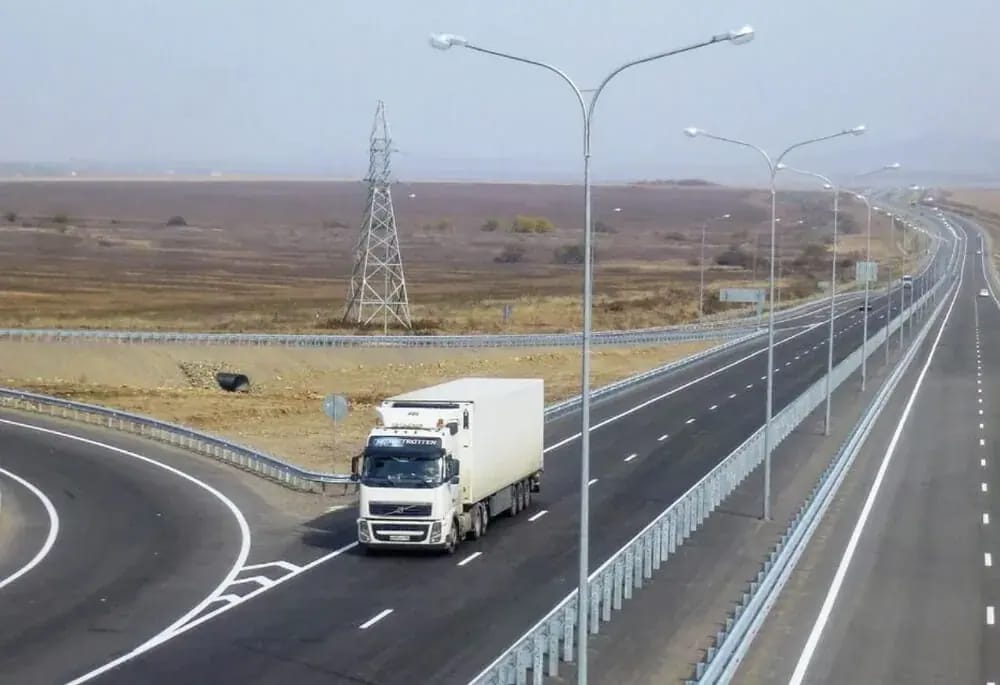
The active construction and commissioning of modern high-speed highways are elevating the economic and logistical potential of Turkmenistan to a new level. The "Ashgabat — Turkmenabat" high-speed highway, reaching a length of 600 kilometers and a width of 34.5 meters, is a clear proof of this. To ensure that these modern roads, equipped with digital monitoring and intelligent systems, provide seamless service for decades, protecting them from excessive loads and preserving the road surface is currently defined as one of the crucial tasks at the state level.
In order to ensure the long-term and sustainable use of new roads that comply with international standards, strict rules and specific requirements regulating the movement of heavy and large-capacity vehicles are in force in our country.
Legal Framework of Road Logistics
All road relations within the country and the mechanisms for their protection are regulated on the basis of the Law of Turkmenistan "On Amendments and Additions to the Law of Turkmenistan on Axle Loads and Road Activity" (commonly referred to as the Law "On Motor Roads and Road Activity"). This document, adopted in 2013 and consistently improved according to the requirements of the time, guarantees the legal basis for protecting road infrastructure elements.
As an integral part of road equipment, not only road signs or markings serve this purpose, but also modern automated weight and dimension control points that monitor the strict execution of established regulations.
Applicable Weight Standards for Cargo Vehicles
To prevent premature wear and damage to the road surface, specific restrictions have been established based on the total weight of vehicles and axle loads. Depending on the type of road, the maximum weight limits that can pass without permission are as follows:
- For main roads of categories I—III and new highways:
- Total weight: must not exceed 36 tons;
- Single axle load: must not exceed 10 tons;
- Tandem (double) axle load: must not exceed 16 tons;
- Tridem (triple) axle load: must not exceed 22 tons.
- For roads of categories IV—V:
- Single axle load: must not exceed 6 tons;
- Tandem axle load: must not exceed 10 tons;
- Tridem axle load: must not exceed 13 tons.
If the total weight of the vehicle or its axle load is higher than the standard, it is subject to mandatory weight control.
Dimension Limits for Oversized Vehicles
In order to guarantee safety during movement, vehicles exceeding the following dimensions are considered oversized, and their movement requires special monitoring:
- Height (including cargo): over 4 meters;
- Width: wider than 2.5 meters;
- Length of the road train: longer than 20 meters in the case of one trailer, and longer than 24 meters if two or more trailers are present;
- Cargo protrusion to the rear: more than 2 meters.
Transportation Procedure and Financial Mechanism
The movement of heavy and oversized vehicles on the roads is possible only on the basis of a special permit issued in advance. This document is intended for a specific route, within a defined time interval, and for a one-time transit only.
Main conditions and requirements of movement:
- Time restriction: Heavy machinery is not allowed to enter main highways during peak traffic hours on the roads.
- Speed restriction: In order to fully ensure safety, the recommended maximum speed of the vehicle is specifically indicated in the permit.
- Financial responsibility: Special fees are collected for the passage of heavy vehicles, and these funds are directly allocated to maintaining the road infrastructure in a modern state. A mechanism for compensating the actual damage caused to the road surface is also operational.
- Engineering support: If additional technical works, such as reinforcing certain parts of the road or temporarily removing protective structures, are required to transport oversized cargo, these measures are agreed upon in advance and fully provided by the carrier.
Currently, full compliance with the established routes, speed limits, and weight dimensions is regularly monitored by the relevant state services. Compliance with these rules not only protects the roads but also creates conditions for the seamless and sustainable operation of logistics companies.
High-tech and wide highways are built for the benefit of our people and the economic stability of our country. Preserving this huge infrastructure built by the state and using it carefully depends on the responsible approach of every citizen and relevant institutions and enterprises.
(Those who wish to obtain more detailed information about the indicated regulatory-legal framework and Laws can use the "Legal Information Center" section on the official website of the Ministry of Adalat (Justice) of Turkmenistan).




Comments
No comments yet. Be the first.