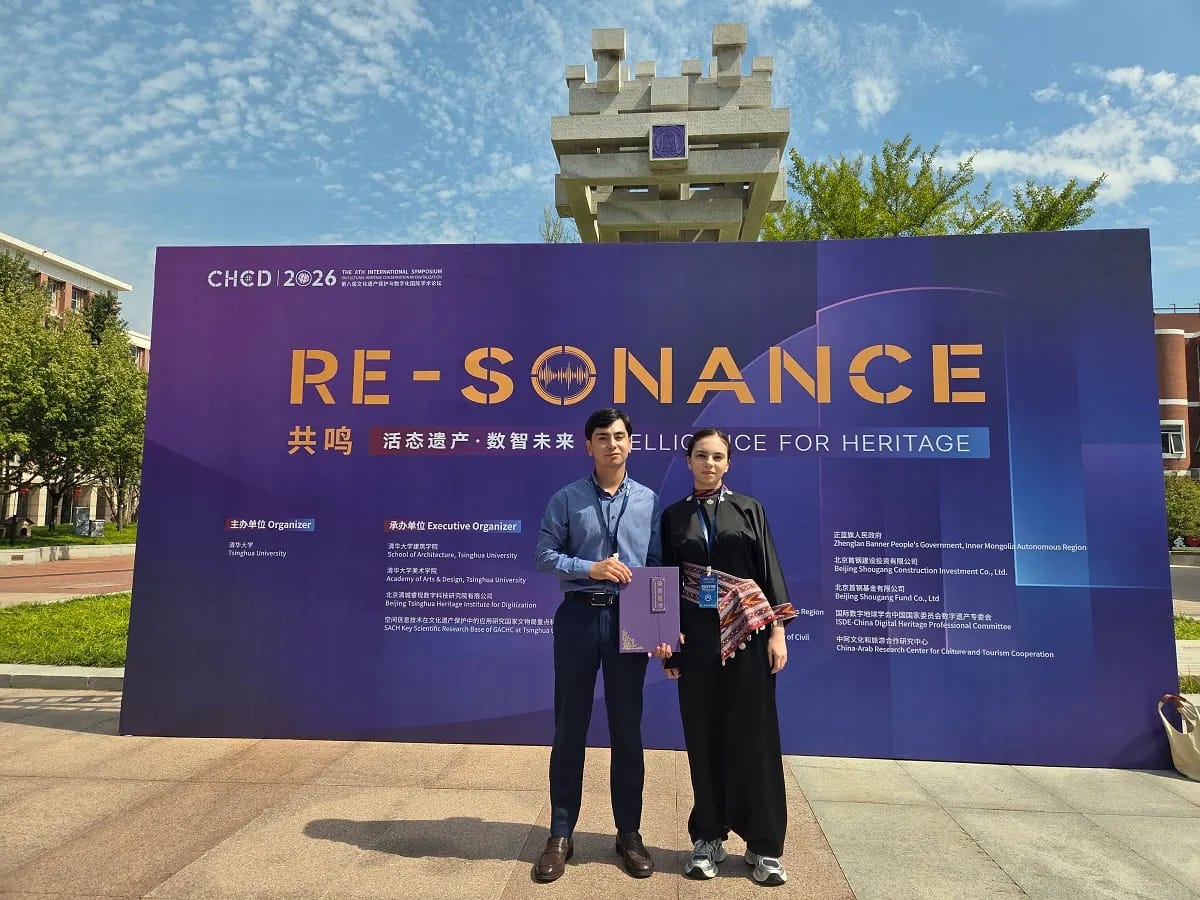
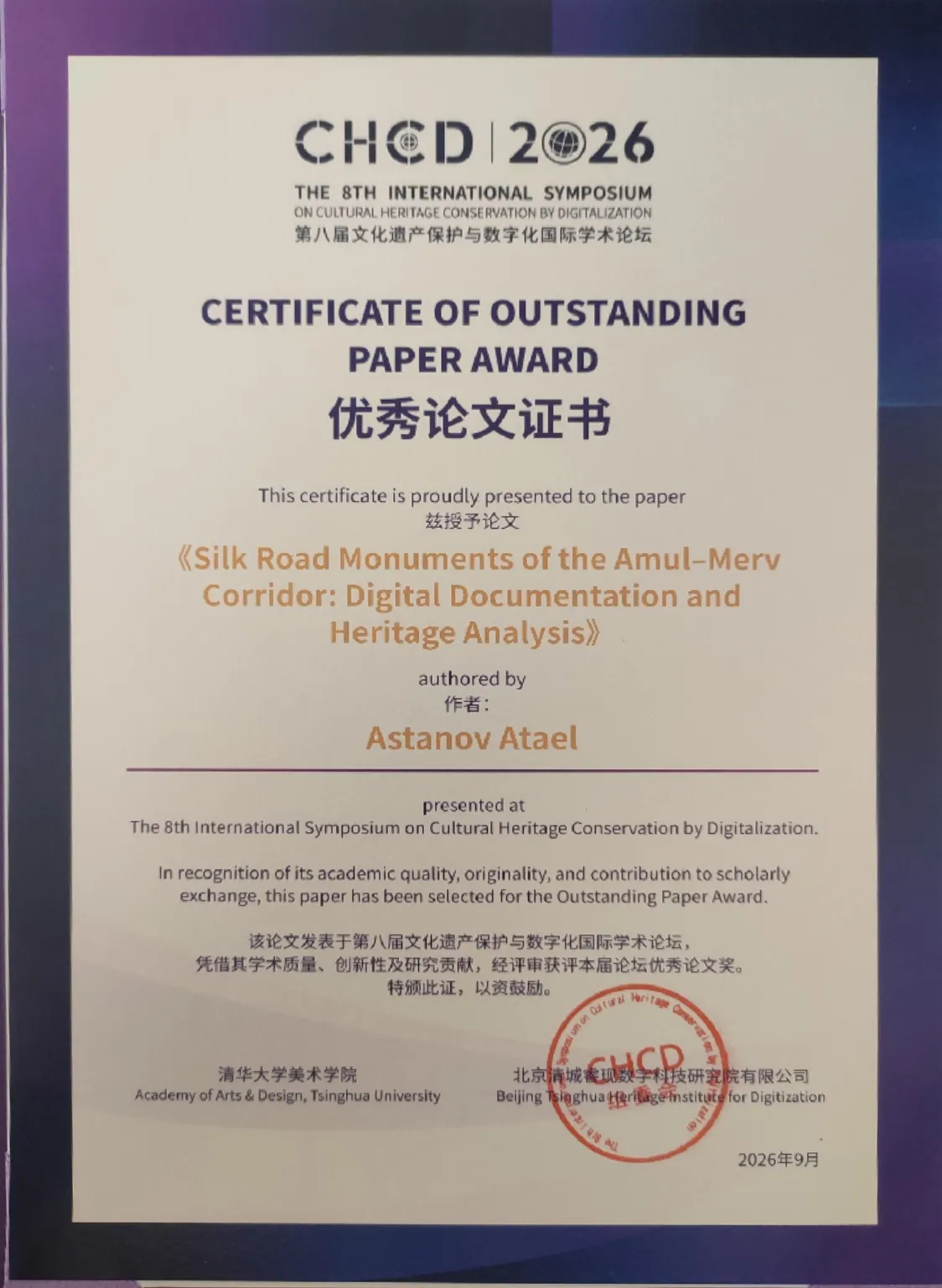
A scientific study by researchers from Turkmenistan dedicated to the historical and cultural heritage of the Amul–Merv Corridor of the Great Silk Road received high recognition at an international symposium held in China. The research was awarded the “Outstanding Paper Award”.
The scientific paper, titled “Silk Road Monuments of the Amul–Merv Corridor: Digital Documentation and Heritage Analysis”, was prepared by Atdaýel Astanow, Arman Astanowa and Sewginur Astanowa.
The international CHCD2026 symposium was held on September 9–12 at Tsinghua University in Beijing. The event brought together scholars and specialists from various fields from more than 20 countries and regions around the world.
On September 11, Atdaýel Astanow spoke at the “Young Scholars Session 1” of the symposium, presenting the results of research on the digital documentation and study of monuments of the Amul–Merv Corridor associated with the Great Silk Road.
Atdaýel Astanow is Deputy Director and Chief Researcher at the private enterprise “Demirgazyk ýyldyzy”, where he leads the Experimental Archaeometry and Heritage Materials project. Since 2018, he has been studying the archaeology of the Merv trade route passing through Amul, as well as the historical and archaeological heritage of the Lebap region.
Arman Astanowa is studying Artificial Intelligence and Engineering at East China University of Science and Technology in Shanghai. Sewginur Astanowa works as a teacher at the Seyitnazar Seydi Turkmen State Pedagogical Institute.
One of the main areas of the research is the digital documentation of historical monuments associated with the Amul–Merv Corridor and the creation of their three-dimensional (3D) models. This historical and cultural complex was included in the UNESCO World Heritage List in 2024.
With the support of the private enterprise “Demirgazyk ýyldyzy” and within the framework of a scientific-industrial grant, work was carried out to create 3D models of the monuments, study them and use them digitally in the future.
The “Outstanding Paper Award” received in Beijing demonstrates the international recognition of scientific research aimed at studying the historical and cultural heritage of Turkmenistan. It also proves that modern technologies such as digital documentation and 3D modelling create important opportunities for studying and preserving the monuments of the Amul–Merv Corridor.



Comments
No comments yet. Be the first.