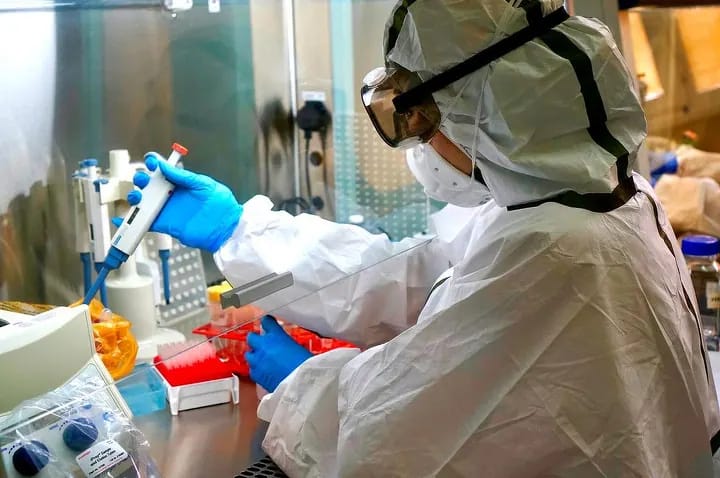
Scientists at Sechenov University in Russia have found that traces of the coronavirus may remain in the human body for an extended period after a COVID-19 infection and could potentially affect the development of various diseases. The RIA Novosti news agency reported the findings, citing the university’s press service.
During their research, specialists detected coronavirus RNA (ribonucleic acid) and proteins several months, and even years, after the initial infection. These traces were found in the lungs, gastrointestinal tract, heart and endometrium, the inner lining of the uterus.
According to the researchers, the post-COVID period may be associated with the development of chronic obstructive lung diseases. Some patients also experienced persistent inflammatory processes.
The researchers also examined possible links between post-COVID conditions and lung cancer, liver changes, gastrointestinal disorders — including diseases affecting the small and large intestines and the pancreas — as well as cardiovascular system disorders.
Research in this field may help scientists better understand the long-term changes that occur in the body following a coronavirus infection and investigate how post-COVID conditions could affect the development of various diseases. However, identifying an association between conditions does not mean that they are directly caused by the coronavirus.



Comments
No comments yet. Be the first.