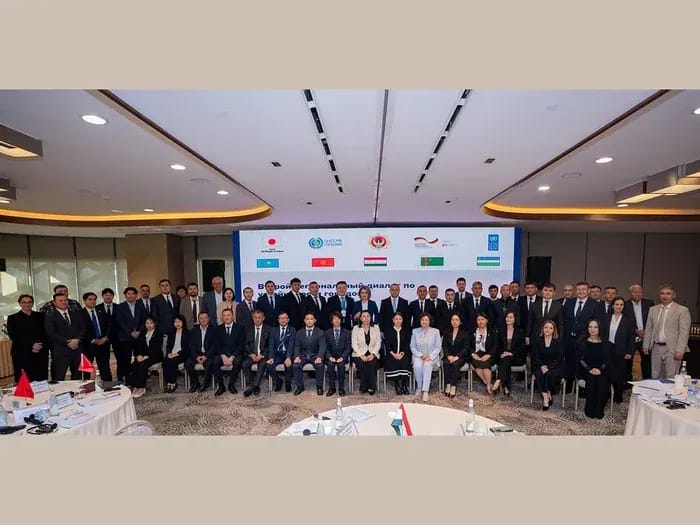
The Second Regional Dialogue on Urban Resilience in Central Asian cities was held in Tashkent on 19–20 October. The event brought together government representatives, city leaders, and international experts from Kazakhstan, Kyrgyzstan, Tajikistan, Turkmenistan, and Uzbekistan.
The event was organized by Uzbekistan’s Ministry of Emergency Situations, the Regional Centre for Emergency Situations and Disaster Risk Reduction, and the United Nations Development Programme (UNDP), with financial and expert support from the Government of Japan. The meeting’s main objective was to develop practical solutions to protect people and urban infrastructure from climate-related hazards and natural disasters.
During the dialogue, membership in the Coalition for Urban Resilience increased from five to ten cities. Previously, the coalition included Petropavlovsk, Osh, Dushanbe, Ashgabat, and Namangan. Bishkek, Manas, Isfara, Fergana, and Kokand have now joined the group. Some of the new members receive support from the German Agency for International Cooperation (GIZ).
The coalition serves as an important platform for sharing experience and knowledge on long-term urban planning that takes seismic and climate risks into account, as well as for introducing best practices. A representative of the Bishkek City Hall compared the coalition to an “umbrella” — a shared roof that brings together the efforts of countries across the region.
During the meeting, a memorandum was also signed among the national seismological institutes of the five countries. The document is intended to promote the exchange of scientific data, coordinate cooperation, and support joint assessments of seismic activity.
Participants in the dialogue emphasized the importance of implementing measures to prevent natural hazards and investing in resilient infrastructure. They noted that these efforts help save lives, improve urban safety, and protect economic gains.
The initiatives put forward during the meeting are aimed at advancing international objectives related to disaster risk reduction, climate change adaptation, and sustainable urban development. In particular, they contribute to the implementation of the Sendai Framework for Disaster Risk Reduction, the Paris Agreement on climate change, and the United Nations 2030 Agenda for Sustainable Development.



Comments
No comments yet. Be the first.