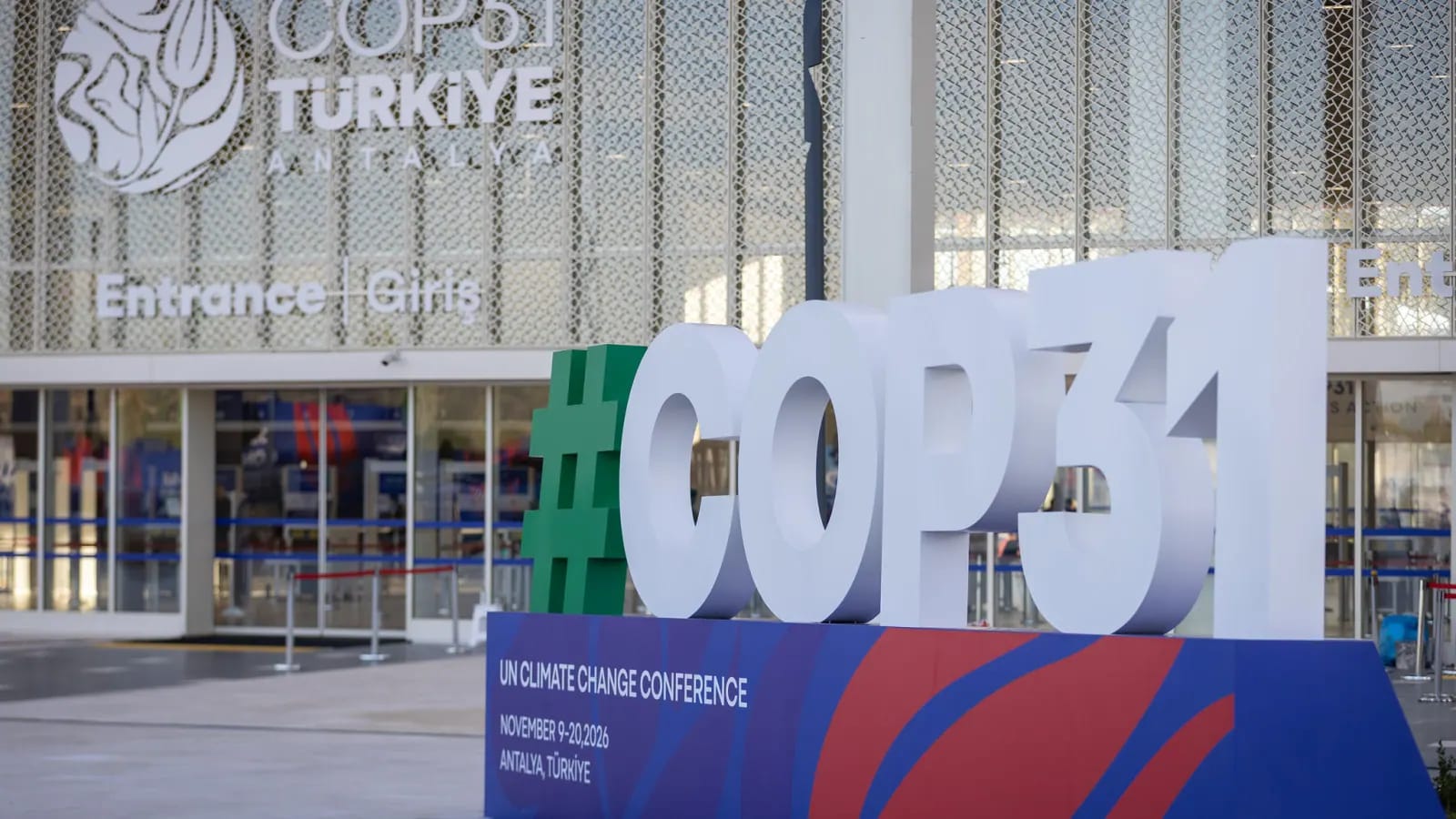
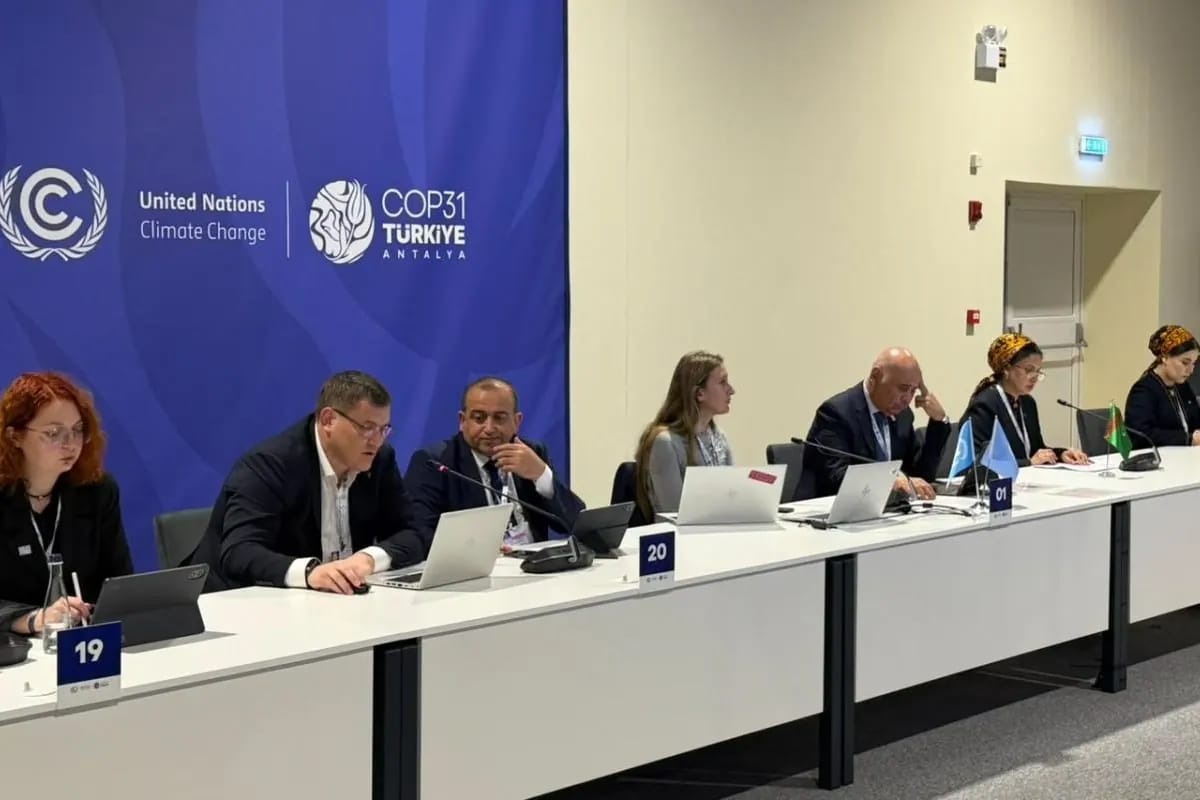
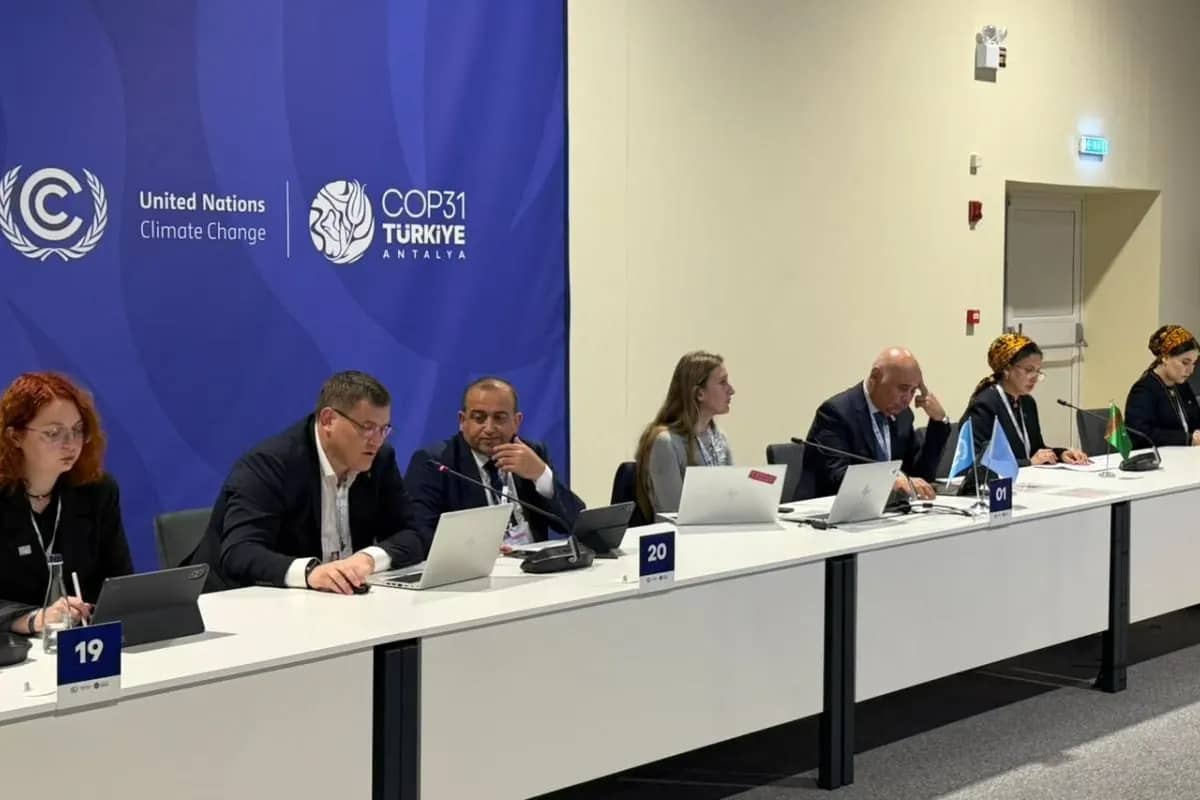
Representatives of Turkmenistan held a meeting with a representative of the International Atomic Energy Agency (IAEA) on the sidelines of the 31st Conference of the Parties to the United Nations Framework Convention on Climate Change (COP31) in Antalya, Türkiye. Turkmenistan’s Minister of Education, Jumamyrat Gurbangeldiyev, also attended the meeting. The parties discussed prospects for developing cooperation in education, science and the peaceful use of nuclear and radiation technologies. This was reported by Atavatan Türkmenistan.
During the meeting, particular attention was paid to training highly qualified personnel, primarily for the healthcare sector, as well as for agriculture, environmental protection and water resource management. Representatives of Turkmenistan exchanged views on priority areas of cooperation with Wei Huang, Director of the Planning, Information and Knowledge Management Section of the IAEA Department of Nuclear Energy.
Minister of Education Jumamyrat Gurbangeldiyev spoke about the reforms being implemented in the country under the leadership of President Serdar Berdimuhamedov and on the basis of the strategic initiatives of Gurbanguly Berdimuhamedov, National Leader of the Turkmen People and Chairman of the Halk Maslahaty of Turkmenistan. In this regard, the importance of developing modern medical infrastructure, introducing scientific achievements into production and practical activities, and training national specialists capable of effectively using innovative technologies was highlighted.
As an example of the work being carried out in this area, the 500-bed International Scientific and Clinical Oncology Centre, which opened in Ashgabat in October 2026, was presented. The centre is equipped with modern positron emission and single-photon emission computed tomography systems, as well as advanced technologies for high-precision radiation therapy, radiosurgery and radiopharmacy. These capabilities help detect cancer at an early stage and improve treatment effectiveness. At the same time, working with new technologies places higher demands on the professional training of medical personnel.
The meeting also highlighted that specialists in radiation diagnostics, radiation therapy and oncology are being trained at the Myrat Garryýew State Medical University of Turkmenistan. The university has relevant departments, provides training for clinical residents and conducts professional development programmes for practising doctors. The development of modern scientific and clinical centres makes it possible to strengthen the links between medical education, scientific research and clinical practice.
It was emphasised that Turkmenistan, as an IAEA member since 2016, has been consistently expanding its cooperation with the Agency in areas such as radiation safety, the diagnosis and treatment of oncological diseases, specialist training and the development of relevant infrastructure.
The meeting also addressed the importance of the international initiative “Atoms for LLDCs” (“Atoms for Landlocked Developing Countries”), put forward by Turkmenistan in 2026. Implemented within the framework of the Awaza Programme of Action, the initiative is aimed at expanding opportunities for landlocked developing countries to benefit from the peaceful applications of nuclear science.
For its part, the IAEA representative provided information on the opportunities the Agency can offer member states to develop their education systems and human resource capacity. These include specialised training programmes, international internships, expert missions, nuclear knowledge management programmes, digital educational resources, and cooperation between universities and research centres.
The parties also discussed IAEA programmes for training specialists in nuclear medicine, medical physics, radiation therapy and radiation protection, including activities carried out under the “Rays of Hope” initiative.
Following the meeting, both sides expressed their interest in further developing cooperation, improving the training of Turkmen specialists, exchanging scientific and educational experience, and exploring opportunities to implement joint educational initiatives.
Comments
No comments yet. Be the first.