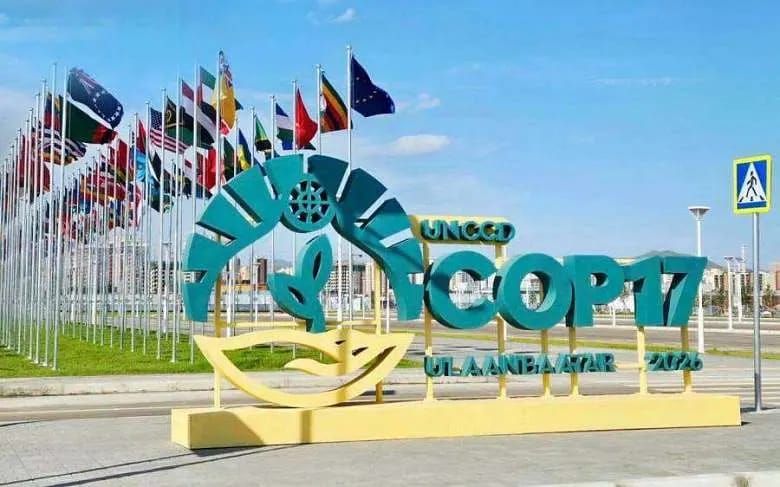
At the 17th session of the Conference of the Parties to the United Nations Convention to Combat Desertification (COP17), held in the capital of Mongolia, Ulaanbaatar, a special thematic report dedicated to the state of land resources in Central Asia will be presented.
The presentation of the report entitled "Global Land Outlook" is scheduled for August 26. In the document, Central Asia is analyzed as a unified ecological system in which natural phenomena and human activity are closely interconnected.
The report particularly emphasizes the interrelationship between the state of land and water resources, ecosystems, and the well-being of the population. Great importance is also attached to the issues of efficient use of natural resources in the region and their comprehensive management at the regional level.
The theme of the report is of particular importance for Turkmenistan as one of the five Central Asian states. Land degradation in the region is closely linked to climate change, the presence of vast pastures, irrigated agriculture, soil salinization, and risks associated with water resources.
COP17 is being held in Ulaanbaatar from August 17 to 28 under the slogan "Restoring Land — Restoring Hope." The main agenda of the conference includes issues such as restoring degraded lands, increasing resilience to drought, rational management of pastures, and ensuring food and water security.
Turkmenistan is also actively participating in the work of the international conference. On August 17, at the plenary session, the representative of Turkmenistan spoke on behalf of the interregional group of the UN Convention to Combat Desertification "Central Asia — Russia."
Thus, Turkmenistan's participation in this international forum contributes to promoting common regional approaches to protecting land resources, combating desertification, and ensuring environmental sustainability in Central Asia.
The special report to be presented at COP17 is expected to serve as one of the important sources of information for assessing the current state of land in Central Asia, identifying key environmental risks, and strengthening cooperation between the countries of the region.
Comments
No comments yet. Be the first.