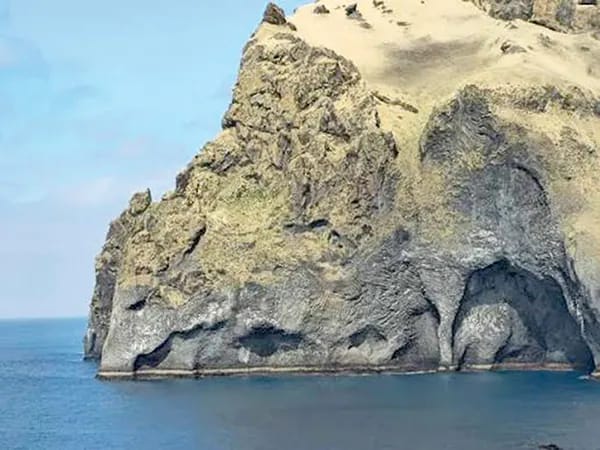
Elephant Rock (Halldórsskor), located on the island of Heimaey in Iceland's Westman Islands archipelago, is considered one of nature's remarkable creations. Its unusual shape, resembling a giant elephant, attracts the attention of visitors from around the world.
There is a theory that the basalt rock was formed in connection with the 1973 eruption of the Eldfell volcano. However, many scientists believe that its distinctive shape developed over thousands of years through geological processes and erosion.
Located on the northwestern coast of Heimaey, the rock resembles an elephant with part of its body submerged in the sea when viewed from a distance. Its surface clearly reveals the main features of the animal: its head, ear, eye and trunk.
Local folklore also includes several legends about Elephant Rock. According to one story, an elephant that had been punished was exiled to the island. It fell asleep near the rock and eventually turned to stone. Another legend suggests that the unusual shape was carved by local residents themselves.
In recent years, powerful ocean waves crashing against the coast have contributed to the formation of various hollows and patterns on the rock's surface. Shaped by natural forces, this remarkable formation is recognised as one of Iceland's distinctive natural attractions.






Comments
No comments yet. Be the first.