
Combining Kazakhstan, Uzbekistan, Turkmenistan, Kyrgyzstan, and Tajikistan, the region's total economic capacity, population, natural resources, and transport-logistics capabilities enhance its international significance.
According to the provided data, the total GDP of the five countries reaches approximately 543 billion dollars. The region's population exceeds 83.6 million, and current estimates for 2026 put this figure close to 84–85 million people. Furthermore, the accumulated foreign direct investment in Central Asian countries is estimated at approximately 220.5 billion dollars.
Kazakhstan — the main economic power of the region
Kazakhstan holds a particularly large share in the economic structure of Central Asia. The country accounts for approximately 306 billion dollars of GDP, which is about 56 percent of the region's total economy.
Kazakhstan also occupies a leading position in the region's exports. Central Asia's total exports amount to approximately 39 billion dollars, with nearly two-thirds coming from Kazakhstan.
Kazakhstan also leads in terms of accumulated foreign direct investment, with the country's indicator standing at approximately 151 billion dollars, forming about 69 percent of the region's total.
Kazakhstan's financial stability is also rated as the highest in the region. In August 2026, S&P Global Ratings upgraded the country's long-term credit rating to BBB. Thus, Kazakhstan remains the only country in Central Asia with an investment-grade credit rating.
The presence of international reserves and state funds in the country also creates an important financial buffer. According to the data, reserves and relevant state funds can cover the state external debt by approximately 3.8 times.
Nevertheless, Kazakhstan faces tasks such as moving away from dependence on oil, gas, and metals, diversifying production, and increasing the share of high-value-added sectors.
Uzbekistan — one of the main centers of high-paced development
Uzbekistan is the second largest economy in Central Asia. The country's GDP is approximately 147 billion dollars, with its share in the region's total economy approaching 27 percent.
Uzbekistan is also the leading state in the region by population size. According to 2026 estimates, the country's population is approaching 37 million people. The fact that the majority of the population consists of youth creates tremendous opportunities for the labor market, domestic consumption, and new business initiatives.
In recent years, the intensification of economic reforms, privatization, and industrialization in the country has stimulated the influx of foreign investment. Therefore, Uzbekistan is characterized as one of Central Asia's most active markets for new investments.
According to the International Monetary Fund forecast, Uzbekistan's economic growth in 2026 could reach 6.8 percent, while the Eurasian Development Bank estimates it at 7.9 percent.
Turkmenistan — an economy relying on energy capacity
According to the data provided, Turkmenistan's GDP is approximately 50 billion dollars, making up about 9 percent of Central Asia's total economy.
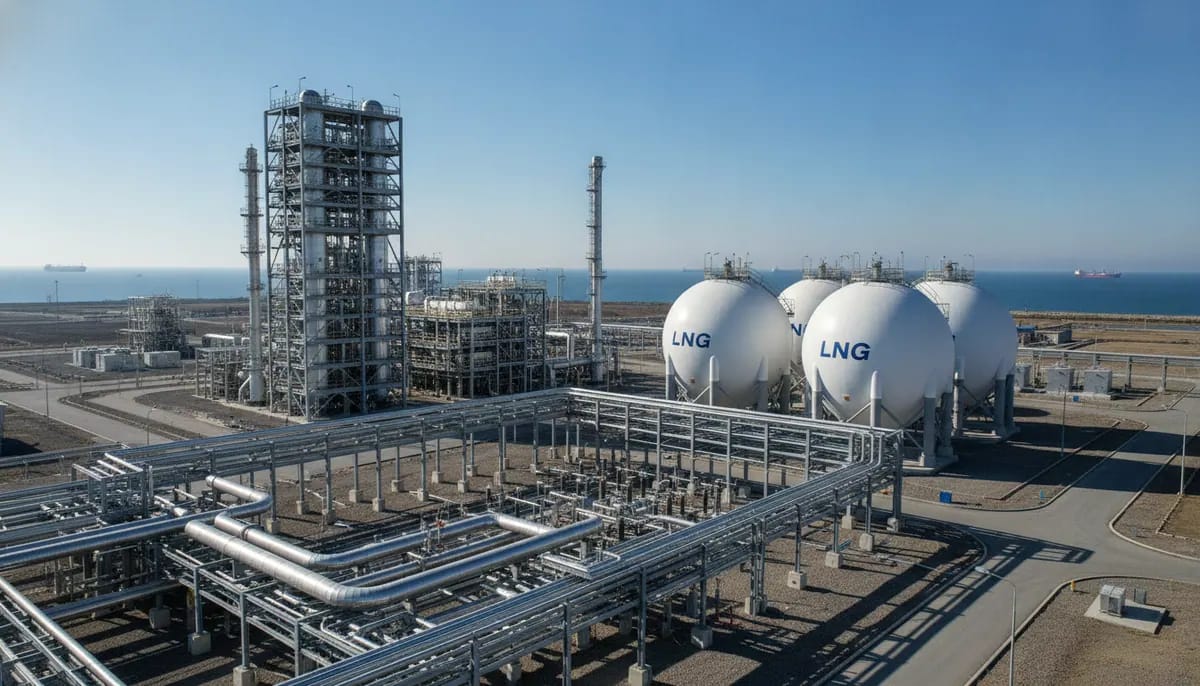
The presence of large natural gas reserves is one of the main sources of Turkmenistan's economic power. The energy sector provides a significant portion of export revenues and foreign economic relations.
At the same time, diversifying the economy, expanding processing industries, and increasing the share of non-resource sectors in the economy remain key areas for long-term growth.
Kyrgyzstan — a country expected to achieve high growth rates
Kyrgyzstan's GDP is approximately 23 billion dollars, accounting for nearly 4 percent of the region's total economy.
Small and medium-sized businesses, the mining sector, and remittances from citizens working abroad play a major role in the country's economy. The hydropower sector also serves as one of the important opportunities for future development.
Growth forecasts for 2026 indicate that Kyrgyzstan's economy is expected to grow at a high pace. The Eurasian Development Bank forecasts the country's growth at 10.2 percent, while the International Monetary Fund's forecast is around 6.1 percent.
Tajikistan — hydropower and mining opportunities
Tajikistan's GDP is approximately 18 billion dollars, with its share in the region approaching 3 percent.
The country has vast potential for hydropower. In addition, agriculture, the mining sector, and trade relations with neighboring states are important directions of economic growth.
According to the Eurasian Development Bank forecast, Tajikistan's economic growth in 2026 could reach 8.3 percent, whereas the International Monetary Fund expects growth around 6 percent.
Economic structure of Central Asia
Country | GDP | Share in the region | Main economic direction |
Kazakhstan | ≈306 bln $ | ≈56% | Oil and gas, metallurgy, export, investment |
Uzbekistan | ≈147 bln $ | ≈27% | Industry, services, investment, domestic market |
Turkmenistan | ≈50 bln $ | ≈9% | Natural gas and energy |
Kyrgyzstan | ≈23 bln $ | ≈4% | Hydropower, mining, entrepreneurship |
Tajikistan | ≈18 bln $ | ≈3% | Hydropower, agriculture, mining |
As seen from these indicators, Kazakhstan, Uzbekistan, and Turkmenistan together generate over 90 percent of Central Asia's GDP. Thus, these three states occupy a pivotal role in the region's economic structure.
Investment situation
The accumulated foreign direct investment in Central Asia is estimated at approximately 220.5 billion dollars, with the main share falling to Kazakhstan.
More recent UNCTAD data show that by the end of 2025, the region's accumulated foreign investments increased to 235.5 billion dollars. This growth demonstrates Central Asia's growing importance for international investments.
While Kazakhstan leads in terms of accumulated investments, Uzbekistan stands out in terms of the growth rate of new investments, driven by its economic reforms and new production projects.
Economic growth in 2026
Forecasts from international organizations show that Central Asia's economy can maintain high growth rates in 2026, although there are certain differences among various organizations' projections.
According to the Eurasian Development Bank's more optimistic forecasts, Central Asia's overall economic growth could exceed 6.5 percent, and the region's total GDP could surpass 600 billion dollars.
S&P Global Ratings estimates Kazakhstan's economic growth in 2026 at approximately 5.1 percent. The European Bank for Reconstruction and Development's forecast for Central Asia and Mongolia expects growth to average around 5.6 percent in 2026.
Differences in forecasts are explained by varying evaluations of investment activity, infrastructure projects, re-exports, commodity market prices, and external economic risks.
Main tasks facing the region
Along with economic growth opportunities, Central Asia faces several strategic issues. First of all, it is necessary to develop transport and logistics infrastructure. The region's location between Europe and Asia allows for more effective utilization of the Middle Corridor's potential.
The second important direction is the rational use of water resources and combating the effects of climate change. Effective management of water and land resources is of exceptional importance for the future of agriculture and food security.
The third direction is strengthening regional economic integration. Increasing trade among Central Asian countries, developing transport corridors, simplifying customs procedures, and expanding production cooperation can help reduce external economic risks.
Overall, in 2026, Central Asia, with its economic capacity, natural resources, large population, and strategic geographic location, is emerging as an independent and important center in the global economy. While Kazakhstan acts as the economic and financial anchor of the region, Uzbekistan stands out with its growth rate and investment activity. Turkmenistan through its energy potential, and Kyrgyzstan and Tajikistan through hydropower, mining, and other natural capabilities, strengthen the region's overall economic potential.
The main condition for future growth will be the diversification of economies by the countries, expansion of investment opportunities, strengthening of regional cooperation, and joint resolution of transport, water, and ecological issues.


Comments
No comments yet. Be the first.