In the modern era, products made from camel wool—which holds a special place in the national heritage of the Turkmen people—continue to attract great interest. Distinguished by its natural properties, camel wool has been widely used in making various textile products since ancient times. Today, this tradition is developing at a new level, combined with modern production technologies.
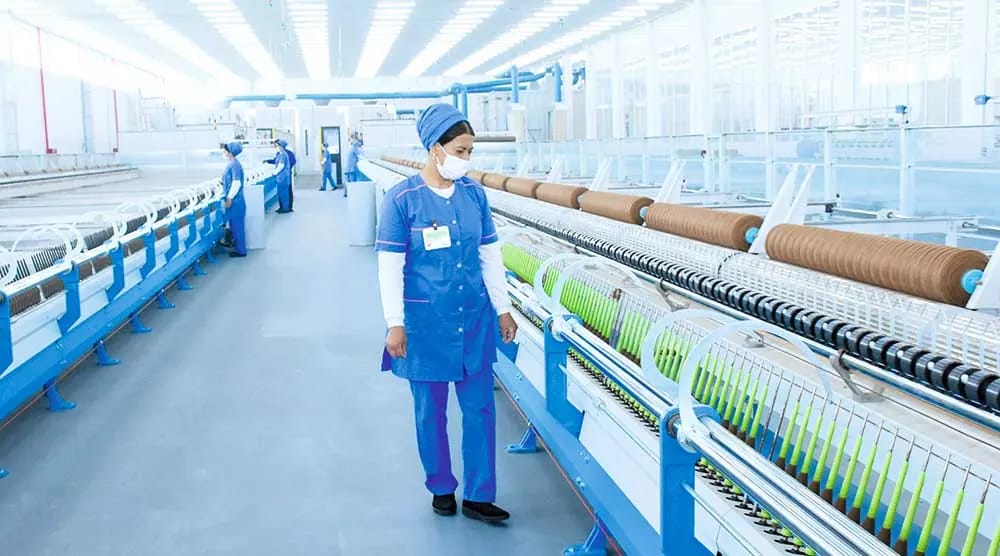
One such production facility has been established at the textile complex of the Ministry of Textile Industry of Turkmenistan in the city of Bayramali. A new department specialized in processing camel and goat wool to produce high-quality wool yarn has been put into operation at the enterprise.
The launch of the new department became an important step in combining traditional Turkmen weaving with modern technologies. Production processes here are carried out using up-to-date equipment. Furthermore, the automation of technological processes helps ease working conditions for employees and improves the quality of manufactured products.
Camel wool is one of the natural raw materials that has been widely used in the life of the Turkmen people since ancient times. Traditional textile items such as belts (bilguşak) and cloaks (agarçäkmen) are made from it. These products are distinguished by their naturalness, durability, and unique properties.
The creation of the new production department at the Bayramali Textile Complex, while continuing the national weaving heritage, also creates conditions for the efficient use of local raw materials. As a result of processing camel and goat wool at the enterprise, high-quality wool yarn is produced.
The commissioning of the new department in the spring of the year marking the glorious 35th anniversary of sacred Independence was a significant event for the textile workers of Bayramali. Currently, production activities are carried out on a regular basis, and opportunities are being created to increase the volume and variety of new products.
The combination of national weaving traditions with modern production capabilities makes it possible to manufacture high-quality products from local raw materials, increase the competitiveness of domestic goods, and contribute to the development of the textile industry.




Comments
No comments yet. Be the first.