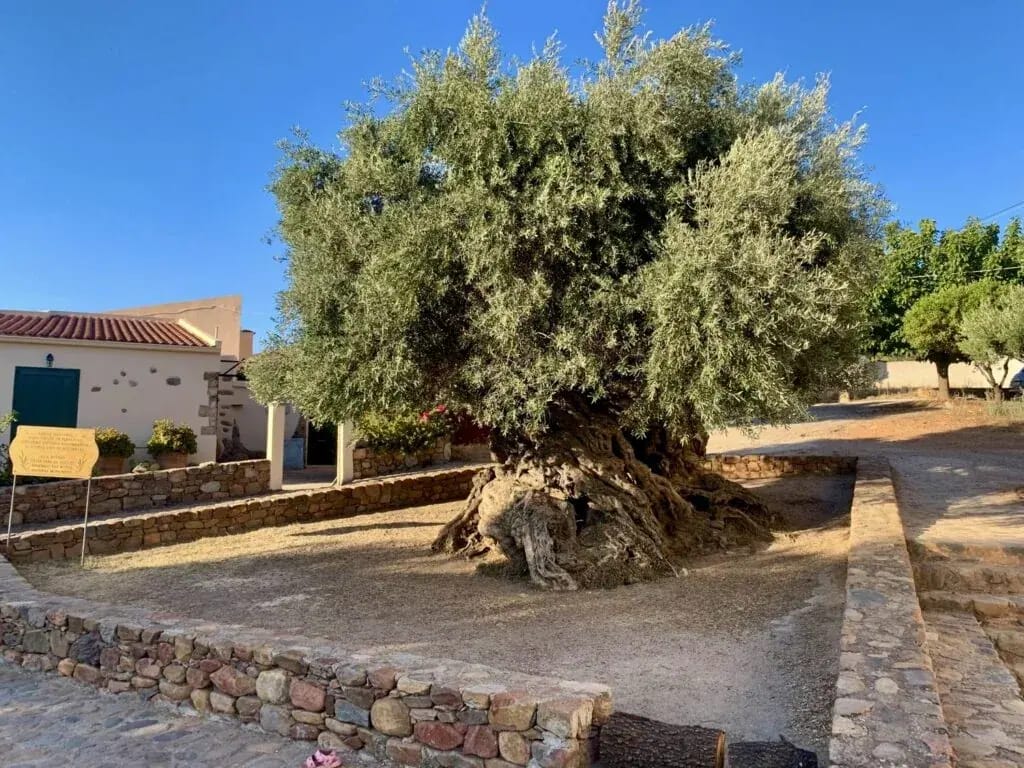
The village of Ano Vouves on the Greek island of Crete is famous not only for its historical monuments but also for the world's most fascinating natural treasure. The olive tree growing here remains at the center of attention for scientists and tourists, bearing the title of the oldest fruit-producing tree in the world.
This ancient tree is considered a miracle of nature. Scientists face difficulties in determining its exact age because the original trunk rotted away centuries ago. However, due to a wonder of nature, the tree did not wither away completely; instead, it continued its life by growing new branches in place of the decayed trunk. Currently, it is estimated that just one "new" branch of the tree is 2,000 years old.
The physical appearance of the tree tells its history:
- Branch span: 12.5 meters.
- Trunk diameter: 4.6 meters.
Although this tree has survived numerous forest fires, strong earthquakes, and devastating storms throughout its life, it has not stopped bearing fruit to this day. Its very existence is a symbol of life and resilience.
Every year, nearly 20,000 people from various parts of the world visit the village of Ano Vouves to see this natural monument. The village is famous not only for this olive tree but also for other unique plants:
- Ancient Grapevine: There is also a grapevine in the village that has been consistently yielding harvests for 4 centuries.
This place reminds humans once again of the immense power and eternity of nature. This olive tree in Ano Vouves is preserved as a living bridge connecting the past and the future.





Comments
No comments yet. Be the first.