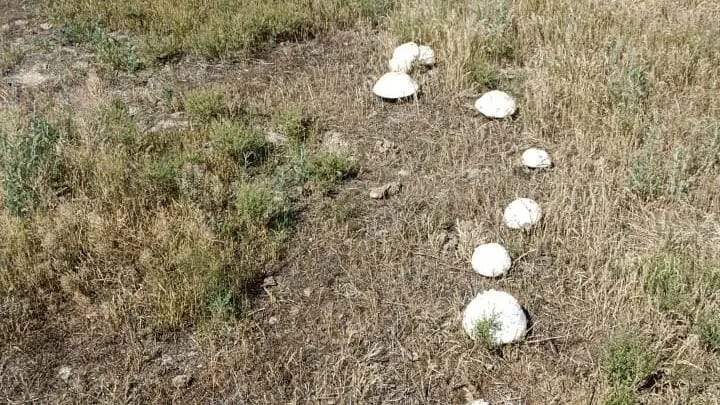
One of the most wonderful sights of spring is mushrooms. Mushrooms form a fascinating life cycle of living organisms, ranging from those visible to the naked eye to microscopic ones. All mushrooms reproduce by spores — tiny mushroom embryos. From these spores, thin branching threads intertwine to grow the mycelium, which eventually produces the fruit body. All of this develops underground within the mushroom system and emerges on the surface in its formed shape. The above-ground life of mushrooms is very short, lasting only 2–3 days. However, the root of the mushroom (mycelium) lives for a very long time.
Naturally, there are various types of mushrooms. Along with field mushrooms, some types of puffball or morel mushrooms are also edible. Mushrooms contain proteins, sugar, mineral salts, phosphoric acid, and other vitamins. Mushrooms often grow at the base of trees. The reason for this is that they can obtain sugar and amino acids from the tree. In return, they transfer their inorganic substances to the tree.
With the arrival of spring, mushrooms can be seen in the foothills, in the steppes, and under the trees. Their pleasant scent adds even more beauty to the scenic views of nature.






Comments
No comments yet. Be the first.