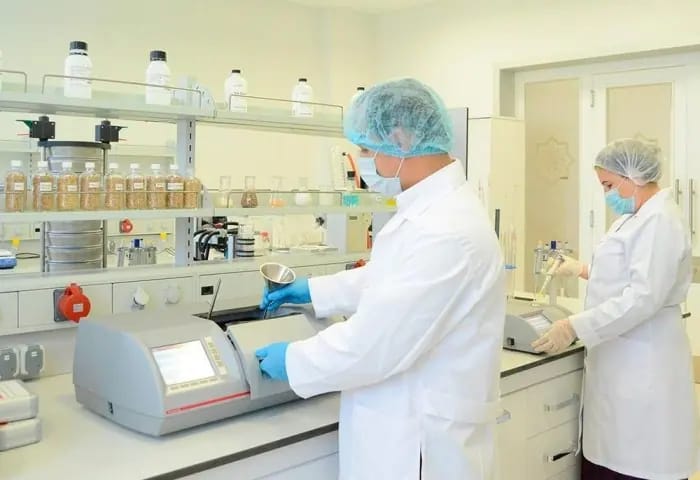
Scientists from the Institute of Chemistry of the Academy of Sciences of Turkmenistan have conducted scientific research on obtaining lubricating grease (solidol) using local raw materials as well as wastes from the oil and gas and food industries. Refined motor and industrial oil wastes, tar, animal fats, gossypol resin, and soapstock—a by-product of the alkaline refining of vegetable oils—were considered as starting components. This was reported in the "Neutral Turkmenistan" newspaper published on Thursday.
The results of scientific work and experiments confirmed that it is possible to produce solidol meeting state standards by applying appropriate purification and technological approaches. The implementation of the developed methods allows for expanding the raw material base for domestic lubricant production, reducing the cost of the product, and lowering the expenses for industrial waste neutralization.
The development of such technologies aligns with the goals of resource conservation and environmental sustainability. The results can be utilized in industrial production, including oil refineries such as the Turkmenbashi Complex of Oil Refineries, which uses base oils for the production of lubricating materials.
A key component in their production consists of mineral raw materials containing lime and calcium oxides, as well as strontium and lithium compounds. All components are extracted within the country, specifically at the Kelete, Akdepe, Balkan, and Koytendag deposits.
The use of local minerals and recycled resources is viewed as a promising direction for the further development of the country's chemical and oil and gas sectors.


Comments
No comments yet. Be the first.