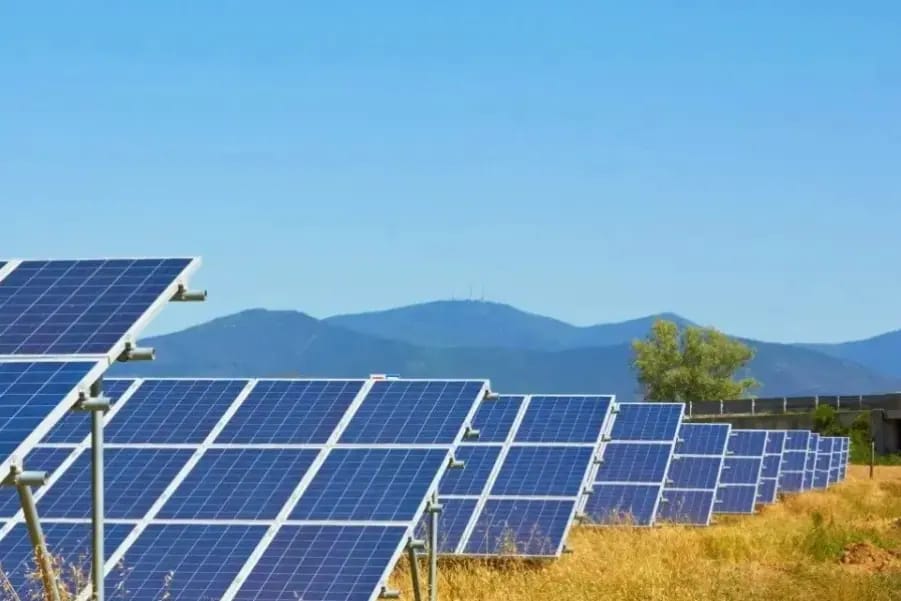
How can solar and wind energy be used without compromising the stability of the entire energy system? This question was addressed at a regional online briefing of the EU RECA project by the German GIZ organization. Specialists from Turkmenistan and neighboring countries were introduced to “smart” inverter technology capable of protecting the national energy system from overloads and failures.
The Challenge of the “Green” Transition
Turkmenistan’s conventional energy relies on powerful gas turbines that maintain network stability. However, large-scale construction of solar power plants (e.g., in Gyzylarbat) poses challenges for engineers: renewable energy sources fluctuate very quickly. Massive solar panels require advanced technical solutions to maintain grid balance.
GFM Technology: The “Brain” of Each Point
The main tool at the briefing was GFM inverters (Grid-Forming Inverters).
They do not just convert current but also “shape” the grid. If network voltage rises or drops rapidly, these inverters do not shut down; instead, they immediately provide “green support” and simulate the operation of a large power plant. GFM inverters integrate separate solar and wind plants into a single stable network.
Kazakhstan’s Experience — For the Region
The briefing on January 6, held via video link, highlighted the experience of a week-long GIZ training at Kazakhstan’s KEGOC system operator. This experience is now being extended across the region. For Turkmenistan, it provides the opportunity to implement renewable energy sources using proven German and European practices.
The outcome will be a technical report, serving as a key guideline for energy specialists in the region. It will be a practical guide for building reliable and modern “green” energy bridges in Central Asia.
The EU project “EU in Central Asia: Renewable Energy Sources” (EURECA) is part of the “Green Central Asia” and “Team Europe Initiative” programs. It is implemented under the German Ministry for Economic Cooperation and Development (BMZ) and funded by the European Union through the “Global Gateway” strategy.
Comments
No comments yet. Be the first.