

















NASA Releases First Photos from Mars Probe
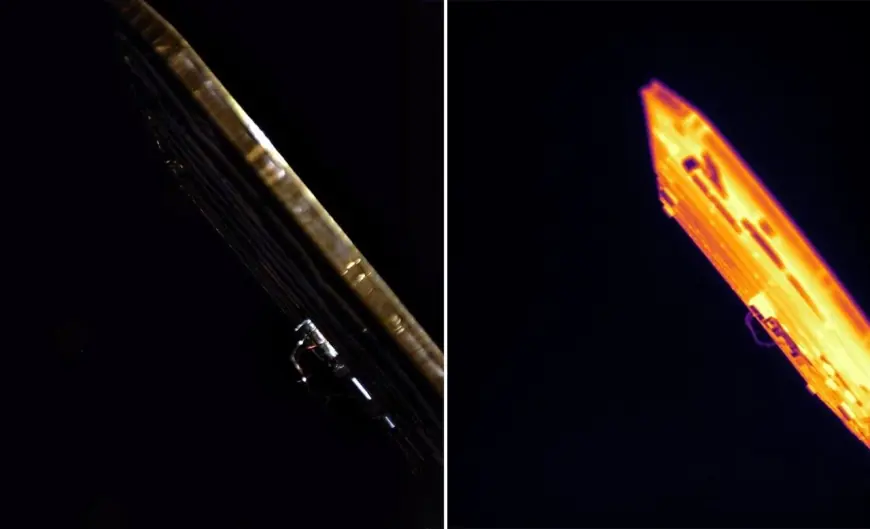
The U.S. space agency NASA has shared the first images from its new Mars exploration mission, ESCAPADE. These photos confirm that the spacecraft is fully operational and successfully continuing its journey to the planet.
The ESCAPADE mission (Escape and Plasma Acceleration and Dynamics Explorers) was launched on November 14, 2025, aboard Blue Origin’s new heavy-lift rocket, New Glenn. The launch took place from the Kennedy Space Center in the United States.
The mission includes two identical probes — they will travel to Mars together and conduct paired observations in the planet’s orbit.
A few days after the launch — on November 21 — one of the probes sent its first image back to Earth using the VISIONS camera system, which operates in the visible and infrared spectrum. One of the photos shows the probe’s solar panels and the dark expanse of space.
These photos confirm:
-
the full functionality of the cameras,
-
normal power supply,
-
correct operation of orientation systems,
-
the spacecraft’s readiness to continue the mission.
The second probe also captured an image, but its camera was pointed deep into space, so the photo appeared dark — this also indicates that its protective system is functioning properly.
Despite these first images, full scientific results will only be known in several years.
In November 2026, the probes will use Earth’s gravity to transition onto their planned interplanetary trajectory.
Reaching Mars is scheduled for September 2027.
The official scientific phase of the mission will begin in mid-2028.
ESCAPADE marks the first NASA mission with two probes operating simultaneously in Mars orbit. Such parallel measurements will allow a more precise study of the effects of solar wind on the planet’s atmosphere.
The main research objectives of the ESCAPADE probes are:
-
studying how solar wind erodes Mars’ atmosphere,
-
analyzing interactions between plasma flows and the ionosphere,
-
determining the structure of the planet’s weak magnetic field,
-
explaining how Mars lost its water and most of its atmosphere.
The data collected could provide new insights into Mars’ climatic past and how it became a dry planet.