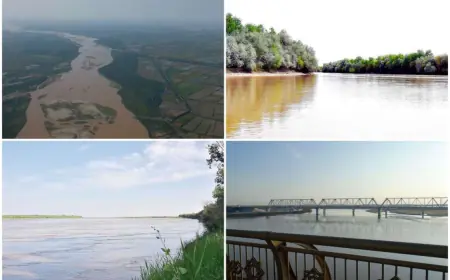

















Ballad of the Amu Darya
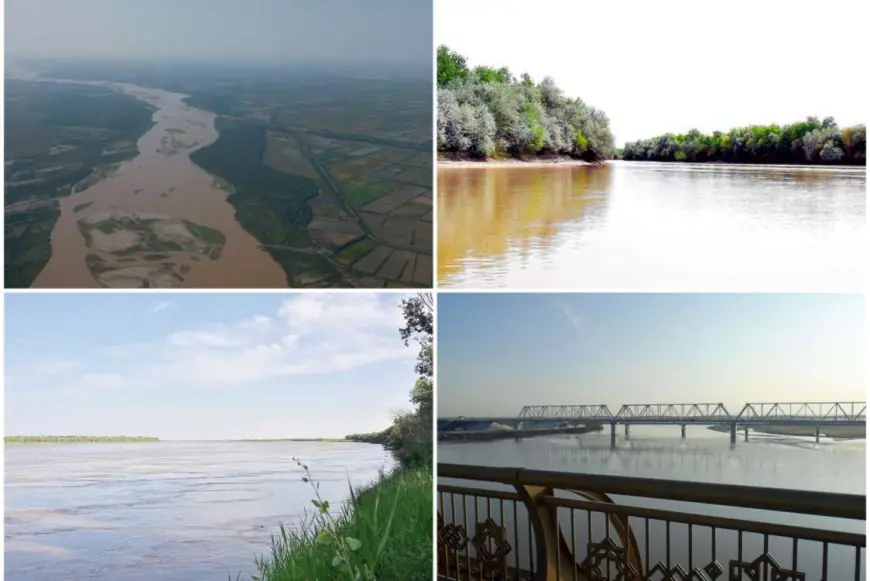
The ancient Roman historian Ammianus Marcellinus (4th century) noted that the Amu Darya and the Syr Darya flowed into the Aral Sea. In his writings, Abulghazi Khan stated that only from the year 1573 did the Amu Darya begin to flow fully toward the Aral Sea. At the end of the 19th century, the Russian orientalist and historian, Academician V. V. Bartold, having compiled the accounts of ancient authors regarding the lower course of the Amu Darya, provided his own analysis and concluded that “during the period of the Mongol invasions as well, just as in modern times, the Amu Darya flowed into the Aral Sea.”
In the 13th–16th centuries, certain changes occurred in the direction of the river’s waters flowing across the lands of the Oghuz khans toward the Caspian Sea. However, some scholars, such as the Dutch orientalist De Goeje, arrived at an opposing conclusion. Such debates concerning the Amu Darya continued for centuries. The emergence of differing interpretations was often caused by the inaccuracy of available data, and at times by the fact that some authors wrote about the river and the destinations of its waters without having seen them personally, relying only on hearsay, which led to errors in scientific conclusions and analyses.
The essence of these discussions lies in the question of whether the waters of the Amu Darya flowed toward the Caspian Sea, the Aral Sea, or both at different times. Archaeological research has uncovered finds dating back to very early periods, even to the era described by Herodotus. The results of these studies and the nature of the discoveries undoubtedly testify to the ancient courses of the Amu Darya.
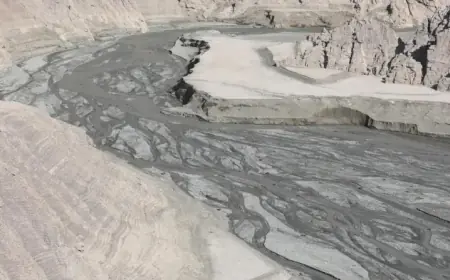
Dozens and even hundreds of kilometers away from the river’s present-day, water-rich channel, traces of its ancient, abundant flows can still be found. It is reasonable to believe that the vast Karakum Desert as a whole, as well as certain areas of the Kyzylkum, are the result of the long-term activity of the Amu Darya. In these regions—sand-covered valleys, coastal terraces, ravines, and depressions that once held lakes—the traces of ancient riverbeds remain clearly visible.
In some places, heavy layers of sand have covered the marks of thousands of years of history. According to scientists, the mineral composition of the sediments forming the Karakum Desert does not differ from that of the modern sediments of the Amu Darya. This clearly confirms that in the past the Amu Darya was a powerful and extensive water system.